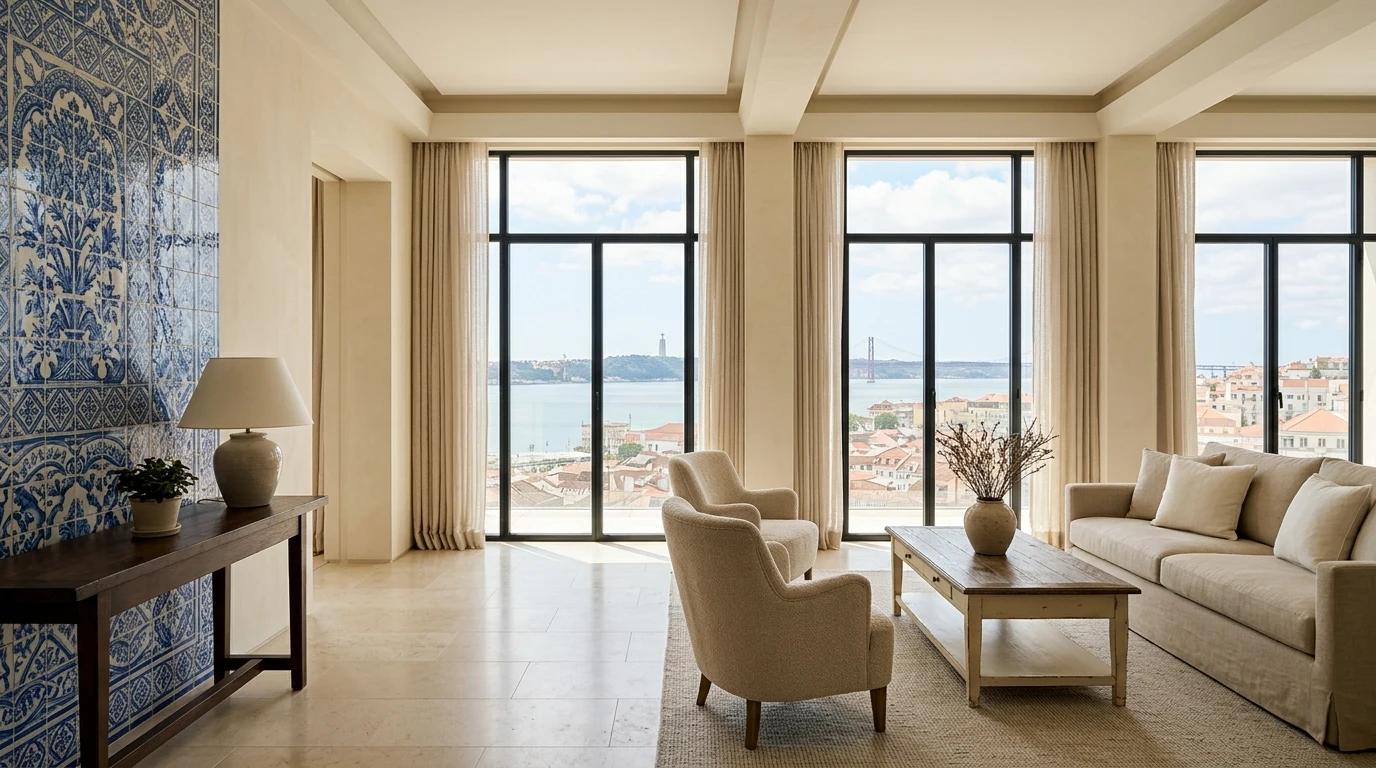
For interior design in luxury hotels, that light is simultaneously the most valuable asset in the market and the most technically difficult problem to solve. Well managed, it turns an ordinary room into a memorable experience. Poorly managed, it produces overheating in summer, glare in west-facing rooms and an interior temperature that demands artificial climate control for eight months of the year.
What Atlantic light is and why it differs from Mediterranean light
The distinction matters because it determines design decisions. Mediterranean light — Barcelona, Rome, Athens — is direct, intense and yellow. Lisbon's Atlantic light is white, with a greater diffuse component due to oceanic influence, and has a quality photographers call "soft light": it does not project hard shadows, does not overexpose pale surfaces and maintains a colour temperature between 5,500K and 6,500K in clear sky conditions — cooler and whiter than the Mediterranean light of southern Spain.
This has direct consequences for palette and material decisions in a Lisbon hotel. Tones that work under Mediterranean light — warm whites, ochres, terracottas — under white Atlantic light lose warmth and can read as cold. The tones that work best under Atlantic light are those with a neutral or cool base: pure white or grey-based white, unbleached linen, Portuguese cream limestone, the indigo blue of traditional azulejo. These materials absorb the colour temperature of the exterior light and return it to the space coherently.
Lisbon also has a specific phenomenon that sets it apart from other Atlantic cities: the luminous reverberation of the Tagus. Rooms with river views — especially those facing south or south-west — receive not just direct light but light reflected off the water, which adds a brightness and movement component that does not exist in inland cities. That reverberation is one of the most photographed visual arguments of Lisbon hotels — the Altis Belém, with its floor-to-ceiling windows facing the Tagus, is the most cited example — and also a source of glare if the design does not manage it.
Solar orientation and room design: the four orientations and what they produce
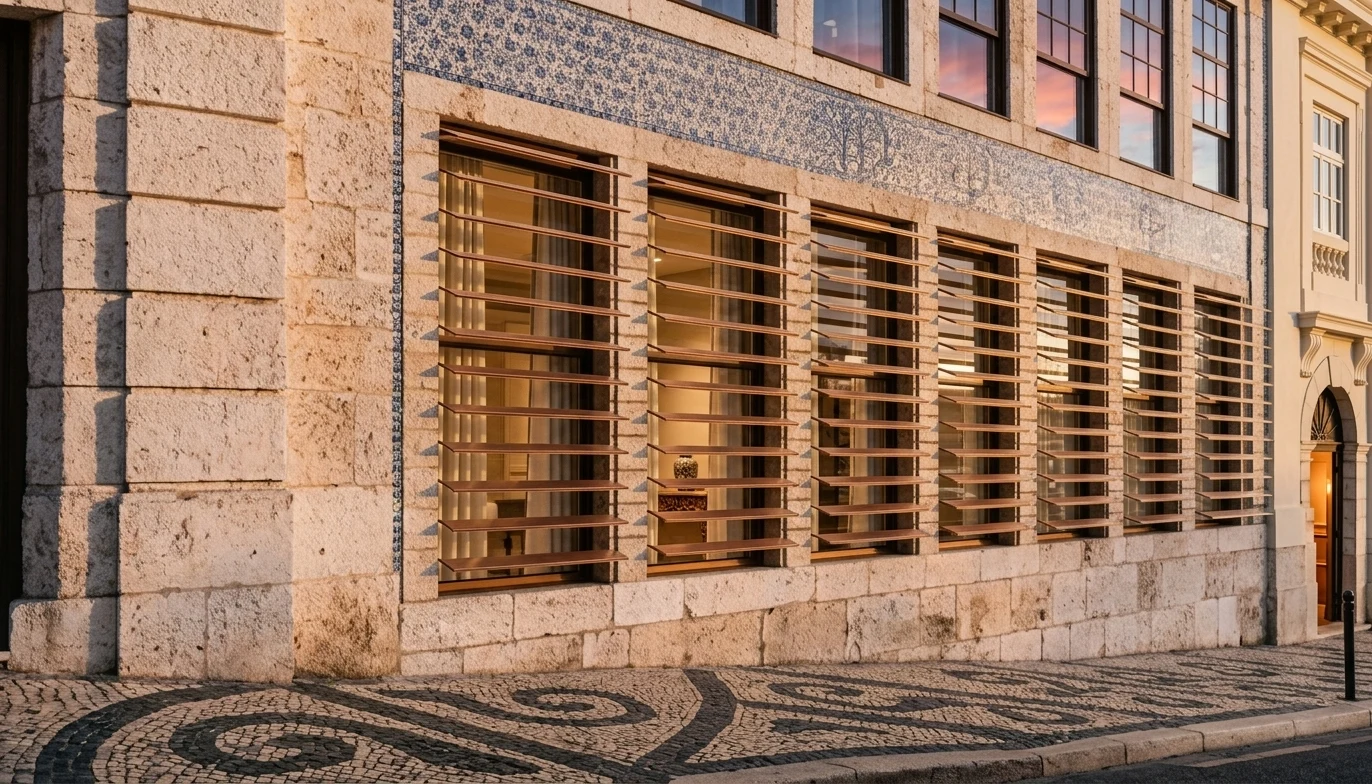
South orientation. The most balanced in Lisbon. Direct light for most of the day, maximises natural warmth in winter — November to March, when Lisbon has cold nights — and with adequate exterior solar protection is manageable in summer. The risk: without exterior protection, in July and August the thermal load of a south-facing room can exceed 35°C with the window closed, requiring intensive climate control. The design solution: adjustable exterior louvres or retractable awnings that block high summer sun without preventing diffuse light entry.
West orientation. The most problematic in a Lisbon hotel in high season. July and August afternoon with west orientation produces severe overheating that no domestic climate control system can resolve efficiently. The asset: the Tagus sunset from a west-facing room is one of the most photographed moments in Lisbon. The hotel that resolves the technical heat problem retains the visual asset. The solution: high-performance solar control glass (solar factor g ≤ 0.25) and motorised exterior protection. Without both, the west-facing room in August is beyond saving.
East orientation. The best for the dawn experience. Warm direct light in the early morning, retreating by eleven. In winter, without direct light from midday, it can feel cold without climate control. The asset: dawn light over Lisbon from the east — the hills of Alfama, the rooftops — is one of the most valued landscapes by the international guest. The risk: the guest who sleeps until ten receives that dawn directly on the bed if blinds do not prevent it.
North orientation. Diffuse, constant light all day. No abrupt temperature changes, no glare, no overheating. Ideal for work suites, spa zones or meditation spaces where constant luminosity is a value. In winter, the north-facing room without direct light may feel cold and needs warmer palette materials and more heating power to compensate.
Real thermal comfort in a Lisbon hotel: beyond air conditioning
Thermal comfort in a Lisbon hotel has a particularity that northern European hotels do not: it must work in two opposing regimes. In January, the exterior temperature can fall to 8°C with humid Atlantic wind: the guest wants warmth. In August, it can reach 38°C with high humidity: the guest wants cool. The same space, the same design, must produce comfort in both conditions.
High thermal mass materials are the design alternative that Lisbon has available natively: Portuguese limestone, granite, calçada paving, azulejo. All absorb heat slowly during the day and release it slowly at night, reducing the space's thermal amplitude without mechanical intervention. A limestone floor in a Lisbon hotel room can reduce peak temperature by 3–4°C compared to a timber floor under the same solar exposure conditions. That difference can make climate control unnecessary during the spring and autumn months — which in Lisbon are the highest tourist occupancy months.
Natural cross ventilation — windows on opposing facades that allow Atlantic air circulation — is another design resource Lisbon has in privileged abundance: the Tagus breeze in summer is 2–4°C cooler than air at altitude, and buildings that capture it with correct aperture orientation can dispense with mechanical climate control on most summer nights. In Lisbon boutique hotels installed in Pombaline buildings — with their relatively narrow plans and windows on two facades — that cross ventilation is a historical resource the interior design project must preserve, not obstruct with partitions or furniture that block the airflow.
Azulejo and limestone: Lisbon's thermal comfort materials
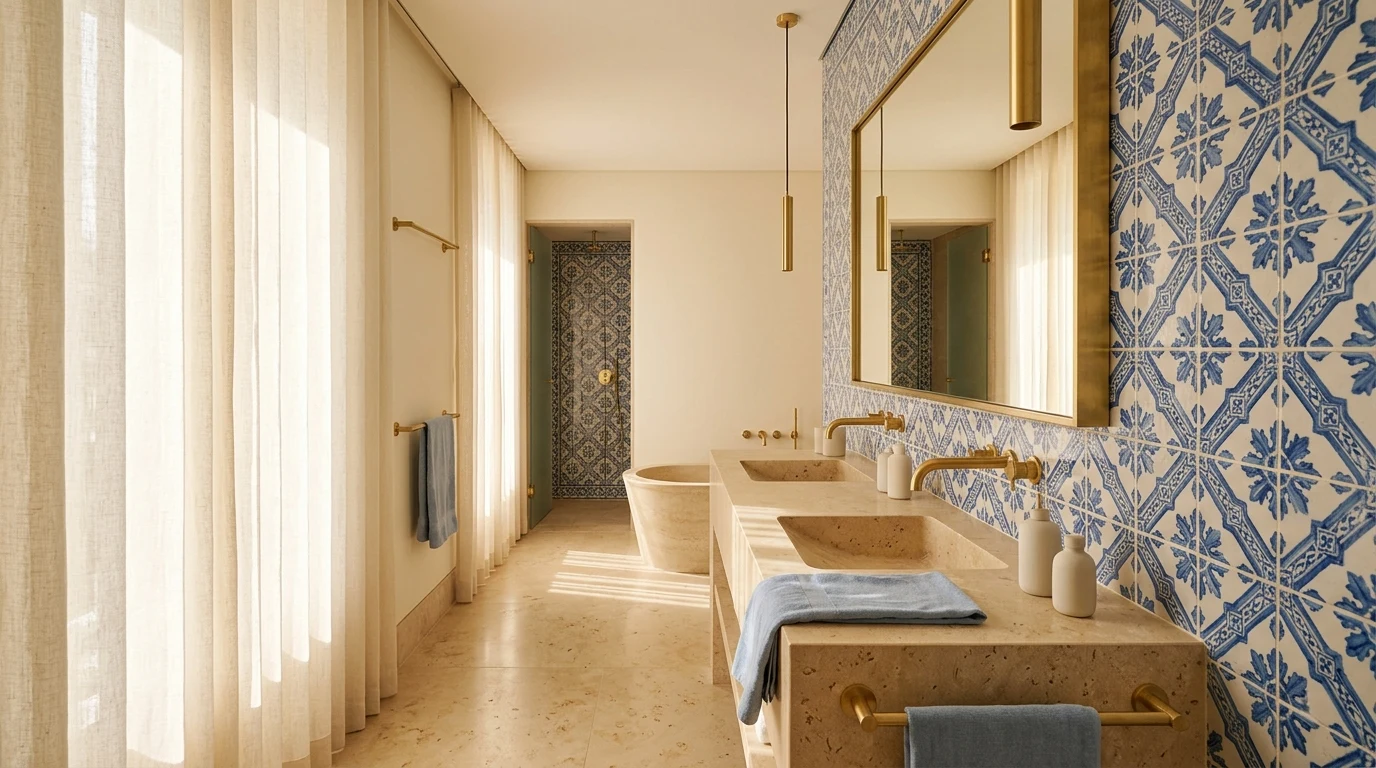
Lisbon's azulejo is not only a decorative element: it is a technical comfort solution that has worked for five centuries. Glazed ceramic reflects direct solar radiation — its shiny surface returns up to 70% of incident energy rather than absorbing it — maintains the tactile coolness the body perceives as comfort in warm months, and has a thermal inertia that dampens temperature peaks. Lisbon's azulejo facades are not just cultural identity: they are bioclimatic engineering applied before the term existed.
Inside a luxury hotel in Lisbon, azulejo as wall cladding — in bathrooms, common areas, corridors — serves the same thermal regulation function and adds the identity of place that the international guest has come to find. The major Lisbon hotels that have renovated their interiors with locally-produced artisan azulejo — Bairro Alto Hotel, Memmo Alfama — consistently achieve higher scores in "authenticity" and "design" categories than those that have opted for imported materials.
Portuguese limestone — Moleanos, Alpinina, Lioz — is the other native thermal comfort material of Lisbon. With a density between 2,100 and 2,600 kg/m³, it has four times the thermal storage capacity of timber and twice that of brick. On common area floors, bathroom countertops and lobby cladding, it produces the sense of solidity and permanence the luxury guest associates with quality, while simultaneously regulating the space's temperature without energy consumption.
The terrace and rooftop: Lisbon's space design must win
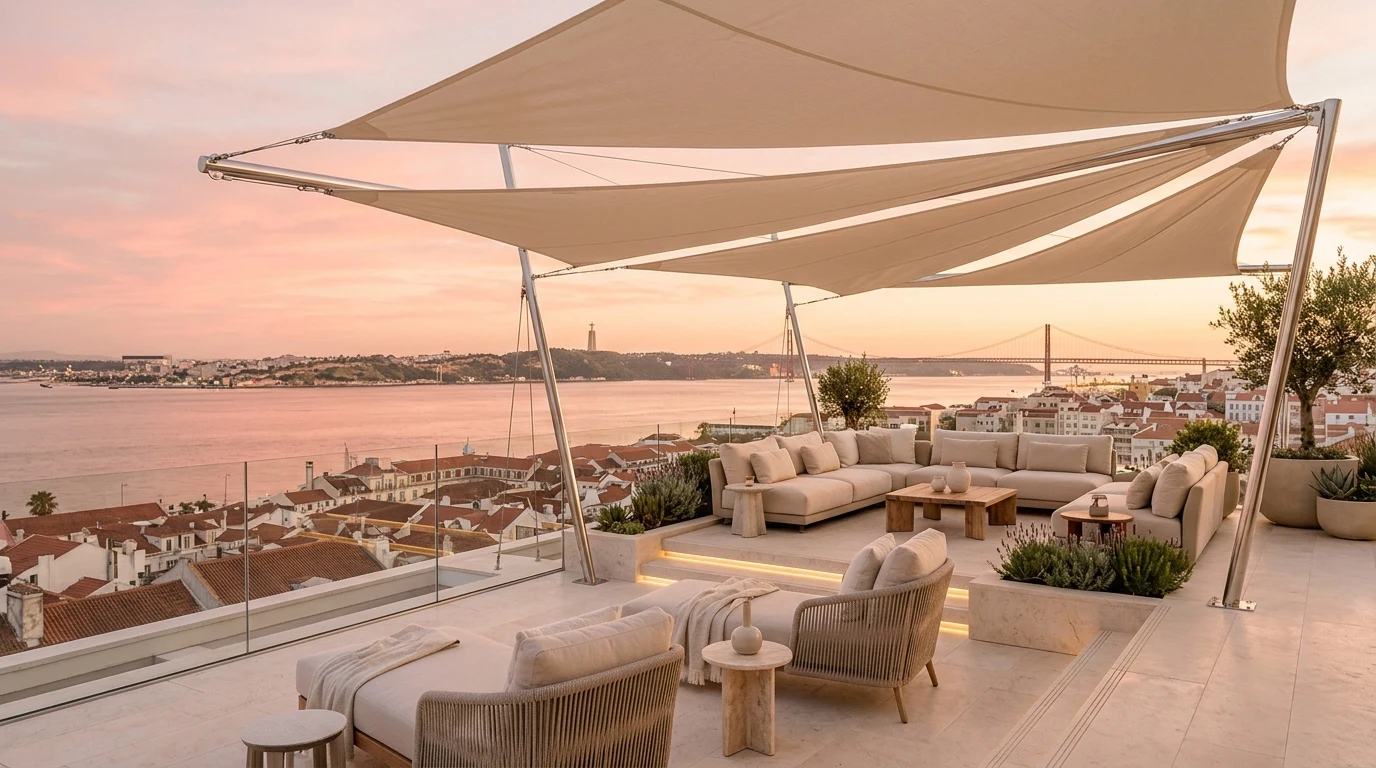
The rooftop of a Lisbon hotel is the space with the greatest differentiation potential and the one most frequently designed badly. The view of Lisbon from height — the terracotta-tiled rooftops, the castle, the Tagus — is one of the most recognisable visual assets in the European hotel market. That asset is won or lost in the design of the space that frames it.
The most frequent errors in Lisbon hotel rooftops: opaque railings that block the view when the guest is seated, dark paving that stores heat and makes the space unusable in summer afternoons, absence of shading that forces closure between twelve and four — the peak tourist footfall period in high season — and night lighting that contaminates the city view with upward glare.
The rooftop that works in Lisbon has: tempered glass or cable-tensioned railing that does not interrupt the seated view, light-coloured paving — white porcelain or beige limestone — that reflects solar radiation and maintains surface temperature in tolerable ranges, retractable shading structure that allows opening and closing according to time and weather, and low-intensity night lighting at ground level that does not contaminate the horizon.
Common areas: where Atlantic light builds the hotel's identity
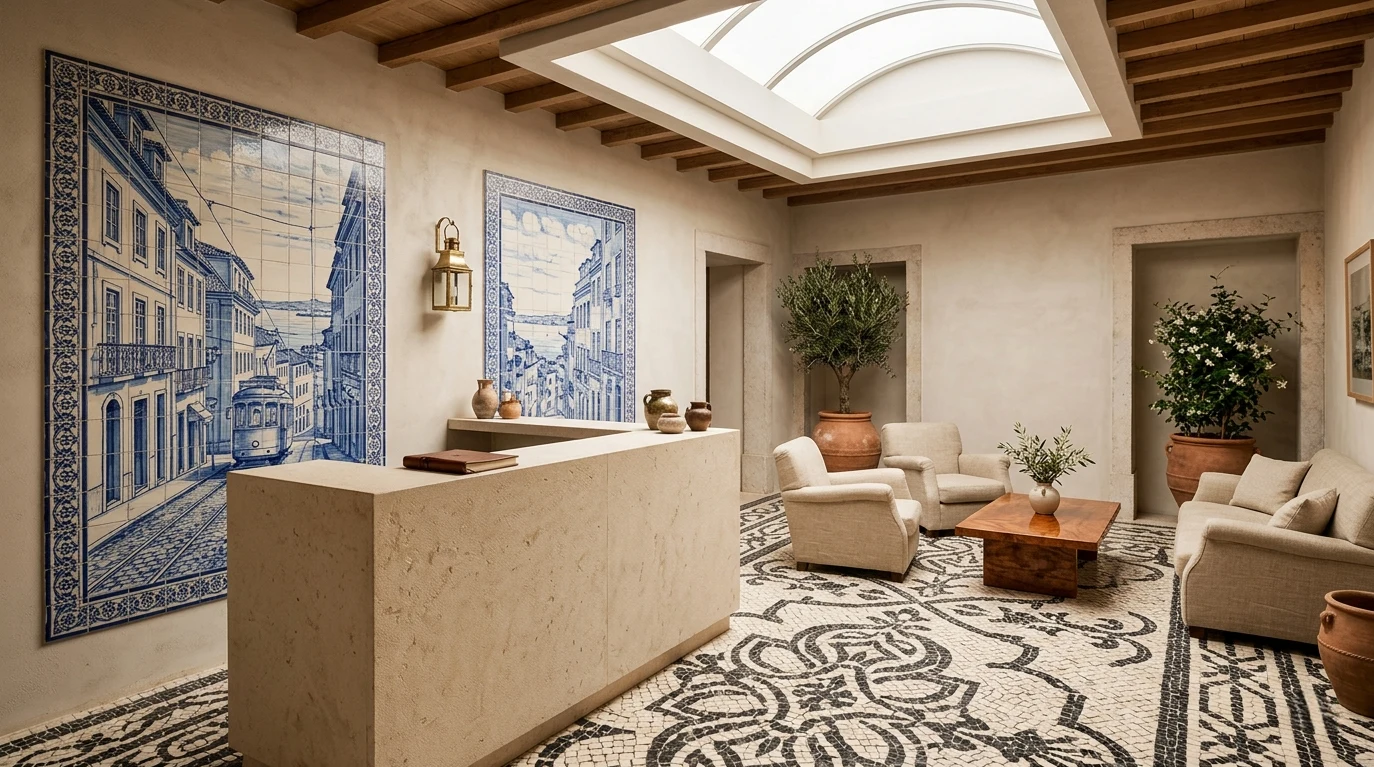
The best Lisbon hotel lobbies share two characteristics: diffuse — not direct — natural light arriving from skylights, interior courtyards or windows on opposing walls, and high thermal mass materials — calçada portuguesa, limestone, azulejo — that maintain stable temperature regardless of what happens outside. That combination produces the sensation of "entering another world" that guests describe in reviews without being able to name exactly why.
Calçada portuguesa — the limestone mosaic paving that defines Lisbon's public space — has technical logic beyond the historical: its light colour reflects solar radiation and its mass dampens temperature peaks. In a hotel lobby, calçada as reception area flooring fulfils the same function as in the street, with the added value of anchoring the guest to Lisbon from the first instant of contact with the ground.
Artificial lighting in Lisbon hotel common areas must be warm — 2,700K maximum — to compensate for the coolness of Atlantic light in winter months and to create contrast with exterior natural light in summer. A Lisbon lobby with 4,000K lighting in December reads as clinically cold. The same lobby at 2,700K produces warmth the guest receives as welcome.
The ROI of bioclimatic design in Lisbon hotels
Correct management of Atlantic light and thermal comfort in a Lisbon hotel is not only a design decision: it is a financial one. Sector data in Portugal indicates that hotels with energy efficiency certification and active bioclimatic design reduce electricity consumption in climate control by 30–50% compared to equivalent-category hotels without those measures.
In a 30-room Lisbon boutique hotel, that saving can represent €15,000–35,000 annually in energy costs. The investment in adequate exterior solar protection, high-performance solar control glass and thermal mass materials in a reform project is typically recovered in three to five years through those savings, independent of the impact on guest experience and ratings.
Interior design for hotels in Lisbon and Portugal is one of Véline Interiors' specialisms. If you have an opening or renovation project in Lisbon and want to evaluate how Atlantic light can become a design and positioning argument, the conversation is open.
Véline Interiors · Hospitality Design
Have a project in Lisbon?
We turn Atlantic light into a design and positioning argument.
Present your project →