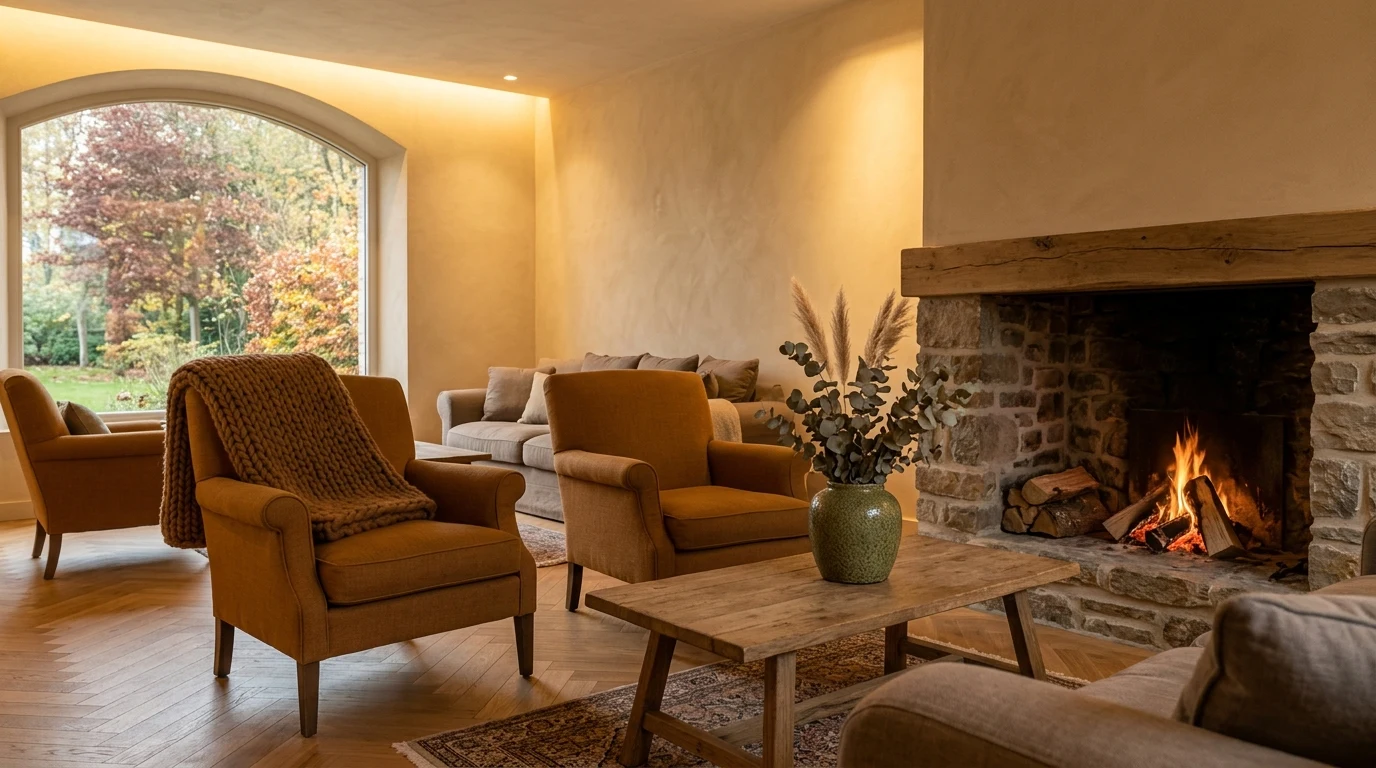
In a boutique hotel or private luxury villa, autumn decoration is not placing pumpkins and dried leaves in corners. It is adjusting the palette of the space's replaceable elements — textiles, decorative objects, flowers and lighting — so that the atmosphere responds to the season with the same naturalness with which the garden does. A well-executed autumn decoration strategy transforms the perception of the space without touching any structural element and produces in the guest the feeling that the hotel thinks about the details.
The luxury autumn palette: what works and what saturates
The difference between autumn decoration with a luxury register and generic seasonal decoration is in colour saturation. Saturated autumn tones — pumpkin orange, intense red, bright mustard yellow — photograph well on social media and visually saturate an interior space in under two weeks. Desaturated autumn tones — warm amber, soft terracotta, matt copper, moss green, earth brown, muted ochre — produce a seasonal atmosphere the eye can inhabit for months without visual fatigue.
The autumn palette that works in a boutique hotel or luxury villa has a warm neutral base — the same that the permanent interiorism of the space should have — over which three or four seasonal tones are layered in the replaceable elements. Linen cushions in deep amber on the sand sofa, a wool throw in toasted brown over the armchair back, a ceramic vase in moss green on the coffee table, a beeswax candle in cream tone with cedar or cinnamon aroma: each element alone is discreet and characterful, and together they produce the autumn reading without any need for figurative pumpkin or leaf elements.
The most frequent error: mixing too many tones from the palette in the same space. Four different autumn tones in cushions, throws, objects and flowers produce visual chaos that competes with the permanent interiorism instead of completing it. The rule that works: choose two dominant autumn tones (for example, amber and moss green) and repeat them in different materials and scales throughout the space.
Textiles: the autumn layer that most rapidly transforms a space
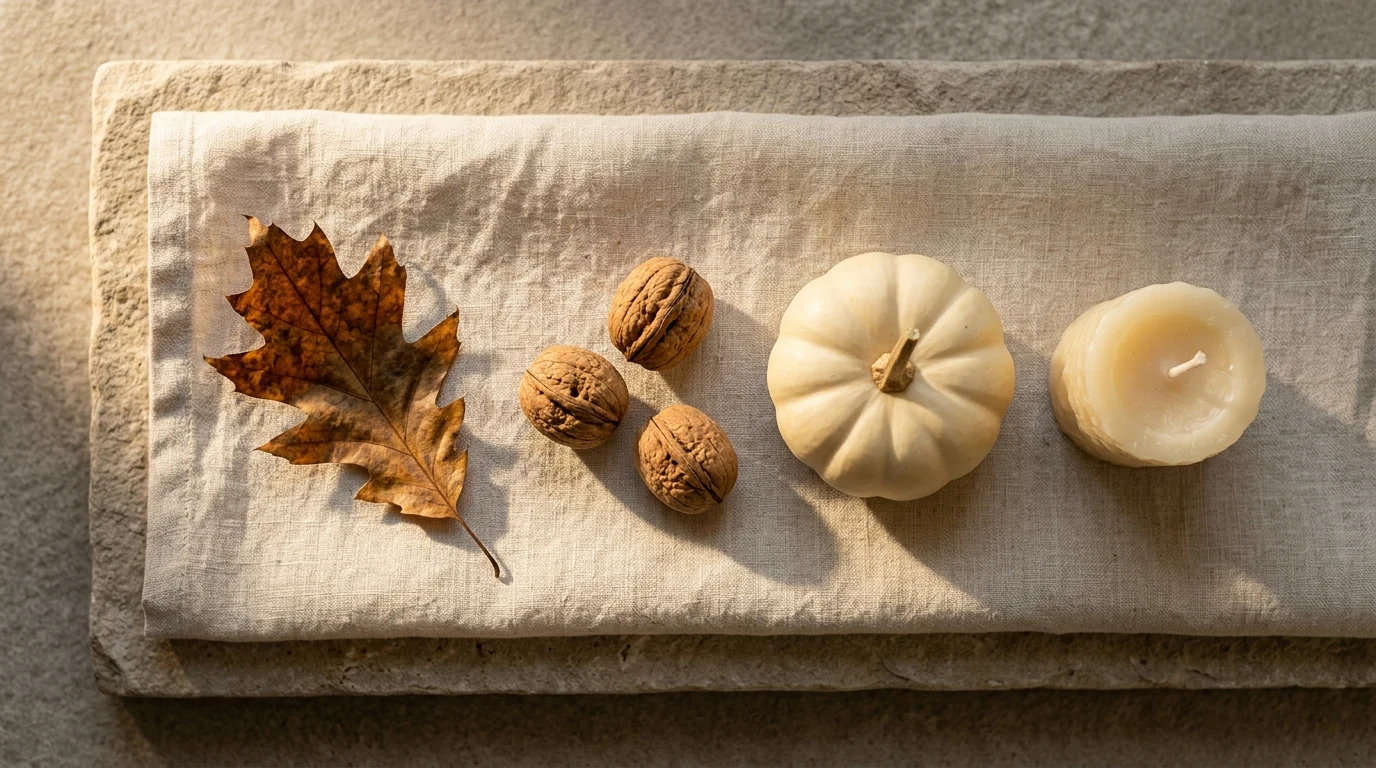
Textiles are the autumn decoration variable with the greatest visual impact per euro invested and the greatest ease of change without affecting any structural element. In a boutique hotel, changing the lobby cushions, room throws and bed runners for pieces in an autumn palette takes an afternoon's work and completely transforms the space's seasonal perception.
The textile materials that best communicate autumn in a luxury context: merino wool in chunky knit for bed and sofa throws, washed linen in amber or toasted brown tones for salon cushions, velvet in bottle green or dark terracotta for accent cushions on the armchair by the fireplace, and wool tweed in a brown-grey mix for hotel room bed runners. All those materials have a visual texture that evokes wool, forest and warmth without any figurative motif.
The wool throw by the fireplace or over the reading armchair back is the autumn textile element with the greatest emotional charge in a rural villa or hotel. Not because it is objectively necessary — the heating does the work — but because it activates in the guest the image of comfort and intimacy that autumn promises: the throw draped over the one who sits by the fire to read, with a cup of something warm, while the rain falls on the windows. That visual code is universal and produces an immediate emotional response.
Natural elements: those that last and those that wilt
Natural elements are the soul of autumn decoration and the category where the most errors occur in luxury hotels and villas. The error is twofold: choosing elements that deteriorate in days (fresh seasonal flowers with a short life, leaves cut from the tree that dry and curl in 48 hours) or choosing artificial natural elements (plastic pumpkins, silk leaves, resin acorns) that in a luxury context produce exactly the opposite effect to the one desired.
Autumn natural elements that last weeks indoors with minimal maintenance: dried natural acorns and pine cones (last months), eucalyptus or cornus sanguinea branches that dry preserving their shape and colour (last weeks), small decorative variety squash and gourds (last 2-4 weeks if uncut), walnuts and chestnuts in ceramic or timber bowls (last indefinitely as dry decorative elements), and dried mushrooms or preserved natural moss (last months without maintenance).
Seasonal autumn flowers with the greatest indoor durability: chrysanthemums (10-14 days), zinnias (7-10 days), late dahlias (5-7 days) and rosehip or cotoneaster branches with their red berries (2-3 weeks). In a boutique hotel where floral arrangements are refreshed weekly, mixing chrysanthemums with berry branches and dried oak leaves produces a seasonal quality composition with a 7-10 day useful life.
Autumn lighting: lowering the temperature and intensity
Lighting is the autumn decoration element with the greatest impact and the one most frequently overlooked. In autumn, natural light becomes warmer, lower and more lateral — the sun is closer to the horizon and light enters through windows at an angle that produces long shadows and a golden warmth that does not exist in summer. Artificial lighting in a hotel or villa should respond to that change: reducing colour temperature (moving from 3,000K to 2,700K if the installation allows), reducing the general intensity of the space in the afternoon-evening hours, and adding point light sources — candles, table lamps, firelight — that complement the central lighting.
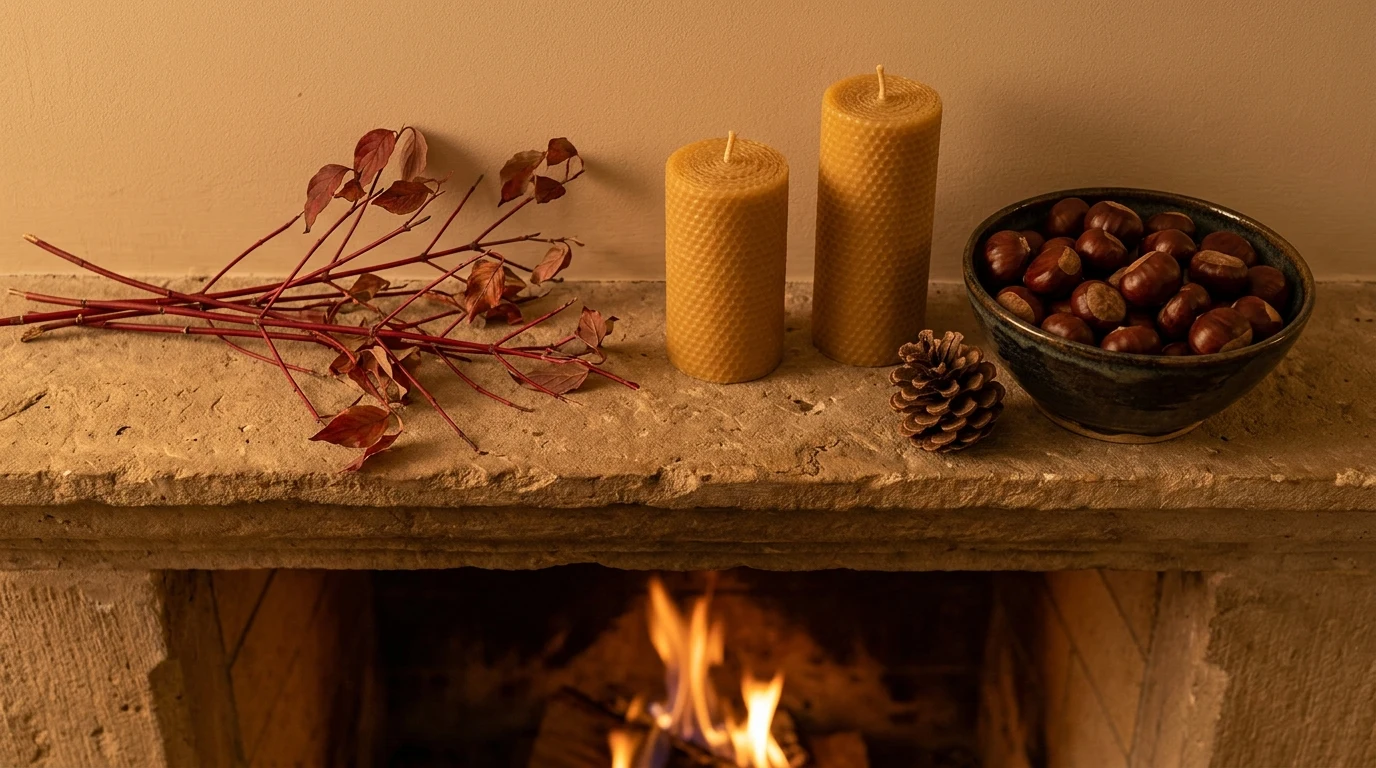
Candles are the autumn decoration element with the greatest emotional charge and lowest cost. In a boutique hotel or luxury villa, candles must be beeswax or vegetable soy wax — never paraffin, which in a luxury context produces a recognisable "cheap candle" smell — with natural seasonal aromas: cedar, amber, cinnamon, vetiver, incense. Grouping three candles of different heights in a dark ceramic bowl on the salon table, on the window ledge or on the fireplace mantel is a composition that requires five minutes' work and produces the most powerful visual and sensory effect of the entire autumn decoration.
The lit fireplace is the defining element of autumn in a rural hotel or private villa, and the one that most directly turns an ordinary stay into a memory. In luxury hotels and villas with a fireplace, lighting it from the first day of October — even when the outside temperature does not demand it — is a guest experience decision more than a thermal comfort one. The smell of burning wood, the sound of the fire and the dancing light of the flames are sensory stimuli that produce an emotional response of home and safety that no other element in the space can replicate.
Interior design for boutique hotels and villas in Spain and Portugal includes seasonal decoration advice as part of the service. If you want to transform your space for the autumn season with design criterion, the conversation is open.
Véline Interiors · Hospitality Design
Want to transform your space for autumn?
We advise on seasonal decoration with design criterion, from palette to natural elements.
Submit your project →