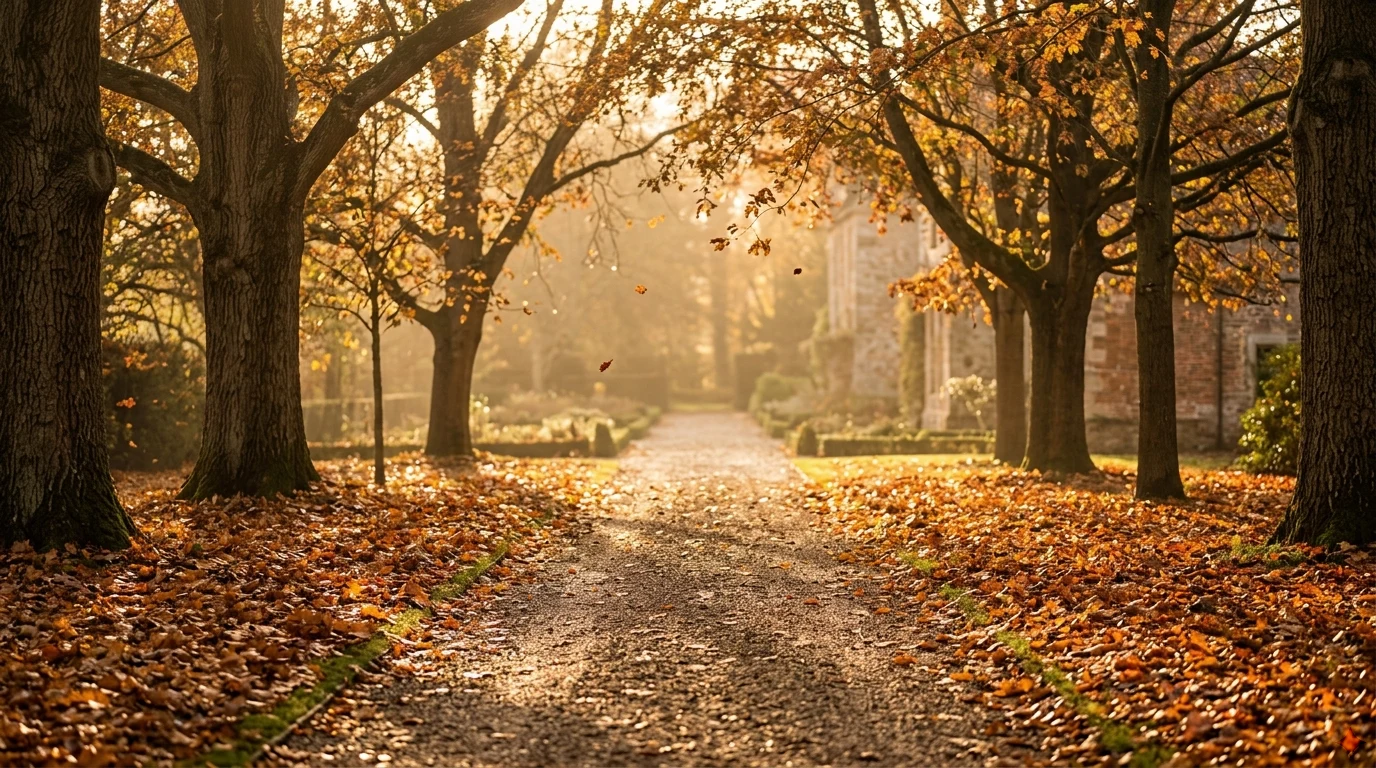
For rural boutique hotels and private luxury villas in Spain and Portugal, autumn is also the season with the greatest untapped income potential. The demand for quality autumn experiences grows consistently in the high-purchasing-power European market: the guest searching for "rural luxury autumn experience" in Spain and Portugal does not find the same quantity and quality of offer they would find for the same type of summer search. Competition in the quality of the autumn experience is still lower than in any other season.
The garden in autumn: the first visual argument of the experience
The autumn garden is the first visual argument of the autumn experience in a rural hotel or private villa, and the most frequently abandoned. The correct intervention: keep access paths and paved terraces clean (where wet leaves create slip risk), but preserve fallen leaves in garden zones, under trees and in the borders. The morning mist is another visual element that the autumn guest in the rural surroundings of Spain and Portugal perceives as part of the attraction. A hotel or villa that actively communicates the morning mist experience ("waking up with the valley in mist and coming down to breakfast by the fireplace") is converting a meteorological condition into an experience argument that the summer guest does not have available.
Autumn walks: the garden extended into the landscape
The five elements that make an autumn walk memorable: designed route maps (not A4 photocopies) with indications of the greatest visual interest points in autumn; a prepared basket or backpack with walk essentials (water bottle with the hotel brand, a local morning snack, a quality raincoat on rainy days); a return moment with a warm drink waiting by the lit fireplace; if the surroundings permit, the possibility of gathering during the walk elements that then incorporate into the hotel experience (chestnuts to roast in the afternoon, mushrooms for that evening's dinner); and a guide — not necessarily professional, it can be the hotel owner or the villa gardener — who knows the surroundings and can point out what a walk without a guide would miss.
Specialty coffee: the ritual that organises the autumn day
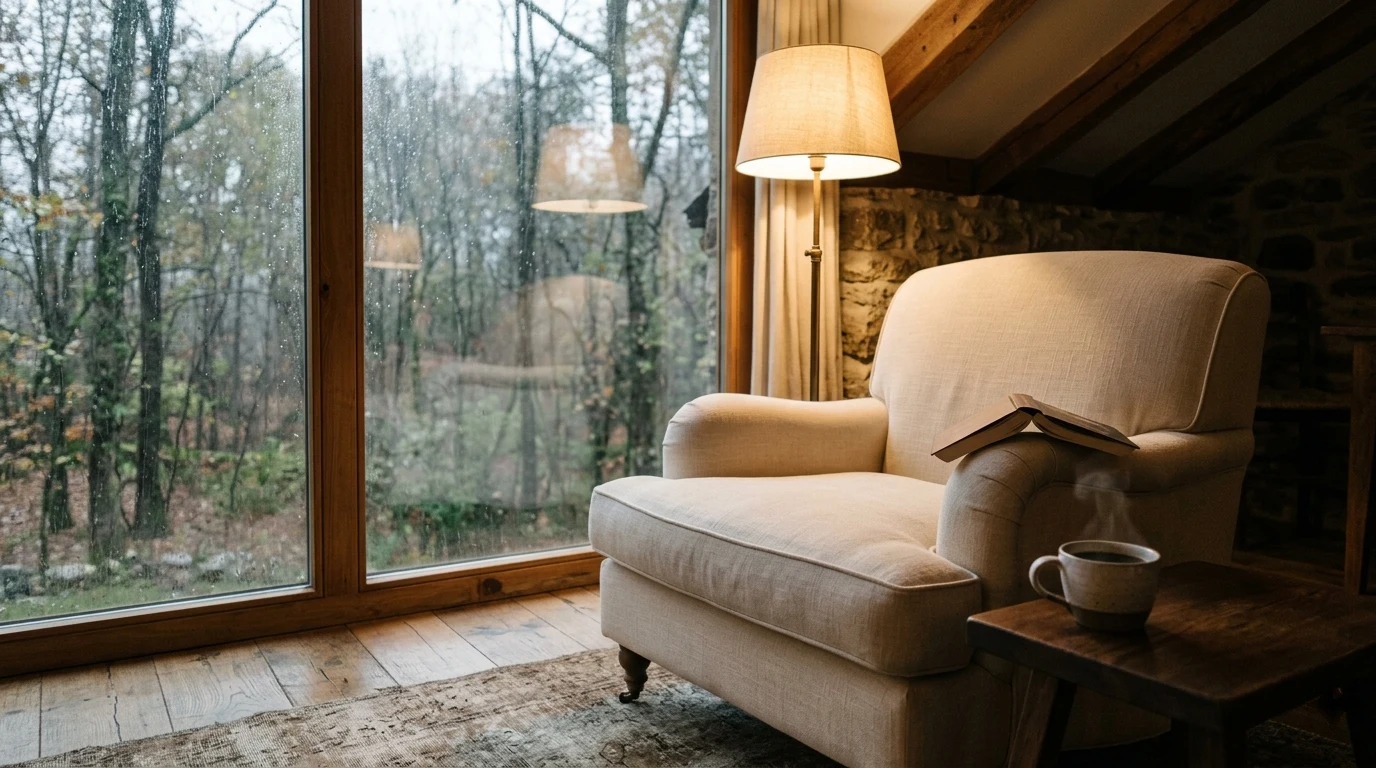
Specialty coffee — single origin, prepared by manual extraction (V60, Chemex, AeroPress) or quality espresso machine — is the gastronomic ritual that best fits the autumn experience of a boutique hotel or luxury villa. Not because it is more elaborate than other options, but because its consumption has a slowness and attention that fit perfectly with the rhythm that autumn invites: the guest who sits by the window with the rain outside, book in hand and carefully prepared coffee, is in the exact moment that hotel's marketing promised when they chose it.
The space where coffee is served matters as much as the coffee itself. A sitting room with library, lit fireplace, reading armchairs and low tables with natural light from large windows produces the context that turns a cup of coffee into an experience. The design of the coffee space — which in a rural boutique hotel can be the main sitting room, the library or a small dedicated room — is part of the value proposition of the autumn experience.
Autumn dinners by the fire: the moment of greatest loyalty-building
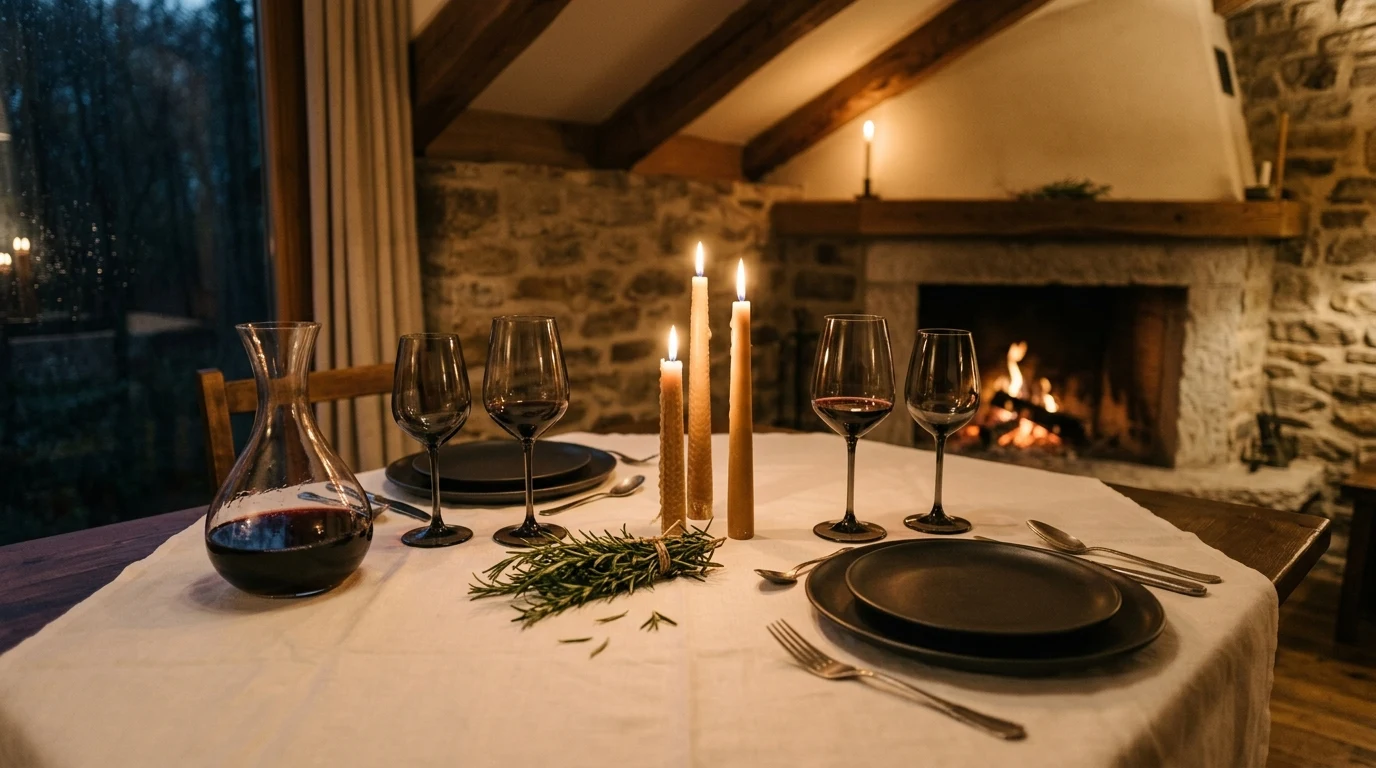
Seasonal ingredients that define autumn cooking in Spain and Portugal: chestnuts (the most versatile autumn ingredient of the Iberian peninsula, present in soups, side dishes, desserts and liqueurs), mushrooms and fungi (porcini, saffron milk caps, black trumpets, boletus depending on the region and year), game (partridge, pheasant, venison, wild boar in areas where hunting is part of local gastronomic culture), quinces and pomegranates (autumn fruits that work in both sweet dishes and marinades and sauces for meat), and wines from the most recent harvest (in October and November in Spain and Portugal, many wineries already have available the first wines of the freshly fermented year — the young wine that does not exist in any other season).
The most powerful moment of the autumn dinner in a rural hotel or private villa with a fireplace: when the guest finishes dessert and coffee, the staff have lit the fireplace in the adjacent sitting room and prepared a glass of aguardiente, brandy or Scotch whisky beside the fire. That gesture — not requested, not charged separately, simply prepared as part of the evening's ritual — is what the guest remembers and recounts the following year when they book again.
Interior design for boutique hotels and rural villas in Spain and Portugal includes seasonal guest experience advice as part of the service. If you want to build an autumn experience that builds luxury guest loyalty, the conversation is open.
Véline Interiors · Hospitality Design
Want to build your hotel's autumn experience?
We design the seasonal guest experience, from the garden to dinner by the fire.
Submit your project →