And yet Halloween — the October 31st holiday that celebrates the dark, the mysterious and the liminal — has its own aesthetic that, when worked with design judgment, produces one of the most photogenic and most memorable atmospheres a boutique hotel can offer all year. The difference between mass-consumer Halloween and luxury Halloween is exactly the same as the one between an orange plastic pumpkin and a natural, uncarved white pumpkin resting on moss: the same cultural reference, a completely different aesthetic result.
This article analyses how to integrate Halloween aesthetics into a boutique hotel or luxury private villa with design judgment, the right palette, and elements that the high-net-worth guest perceives as part of the identity of the place rather than generic seasonal decoration.
The luxury Halloween palette: black, burgundy, anthracite and bone white
The first step to integrating Halloween in a luxury context is abandoning the conventional Halloween palette — pumpkin orange, synthetic black, bright purple — and replacing it with a dark palette that keeps the atmosphere of the holiday but with the right register. The colours that work in a boutique hotel Halloween are exactly the ones that work in a dark, sophisticated luxury interior design register: matte black, deep burgundy, warm anthracite, bone white or cream, and the tones of dark wood and aged stone.
That palette is layered over the space's permanent interior design — which, in a boutique hotel or luxury villa, should have a warm neutral base — through the temporary elements: candles, flowers, decorative objects, accent textiles. The contrast between the neutral base of the permanent interior and the dark temporary Halloween elements produces the "something has changed here" effect that the guest perceives on arrival, without the space looking unrecognisable or costumed.
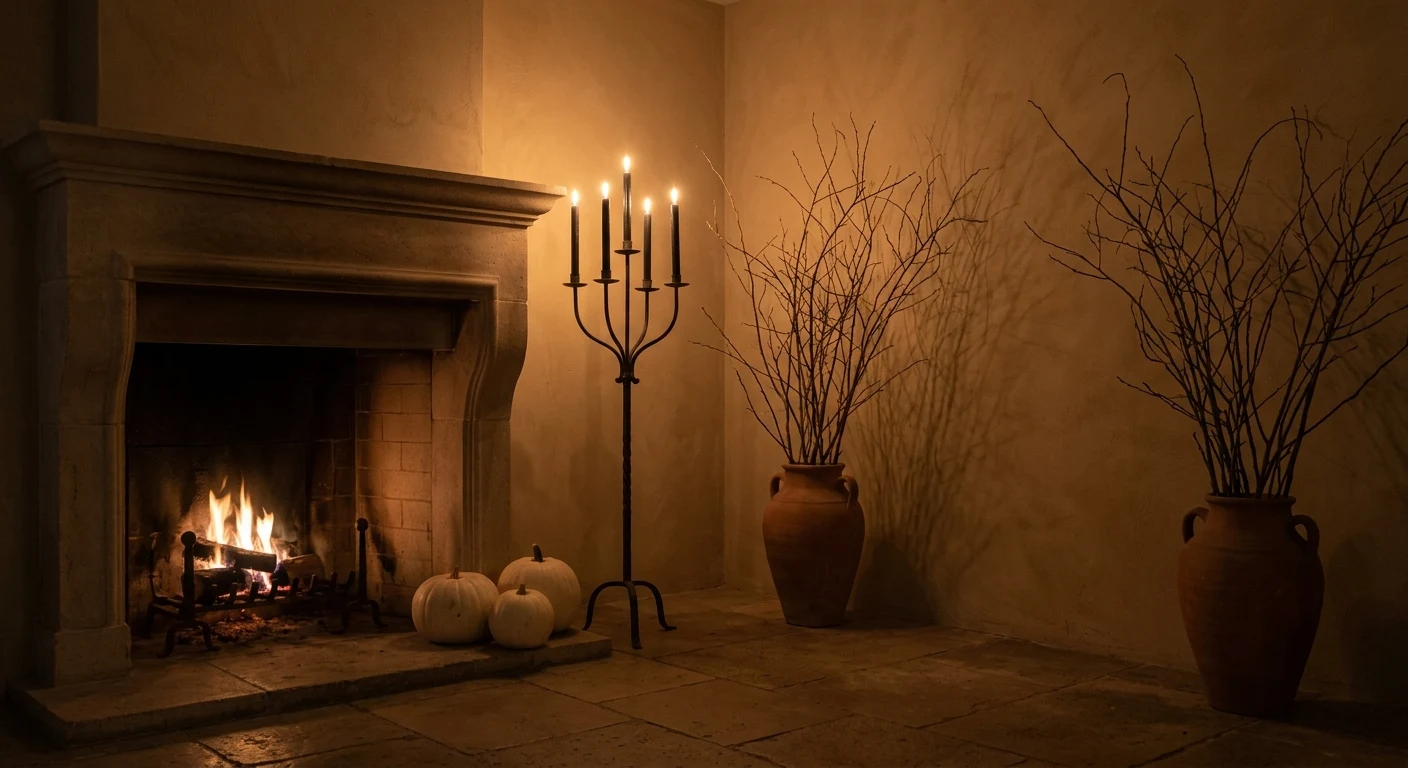
The dark palette elements that work best for luxury Halloween: black beeswax or soy candles (the scent of natural wax rather than paraffin is part of the luxury argument), flowers in black or intense burgundy (aconitum, black cosmos, late-season burgundy dahlias, roses painted in matte black — natural black flowers are scarce; roses spray-painted matte black or midnight blue work well as an accent element), dried weeping willow or red dogwood branches that create dark silhouettes against light walls, and natural pumpkins in white, cream or grey that replace carved orange ones and have a far more discreet and elegant visual presence.
Halloween elements with a luxury register
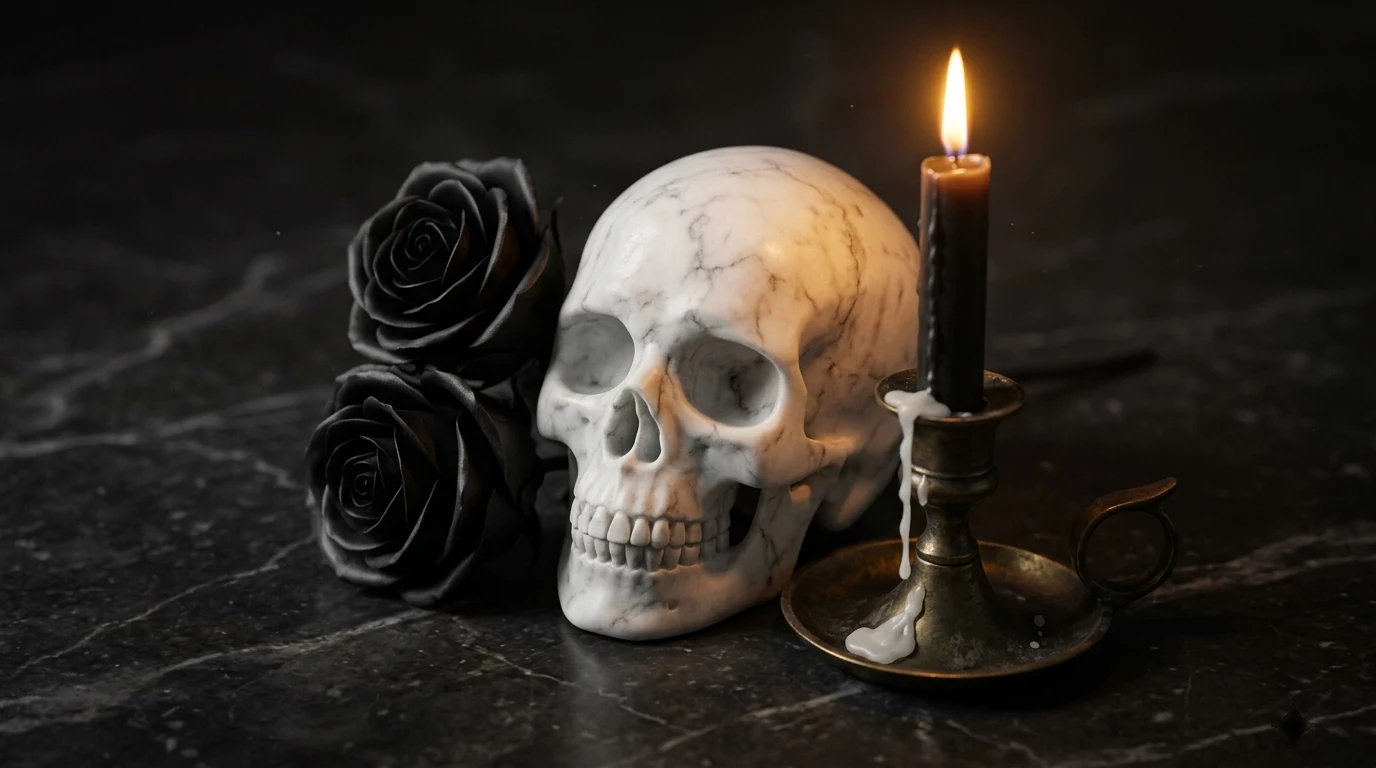
The decorative Halloween elements that keep the luxury register are the ones with a double reading: recognisable as part of the holiday's aesthetic, but also design objects with their own value. A white marble skull on the entrance console is not a Halloween cliché: it is a sculptural piece with visual presence at any time of year that, in October, acquires an additional symbolic charge. A wrought-iron candelabra with multiple arms and black wax candles produces a gothic atmosphere that fits a neoclassical interior as naturally as it would have fit the nineteenth century.
The elements to avoid in a luxury Halloween are exactly the ones that belong to the holiday's mass production: synthetic cotton cobwebs, plastic figures, carved-face foam pumpkins, flickering orange light garlands, coloured fibre-optic elements, and anything with a declaredly "Halloween decorative" function with no design value of its own.
The five Halloween elements with the greatest visual impact and luxury register: first, altar candelabra — wrought iron, aged brass or antique bronze — holding black candles of varying heights, with solidified dripped wax on the arms as part of the composition. Second, natural uncarved pumpkins in white, cream and grey tones, grouped in odd numbers on the floor by the fireplace or at the entrance. Third, dried branches several metres long in a tall black ceramic or dark terracotta vase, for the silhouette effect they produce against the light-coloured interior walls. Fourth, floral compositions in black and burgundy — aconitum, dark dahlia, black gypsophila — in dark glass vases or black-glazed ceramic. Fifth, marble, plaster or ceramic skulls as sculptural accent pieces on mantelpieces, entrance consoles or coffee tables.
The Halloween dinner: the season's most photographed experience
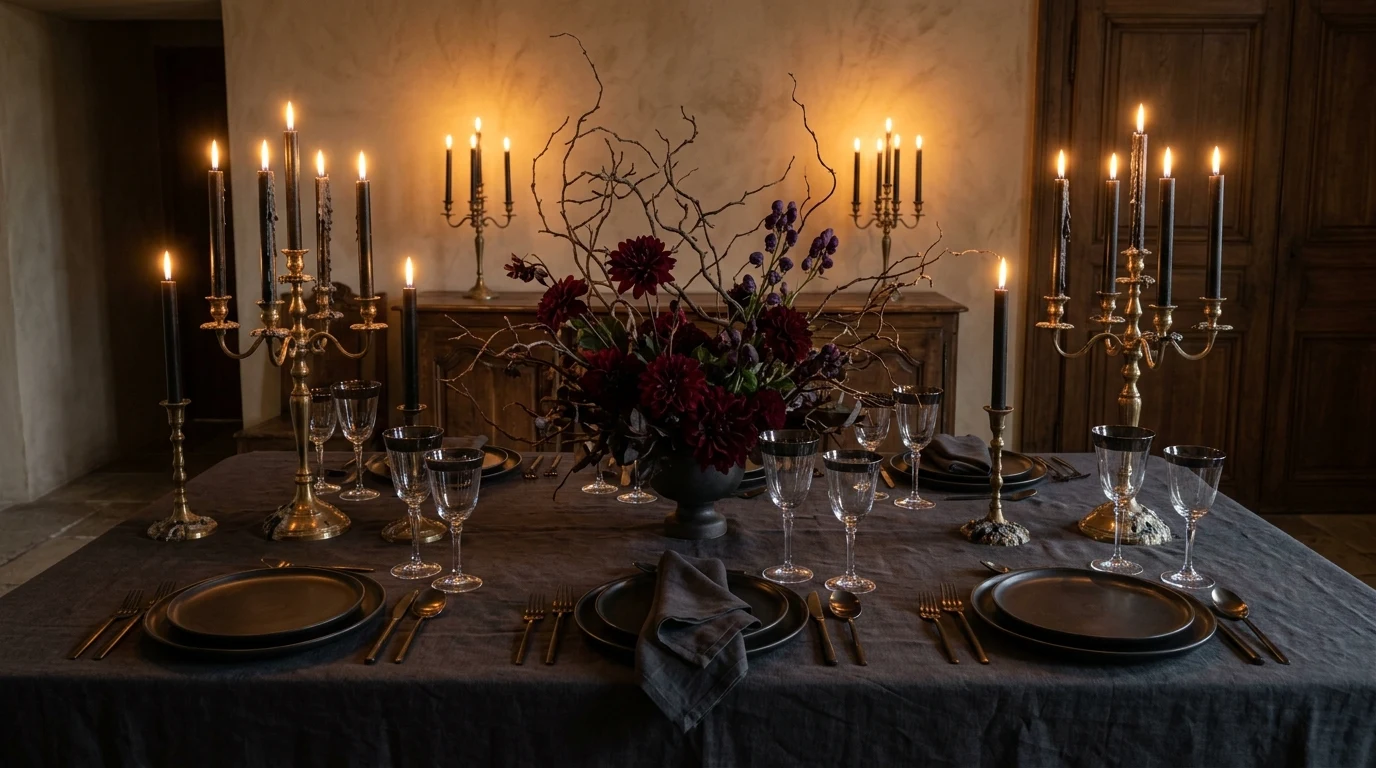
The Halloween dinner at a boutique hotel or luxury villa is one of the experiences with the greatest potential for guest-generated content all year. A well-composed table for the night of October 31st — with dark tableware, tall candelabra, black and burgundy flowers and dark botanical elements — produces images the guest shares immediately and that have a far greater organic reach than any conventional interior design photograph.
The table elements that produce the best luxury Halloween image: a dark linen tablecloth — black, anthracite or deep burgundy — over the table's white linen, which sets the register of the occasion without giving up elegance; matte black or dark artisan stoneware tableware, which in the context of a private dinner produces a visual contrast with the food far more photogenic than conventional white tableware; dark brass or matte black steel cutlery, which in the context of the dinner adds a note of antiquity that fits the holiday's aesthetic; blown-glass glasses in black or black with a gilded rim, which on a Halloween table produce a sorcerer's-goblet effect without losing formal elegance; and a central floral composition of dried branches, black and burgundy flowers, and candles of varying heights that visually unifies the table.
For the menu, the boutique hotels that have had the greatest success with the Halloween experience have opted for a seasonal cuisine that incorporates the ingredients of the Iberian autumn — chestnuts, mushrooms, game, quince, red wine — without giving up the establishment's gastronomic level. A five-star boutique hotel in Portugal's Halloween menu might include a chestnut soup with truffle oil, a venison tataki with red wine and quince reduction, and a dark chocolate dessert with raspberry sorbet and activated-charcoal powder — all of them high-end ingredients and techniques that aesthetically match the holiday's dark palette.
Halloween lighting: lowering the intensity and playing with shadows
Lighting is the element that most defines a boutique hotel or private villa's Halloween atmosphere. The principle: reduce the space's overall intensity to the functional minimum and let candles, the fireplace and focused points of light create the shadows that produce the atmosphere of mystery. A room well lit at 500 lux with central downlights is a room with no mystery. The same room at 50 lux of ambient light, with the fireplace lit, four candelabra holding black candles and a table lamp in the reading corner, produces an atmosphere the guest perceives as cinematic.
Candles are the Halloween lighting element with the greatest impact. In a boutique hotel, lighting the maximum number of candles in the common spaces — lobby, restaurant, lounge — in the days leading up to and on Halloween itself reduces electricity consumption (candles replace part of the artificial lighting) and produces an atmospheric effect no LED lighting can fully replicate: the movement of the flame, the dancing shadows and the scent of natural wax are sensory cues that trigger an emotional response of mystery and intimacy with a long history in collective cultural memory.
The interior design for boutique hotels and villas we provide in Spain and Portugal includes advice on seasonal decoration and guest experiences as part of the service. If you want to create a Halloween experience with design judgment that the guest remembers and shares, the conversation is open.
Véline Interiors · Hospitality Design
Want to create a Halloween experience with design judgment?
We advise on seasonal decoration and guest experiences that the guest remembers and shares.
Present your project →