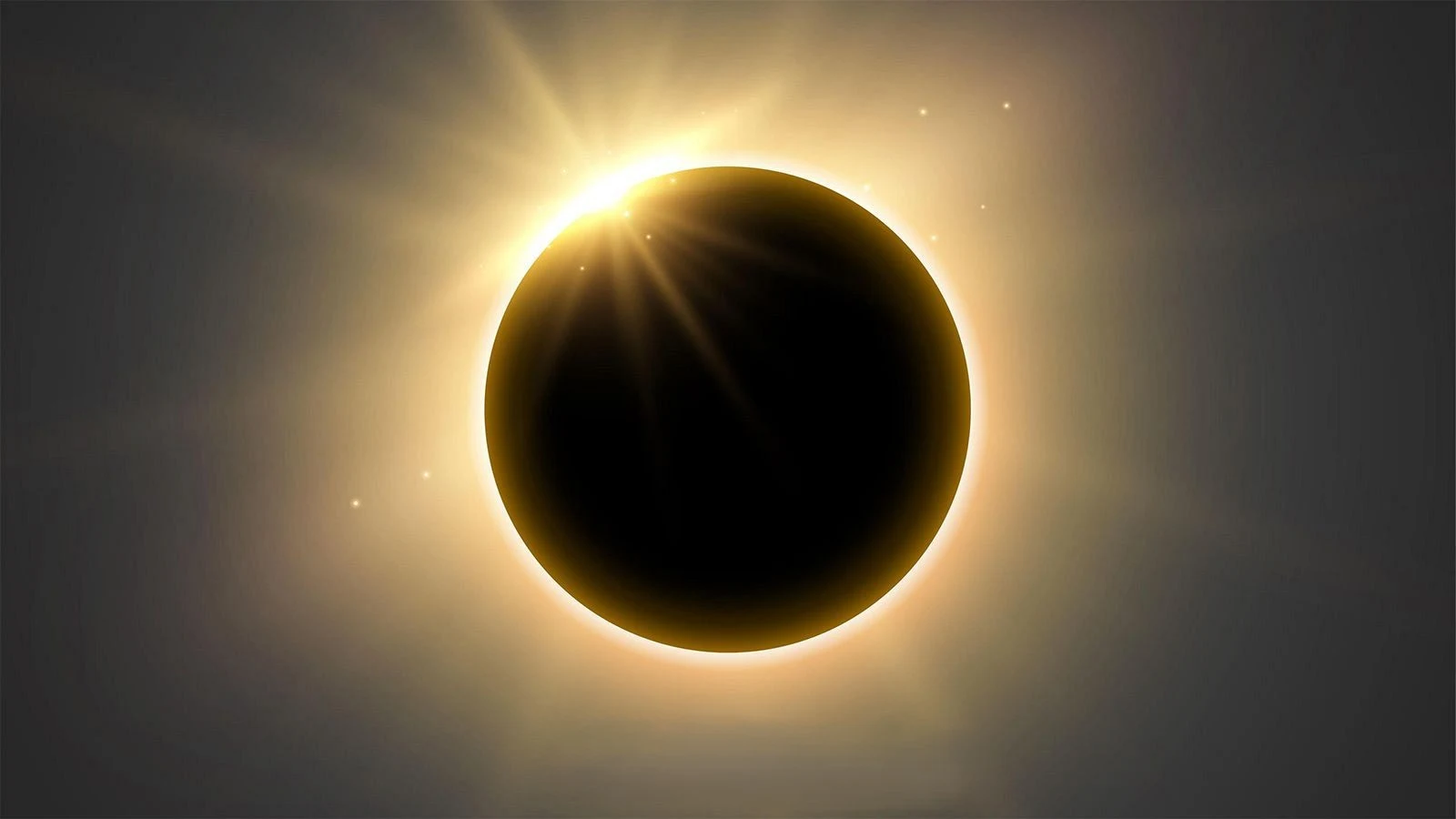
For ninety seconds, the sun vanished over a path stretching from A Coruña to the Balearic Islands. Over 446,000 additional visitors travelled to witness it. Hotel bookings for August rose 17.8% year-on-year. Soria registered a 522% surge in international searches on Booking. Valladolid reached 93% occupancy.
The figures are extraordinary. But yesterday made one thing unmistakably clear: there are hotels that were ready for that moment, and hotels that were simply full.
A two-minute event that had been on some budgets for years
Astrotourism is not a 2026 trend. According to data cited by National Geographic, 62% of a sample of 27,000 travellers plan to organise trips focused specifically on sky observation in the coming months. Rural destinations within the path of totality saw an 830% increase in accommodation searches. That figure does not appear overnight: it is the result of years of latent demand looking for somewhere worthy of receiving it.
The hotels that capitalised on yesterday's eclipse did not begin preparing in July. Barceló Hotel Group designed its "To Look Up" programme months in advance, activating at least five properties along the eclipse's geographic arc with a combination of astronomy, gastronomy and site-specific narrative. Gran Hotel Mas d'en Bruno, in the Priorat, built a four-day programme around guided astronomical observation, wellness and biodynamic wine tourism within the path of totality. Molino de Alcuneza, in Sigüenza, brought in a certified Starlight guide and a curated welcome pack for every guest.
The difference between those hotels and the ones that simply raised their room rate is not budget. It is anticipating experience as a design criterion.
What separates a hotel that "has the eclipse" from one that merely endures it
Reducing the eclipse to one high-occupancy night is the most expensive mistake a hotelier can make — not morally, but operationally. The guest who drove eight hours to witness ninety seconds of totality will not forgive a terrace where the columns block the western horizon. Will not forgive a pool facing east. Will not forgive fixed exterior lighting that floods the precise moment of darkness.
A sunset eclipse — peaking between 20:27 and 20:35 depending on province — demands unobstructed westward visibility at low elevation. That is a design variable, not a scheduling decision.
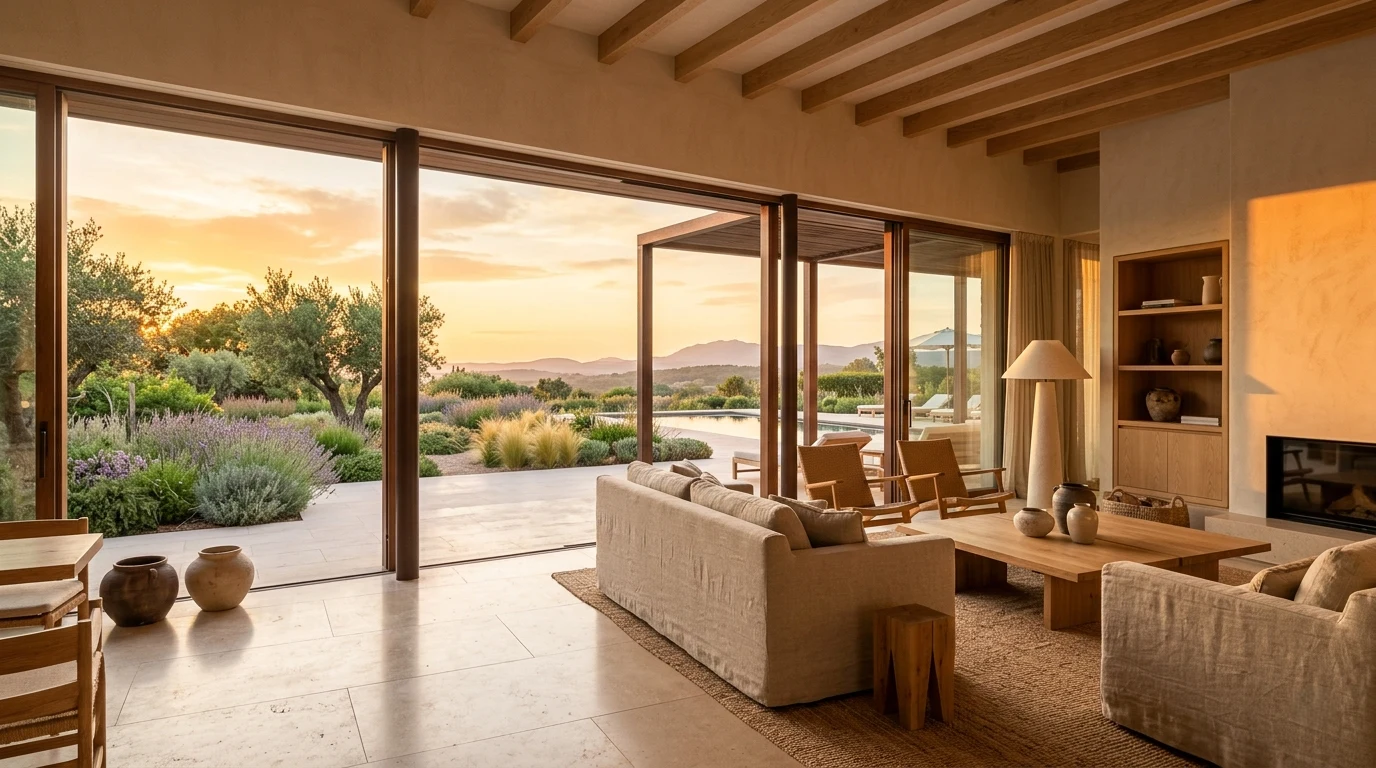
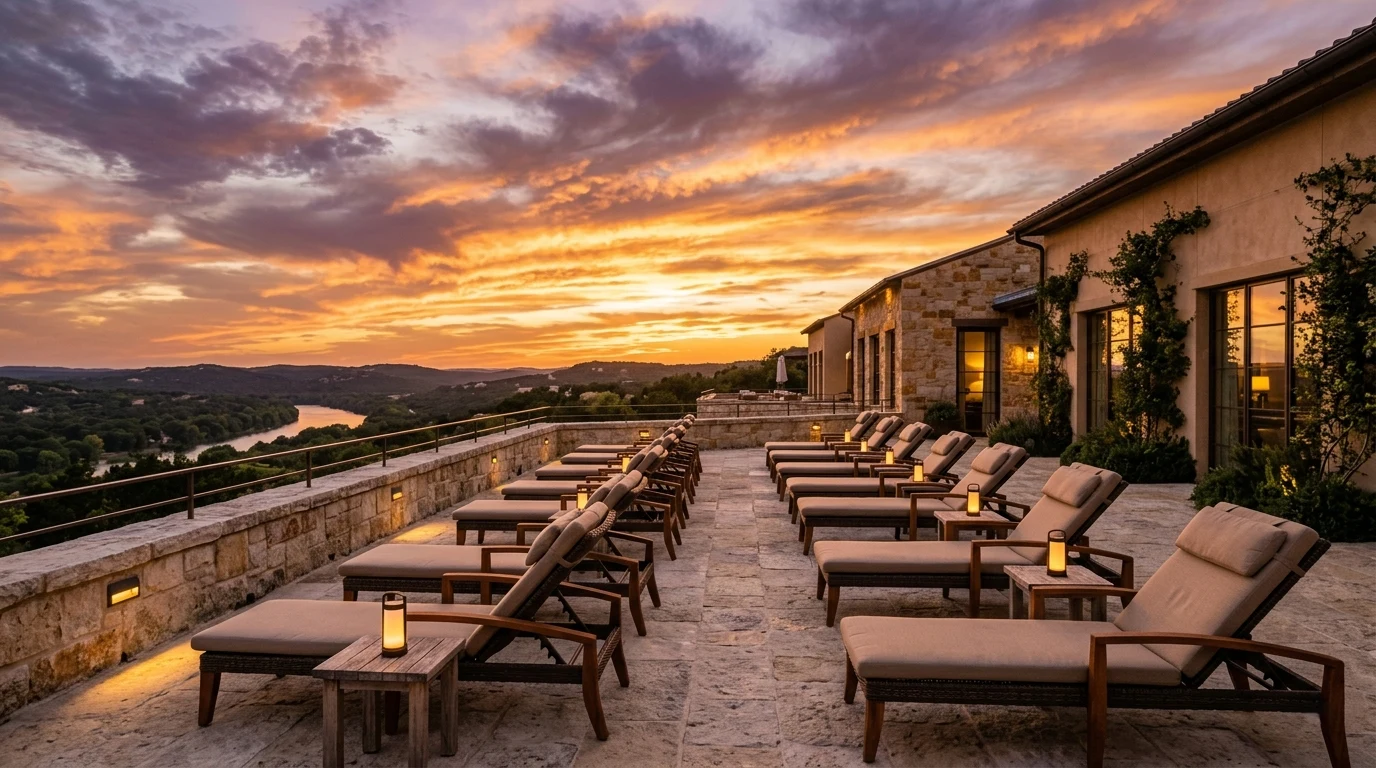
The hotels that worked had terraces with open horizons. Gardens conceived for observation, not just daytime photography. Dimmable or zone-controlled exterior lighting. Common areas that could be cleared and converted into collective viewing points. Those decisions are not made the week of the event: they exist in the project drawings, or they do not exist at all.
The emerging luxury astrotourism segment — cabins with retractable skylights, suites with built-in telescopes, infinity pools aligned to the night sky — is not a niche category for enthusiasts. It is design's response to a measurable demand that in Spain has at least three years of runway: the 2026 eclipse is the first of three. On 2 August 2027, there will be another total eclipse, visible from southern Andalusia. On 26 January 2028, an annular eclipse. The hotel director who treated yesterday as a single date is already behind.
The design decisions that determine whether a hotel can contain a moment like this
Five design variables determined yesterday which hotels capitalised on the eclipse and which wasted it.
Orientation of external spaces. A terrace or shared garden facing west — towards the sunset point where totality occurred — is the most direct asset. It does not cost more than a poorly oriented one: it requires that the decision existed at project stage.
Controllable exterior lighting. Totality turns the surrounding landscape into abrupt darkness. Fixed artificial lighting — garden lamps, perimeter lighting, permanent LED features — destroys that instant. Hotels with zone-controlled or dimmable systems could switch off and offer darkness as part of the experience. This is exactly the same logic that governs the design of a high-end hotel wellness area: light is not decoration, it is a tool.
Common areas capable of reconversion. A lobby that empties and opens outward, a restaurant with full access to the garden, a pool that becomes a viewing point after dark. Functional rigidity — every space locked to a single use — is the greatest enemy of the guest experience in singular events.
Management of light pollution. Nearly invisible in conventional hotel interior design briefs. In astrotourism, it is fundamental. Hotel Mas de Cebrián, in the Sierra de Gúdar, holds Starlight certification precisely because its lighting was designed from the outset to minimise sky glow. That criterion does not compromise daytime comfort — it multiplies the value of the nocturnal experience.
The outdoor space as product, not as access. In most boutique hotels, the garden or terrace is the route to something else — the pool, the restaurant, the room. In an astronomical observation event, the outdoor space is the product. That shift in hierarchy requires designing the exterior with the same rigour as any interior zone: non-reflective paving, furniture stable enough for prolonged observation, no elements interrupting the sight line.
How much does it cost to design a hotel for an event like this?
No more than any well-executed hotel project already costs.
The trap in the question is framing design oriented to singular events as an add-on. It is not. A well-oriented terrace does not cost more than a poorly oriented one: the decision is made at design stage, not at budget stage. Dimmable exterior lighting carries a marginal cost over standard installation when planned from the outset. An outdoor space that works at night — appropriate furniture, correct paving, no elements that fragment the sight line — results from taking the exterior brief as seriously as the interior.
What does cost is not having thought about it: last-minute adaptations degrade the guest experience irreversibly. And the guest who flew from Germany or Japan to see the Spanish eclipse will not rebook the same hotel for 2027.
From a single eclipse to an astrotourism destination — the Iberian trio 2026-2028
Yesterday's eclipse is not an isolated event. Spain will host two more in consecutive years: 2 August 2027 (total, visible from southern Andalusia) and 26 January 2028 (annular). There will be no further total solar eclipse visible from Spain until 2053.
For a hotel within the path of these three events, that represents a premium-demand investment window spanning at least three seasons. Barceló has already calculated this: "To Look Up" is not a one-off campaign — it is a bet on retaining high-spending guests across three consecutive years.
Luxury astrotourism follows its own logic that interior design studios working in hospitality must understand: the sky is the product, the hotel is the container. When the container is well designed — habitable terraces, correct orientation, controllable lighting, reconvertible spaces — the sky multiplies its value. When it is not, the sky remains equally spectacular, and the hotel is merely a staging post.
The next eclipse visible from Spain is in 353 days.
What the hotels that worked actually learned
Three patterns common to the establishments that converted the eclipse into high-value product.
First, programming integrated into the space, not imposed upon it. Hotels that simply placed certified glasses at reception treated the eclipse as an amenity. Those that worked built the experience around what the space already permitted: the Bless Ibiza Cala Nova rooftop as the stage for breathwork and a tribute dinner, the Molino de Alcuneza garden as the natural extension of a three-day programme.
Second, the event as a rate argument, not an occupancy argument. Hotels that used the eclipse as justification to fill rooms at any price — some multiplied their standard rate fivefold without adding a single element of experience — generated immediate reputational damage. Those that built product around the event justified the rate and earned the guest's return.
Third, anticipation as competitive advantage. Bookings in totality zones were made up to eighteen months in advance. A hotel without an eclipse proposition in January 2025 arrived too late. The next eclipse is August 2027.
Designing for the unrepeatable
A total solar eclipse lasts under two minutes. But the experience a hotel can construct around those two minutes — before, during and after — is the kind of product that defines guest memory for years.
Interior design in hospitality is not only the space where the guest sleeps or takes breakfast. It is the space's capacity to hold moments. Moments can be everyday — an afternoon light that enters a room well, acoustics that allow conversation — or they can be unrepeatable. Yesterday was unrepeatable. But the next one is already on the calendar.
Véline Interiors · Hospitality Design
Is your hotel within the path of the 2027-2028 Iberian eclipses?
If your hotel project falls within the path of the 2027-2028 Iberian eclipses and you want to assess how design can help capitalise on that opportunity, the conversation is open.
Present your project →