
A guest settles on the price they expect to pay before they reach the desk. They don't read the rate: they infer it from the floor underfoot, the ceiling height, the order or the noise. Hotel lobby design works in those first few seconds, when the guest has spoken to no one and has already decided whether the place is worth what it charges. The lobby is not welcome decoration. It is the hotel's first sales argument, and almost always the least exploited.
Most writing on the subject stops at first impressions and brand identity. True, but short. The first impression has a measurable consequence: it shapes the rate a guest accepts without resistance, the review they write and the odds they return. Here the lobby is treated the way a general manager treats it —a square metre that must perform— without giving up the design judgement that makes it perform.
What a guest decides before reaching reception
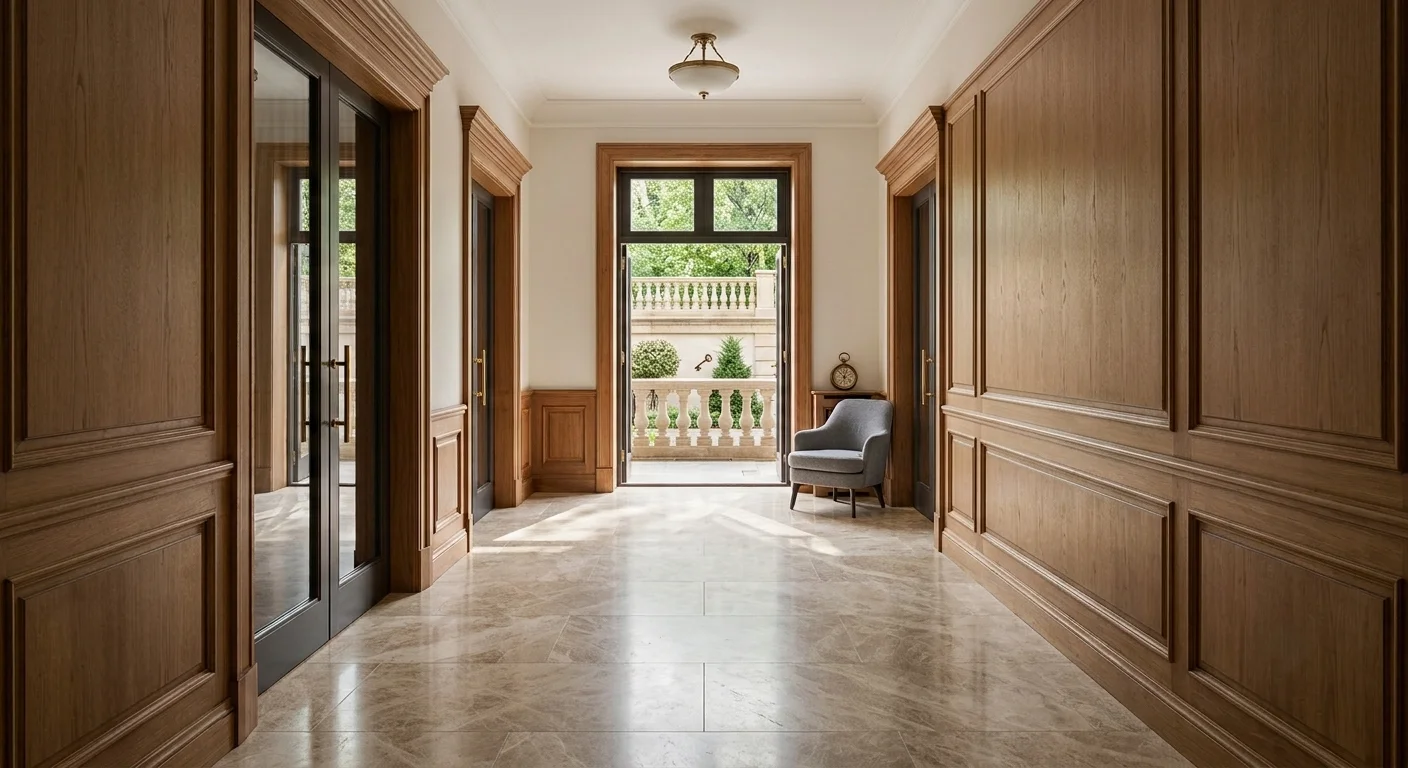
The decision doesn't begin at check-in. It begins at the door. The moment it opens, the eye resolves three things before any other: the sightline, the quality of the light and the level of order. Those three readings happen without words and fix a price expectation that the rest of the stay will only confirm or correct.
A lobby that opens the view towards the far end —a courtyard, a window, a piece of water— relaxes the guest and signals ease. A lobby crowded with furniture and signage does the opposite: it tightens, and tension reads as the suspicion of overpaying. The first decision in a project is not the desk: it is the sightline from the entrance. Everything else is arranged after that line.
Contemporary neoclassicism works precisely there. It doesn't add objects to impress; it orders the space by proportion and axis. The result is a lobby understood at a glance, and what is understood effortlessly is perceived as expensive. The reasoning behind this approach is set out in contemporary neoclassicism and why it works in hospitality.
The lobby as the first pricing decision
ADR (average daily rate) is the mean daily rate a hotel earns per occupied room. It is the figure that sums up whether a hotel sells dear or cheap. And the lobby shapes it before the guest sees a single room.
There is evidence on the link between design and behaviour. The Terrapin Bright Green study with Interface observed that in lobbies with natural elements 36% of guests lingered in the space, against 25% in conventional lobbies. More dwell time in the lobby means more spend at the bar and restaurant, and a perception of value that holds the rate. The same work, drawing on a Hotels.com pricing analysis, put the premium for rooms with views of nature or water at 12% to 18% over those without.
The reading for an owner is direct: lobby design is not aesthetic expenditure, it is a pricing lever. A space that retains the guest and signals permanence lowers resistance to the rate and reduces dependence on OTAs, because perceived value no longer rests on the discount. The lobby is where the hotel decides, without saying so, how much it can charge.
Less desk, more judgement
The trend in the upper segment is clear: reception is shrinking. Check-in is increasingly handled from a phone or a discreet station, and the receptionist steps out from behind a counter to act as host. The imposing desk —an inheritance from the transit hotel— makes little sense in a hotel that wants the guest to stay.
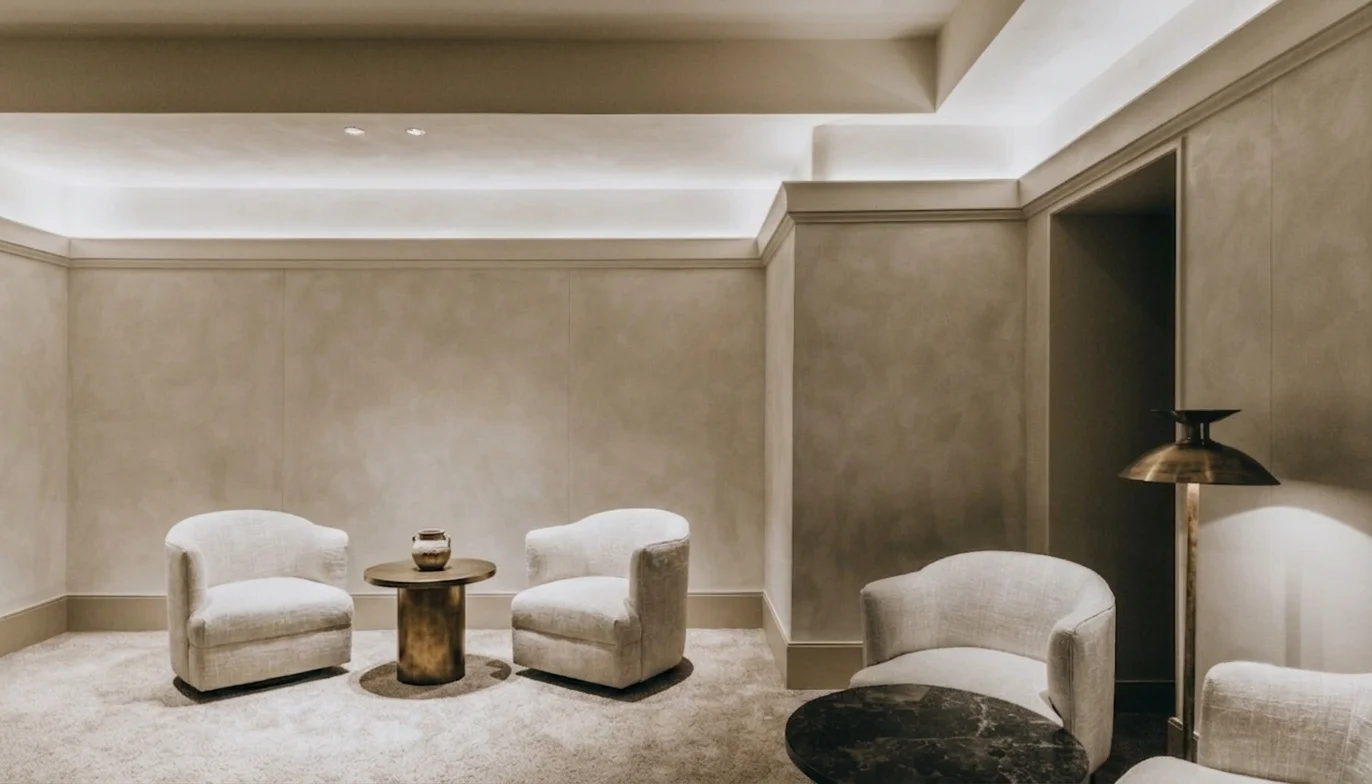
This changes the composition of the space. When the desk stops being the dominant object, the lobby is organised as a room, not a barrier. Distinct seating zones, a clear axis between entrance and far end, and a real separation between the flow of arrivals with luggage and those seated to wait. A lobby that mixes both flows reads as chaotic, however costly the materials.
Neoclassical judgement brings an advantage here: it knows how to organise a room without an object to dominate it. Symmetry, a hierarchy of axes and proportion do the work the desk once did. The space is read, walked and understood, and that clarity is what a high-rate guest expects to find. The same principle governs the studio's hotel interior design projects.
The materials that hold the rate
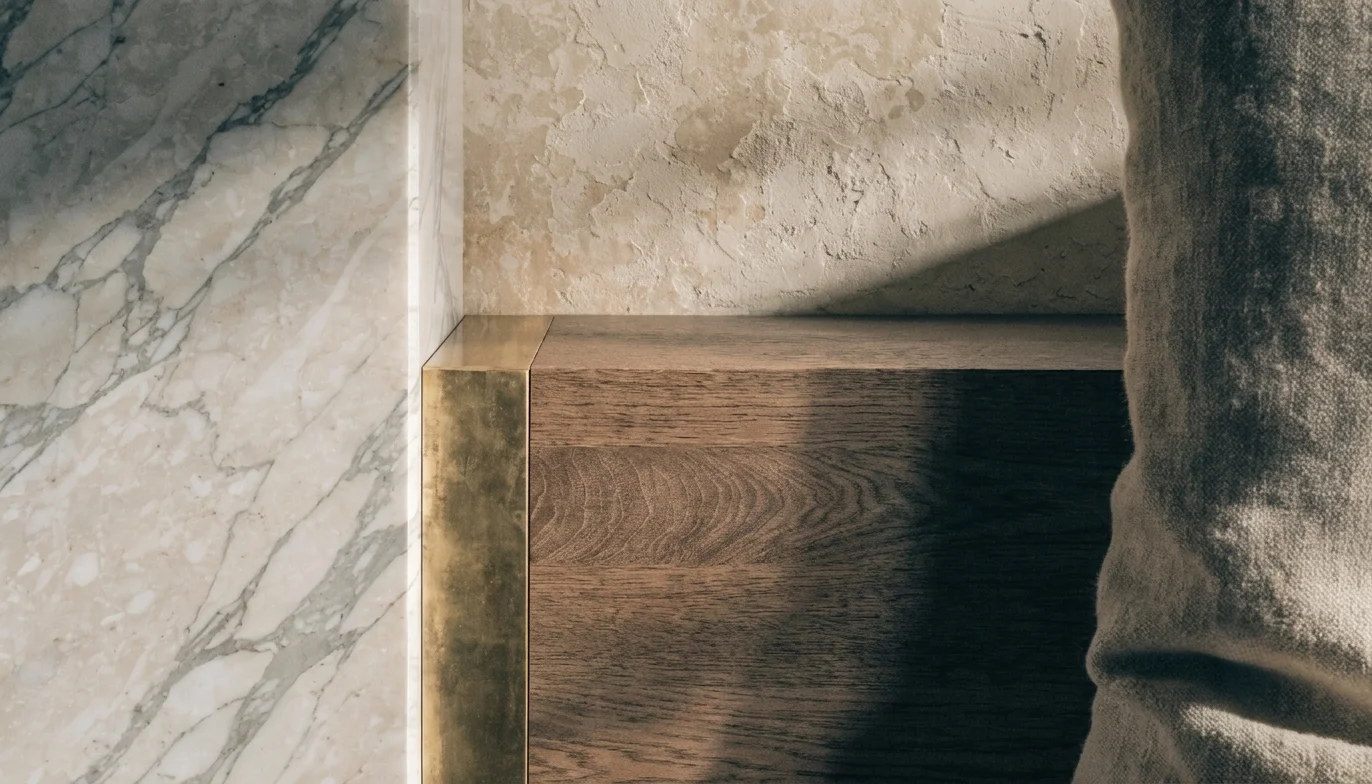
An expensive lobby is not expensive for piling up showy finishes, but for choosing few noble materials and using them well. Dark oak, stone —Estremoz marble among the finest on the peninsula—, aged brass, lime plaster and heavy linen share one quality: they age in one's favour. A material that improves with the years signals permanence, and permanence reads as value.
The opposite is also measurable. The finish designed for the photograph —the neon, the trend cladding, the statement piece— dates the space in two seasons and forces an early refit. What is viral ages fast; proportion and noble material do not. A lobby designed to last ten years costs less than one designed to please for six months.
FF&E —furniture, lighting and equipment— defines both the cost of the project and the guest's perception. That is where a judgement call saves money: fewer pieces, better specified, with high-Martindale textiles that withstand the intensive use of hospitality. Restraint is not austerity; it is the most profitable way to look expensive. The same material approach appears in material selection in high-end interior design.
How much does it cost to redesign a hotel lobby?
It depends on scope, and two scenarios are worth distinguishing. A soft refurb renews textiles, lighting and furniture without touching the shell of the space; it is the quickest and lightest investment, and often enough to reposition the perception of a correct but dated lobby. A full refurbishment intervenes in floors, ceilings, layout and reception; it costs more and halts operations for longer, but it is the only route when the problem is flow and proportion rather than looks.
The useful question is not how much it costs, but how much it returns. A lobby that raises perceived value by a point holds the rate without discounting and recovers the investment through ADR within a few seasons. The right decision starts with an honest diagnosis: what fails —the sightline, the flow, the light, the material— before deciding how much to spend. Refurbishing without diagnosis is where money is lost.
Proportion over spectacle
The lobby that sells is not the loudest. It is the one that makes the rate feel inevitable. It gets the guest, before seeing the room, to have already accepted the price, because the space has told them —without a word— that this place is worth what it asks. That is achieved not with a grand gesture but with a clean sightline, well-resolved light and three materials that age in one's favour.
Hotel lobby design is, at heart, a financial decision in the shape of a room. Treating it as decoration leaves money on the table. Treating it as the hotel's first sales argument is where charging for it begins. The same logic orders the hotel's wellness spaces, where wellness design turns calm into rate.
Véline Interiors · Hospitality Design
If this judgement fits your project, the conversation is open.
We design hotel lobbies that justify the rate before the guest reaches the desk.
Let's talk about your hotel lobby →