Design repositioning is the fastest and most efficient route for a three-star hotel to charge four-star or upper four-star rates without changing its official classification, without structural building work and without expanding capacity. It is also the investment decision with the best return in Portugal's hotel market in 2026: the Upscale segment accounts for 51% of all chain hotels in Portugal, and independent hotels that manage to position themselves in that segment through design capture a demand that generic category hotels cannot retain.
What design repositioning is — and what it is not
Design repositioning is the intentional transformation of a hotel's perceived category through selective interventions in the physical environment — without altering the building structure, without expanding surfaces and without changing the official star rating. Its objective is to produce an experience that the guest perceives as being of a higher category than the star rating indicates, which translates directly into willingness to pay a higher rate and improvement in review platform scores.
What design repositioning is not: a cosmetic surface renovation (replacing curtains and bedspreads without touching the structural materials), a technical equipment update without intervention in the visual environment (replacing air conditioning without touching the rest of the room), or a brand marketing investment that finds no correspondence in the physical product. The guest who arrives at a hotel after seeing attractive photographs and finds an environment that does not match what they saw has a disappointment reaction that translates directly into a negative review, regardless of service quality.
Design repositioning acts on four simultaneous variables: the first perception on entering the space (lobby, corridor, room), the tactile quality of materials (what the guest touches), the visual coherence of the whole (absence of elements that "clash"), and the specificity of place (elements that anchor the hotel in its territory and distinguish it from any other).
The Portuguese market and the repositioning window
Portugal recorded approximately 32.5 million guests and 82.1 million overnight stays in 2025, confirming sustained attractiveness across both domestic and international markets. That demand growth does not distribute evenly across categories: it concentrates in higher-value segments, where existing supply is insufficient and where the international guest is willing to pay more if the product justifies it.
The repositioning window for three-star hotels in Portugal is real and open right now for a specific reason: international quality demand has grown faster than mid-to-upper intermediate supply. A three-star hotel in Lisbon, Porto, the Alentejo or the Douro that repositions for an upper-four experience captures a market segment with far less direct competition than the three-star segment, and can charge rates 40–80% above current levels.
The four phases of design repositioning
A well-executed design repositioning process has four phases. The first is diagnosis: analysis of the hotel's current state (materials, FF&E, lighting, common areas and rooms), identification of the highest visual-impact negative points, and benchmarking against competitor hotels in the target segment. This phase takes 2–4 weeks and produces a report that prioritises interventions by impact and by cost.
The second phase is the intervention strategy: definition of zones to intervene in by priority order, specification of material and FF&E quality levels, and budget estimate by phase. A well-designed repositioning strategy distinguishes between structural interventions (which define the new category perception and where saving destroys the effect) and finishing interventions (where there is room for optimisation without compromising the result). The most frequent errors arise from inverting that hierarchy — saving on the materials that define perception and investing in the details that amplify it.
The third phase is phased execution: in operating hotels, the renovation is done in room blocks to minimise revenue loss during the works. A 30-room hotel can reposition in three phases of 10 rooms, with each phase immediately producing results in the reviews of guests who occupy the renovated rooms — which validates the investment and finances subsequent phases with the revenue improvement.
The fourth phase is commercial positioning adjustment: updating photographs, revising the description on booking platforms, and calibrating rates to the new quality level. A renovated hotel that maintains old descriptions and rates wastes the investment: the guest who arrives at a three-star rate and finds an upper-four product is satisfied but does not pay more. Communicating the new positioning is an integral part of the repositioning process.
Where investment produces the greatest return
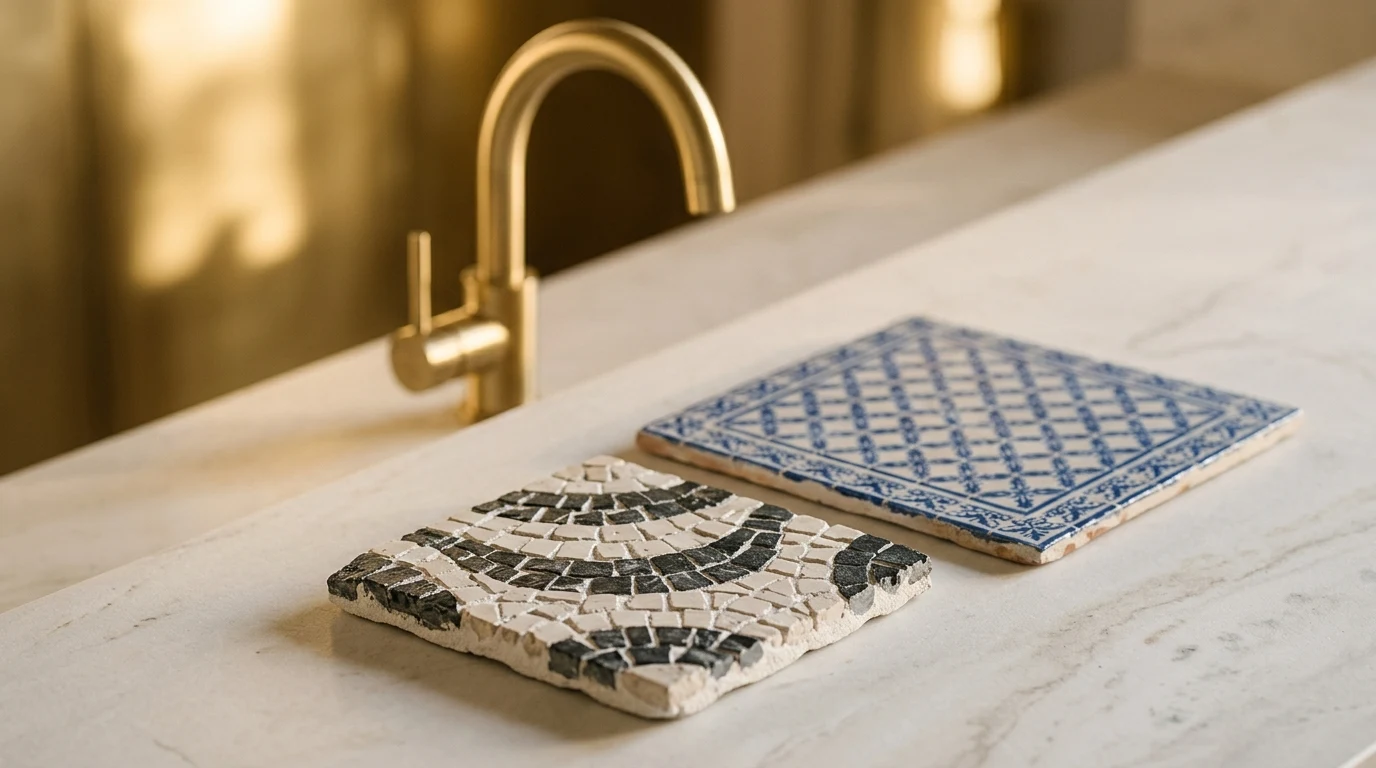
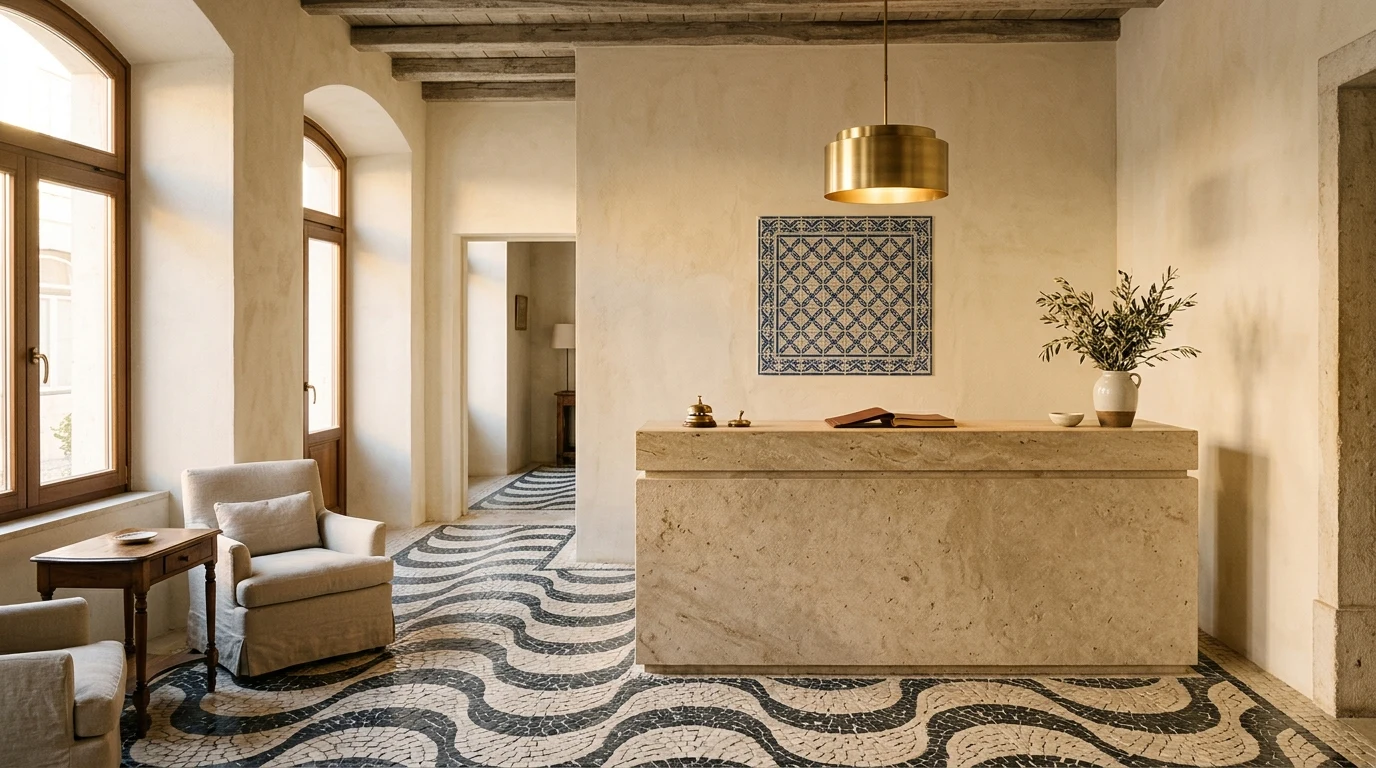
In the lobby, the highest-impact elements are: flooring (calçada portuguesa, limestone, large-format porcelain immediately replace three-star standard ceramics), lighting (replacing generic downlights with designer luminaires or indirect 2,700K lighting transforms the space's register without structural work), and a single focal element (a handmade azulejo panel, a designer furniture piece, a local artwork) that anchors the hotel in its territory. The cost of those three interventions in a 30-room boutique hotel lobby ranges between €15,000 and €40,000 — an investment the guest perceives as the difference between a generic hotel and a hotel with character.
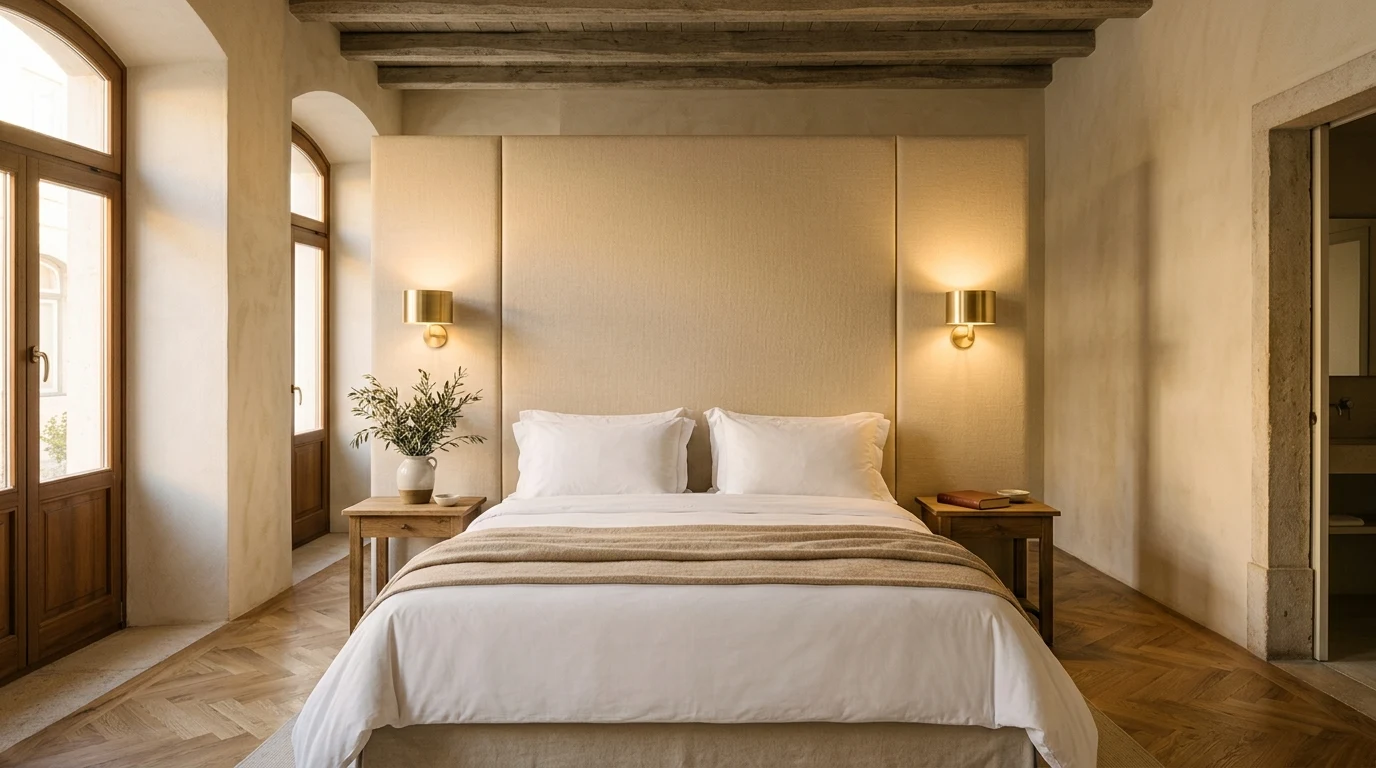
In the room, the highest-impact elements by return order are: the bed and headboard (centred, with floor-to-ceiling or large-dimension headboard, with bed linen at minimum 140 g/m²), lighting (eliminating the central downlight and replacing with layered lighting using symmetric wall lights at the headboard and ambient light at 2,700K), and bathroom claddings (replacing standard ceramics with large-format porcelain, or adding a stone or artisan azulejo element as accent). Those three interventions in a standard room of 20–25 m² represent between €8,000 and €20,000 depending on chosen materials.
The territorial element — the one that distinguishes this hotel from any other in the world — is where investment has the hardest-to-quantify return but the most durable effect on quality perception. A Douro hotel with local schist walls, a Lisbon hotel with handmade Portuguese azulejo, an Alentejo hotel with cork and Évora wool furniture: these elements produce an authenticity the international guest does not find in any chain and is willing to pay at a premium.
The most frequent errors in design repositioning
The most frequent and most costly error: intervening in all zones at the same quality level instead of concentrating investment in the highest-impact zones. A hotel that distributes the budget uniformly across 30 rooms with intermediate-quality materials produces a "renovated but generic" result that does not justify a significant rate increase. The same budget concentrated on 10 rooms with high-quality materials, studied lighting and a distinctive territorial element produces a product the market recognises as a higher category.
The second error: not adjusting the lighting. Lighting is the design factor with the greatest impact on category perception and the most frequently overlooked in repositioning renovations. A room with noble materials but generic 4,000K downlights looks like a renovated three-star room. The same room with symmetric 2,700K wall lights and indirect ceiling lighting looks like an upper four-star room. The cost of the difference is between €800 and €1,500 per room in electrical material — one of the best-return investments in any repositioning renovation.
The third error: renovating rooms without touching common areas. The guest forms their category perception before entering the room. A degraded lobby, a corridor with worn carpet or a breakfast area with office furniture create a negative expectation that no renovated room can completely reverse.
Hotel repositioning in Portugal through interior design is one of Véline Interiors' specialisms. If you have a hotel and want to evaluate repositioning potential and return on investment, the conversation is open.
Véline Interiors · Hospitality Design
Want to evaluate your hotel's repositioning potential?
We evaluate repositioning potential and return on investment through design.
Submit your project →