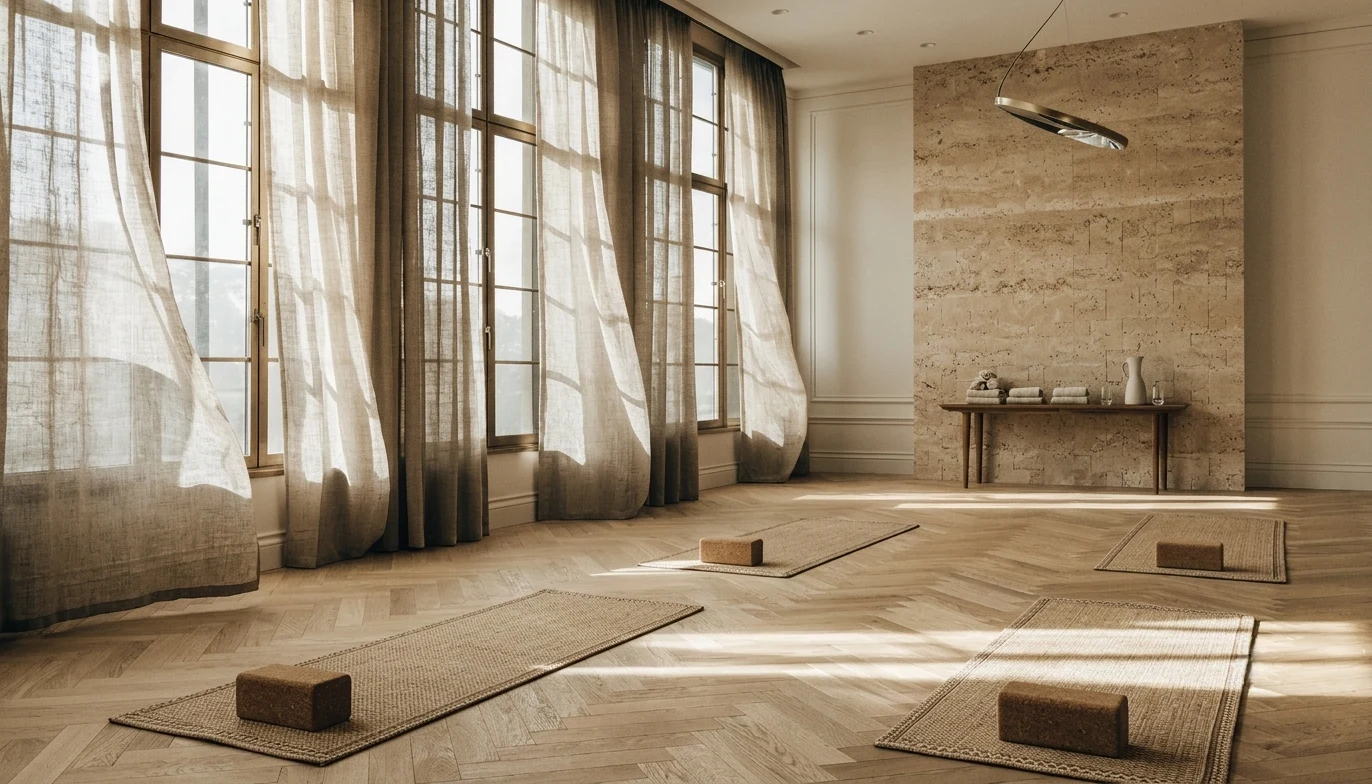
Picture a hotel yoga room and the mental image is usually the same: a five-star resort on the Algarve, or an architect-designed boutique in central Lisbon. That's a framing error, and it costs real opportunity to a far more common type of property: the three or four-star business hotel, urban, with weekday occupancy from executives and more flexible weekends. This is precisely the hotel with the most to gain, because it can turn the same space into an advantage for two different guests with opposite booking logic.
The executive who doesn't want to break their routine
According to a CWT study on business travellers, only 7% maintain no health routine while travelling, and in Spain nearly half — 49% — specifically use the hotel gym or fitness facilities to keep theirs going. That's not a minor figure: it means one in two corporate guests staying at your hotel is already actively looking for a way to sustain physical activity during their trip, and today that search isn't limited to a treadmill.
Add to this the increasingly established bleisure phenomenon in Spain: business tourism generates average spending 32% higher than conventional leisure tourism, and 84% of corporate travellers say they want to incorporate wellness time into their work trips. For the business hotel, this is a very concrete opportunity: a room where an executive can fit in a 30-minute session before a meeting, without leaving the building or sharing a treadmill with a generic gym crowd, is a service that guest values, and one that can tip a direct booking decision away from the competition.
The guest who books specifically for wellness
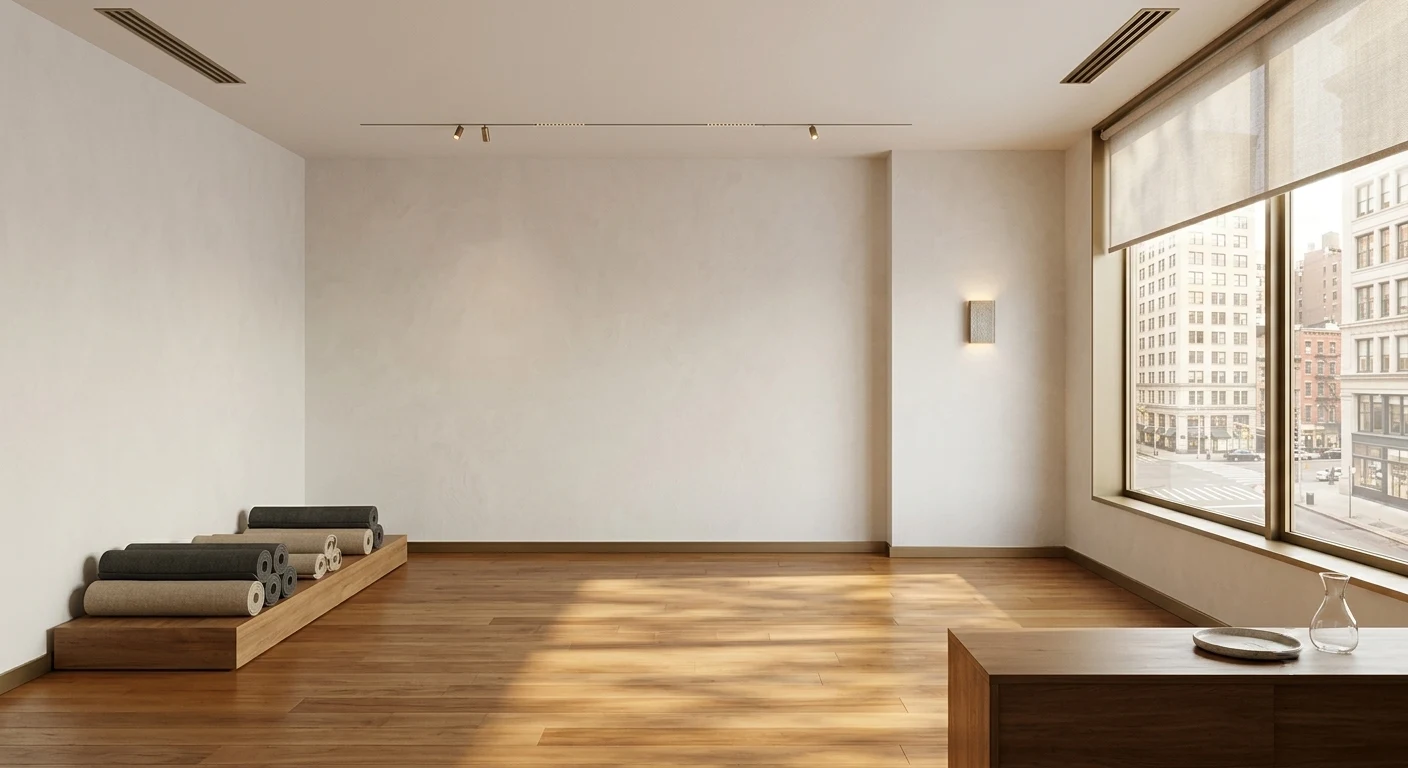
The second profile is different: they aren't travelling for work, they're travelling specifically in search of wellbeing, and they represent a market that's no longer marginal in Spain or Portugal. In Spain, one in five people practises yoga or pilates regularly, and between 2024 and 2025 class bookings across Europe, Spain included, grew by more than 20%, with active users up nearly 27%. In Portugal, the tourism sector itself ranks among the countries leading wellness tourism in 2025, with yoga retreats and rest-focused programmes gaining ground over purely recreational travel.
Accor's 2026 travel trends report, also published via Turismo de Portugal, identifies two shifts that confirm this change: "portable lifestyles," where the traveller — driven by remote work — wants to maintain their physical activity and sleep routine wherever they are, and "social wellness," where practices like yoga stop being a solitary ritual and become a shared experience, as sought-after as a group sauna or a sunrise meditation. Neither of these trends requires a luxury resort. They require a well-designed space.
Why the "ordinary" hotel has more to gain, not less
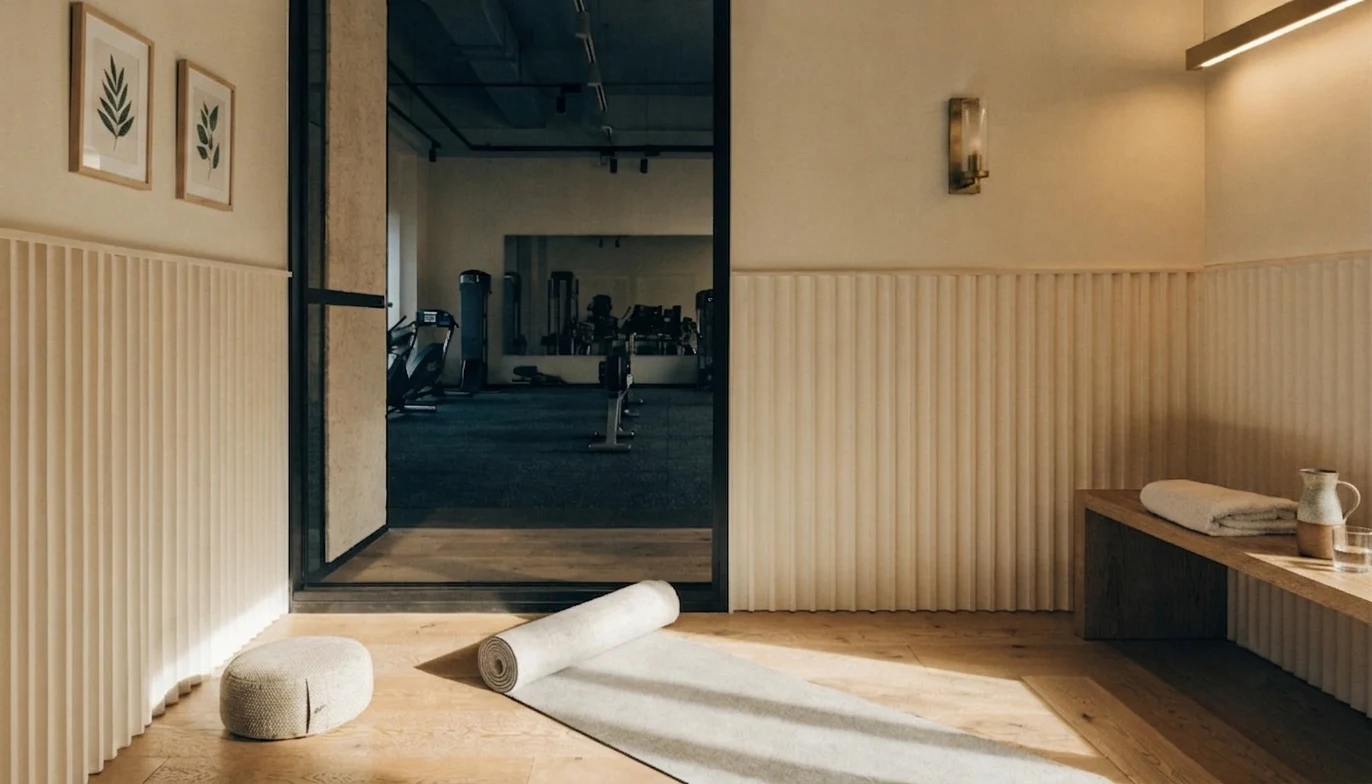
The assumption that a yoga room belongs to upscale hotels inverts the real market logic. At a five-star resort, wellness is already taken for granted; it's part of the price and the guest's expectation, so it differentiates little. At a three or four-star urban or business hotel, the same room is a positive surprise that sets the property apart from competitors that compete almost exclusively on price and location.
The occupancy pattern of this type of hotel also fits the dual use better: on weekdays, the room serves the executive looking to maintain their routine in short, focused sessions; on weekends, the bleisure guest or the one booking specifically for the wellness component, with longer sessions or even a one-off class with an instructor. It's the same square footage working for two demand segments that, in a conventional hotel, usually don't overlap.
Concrete advantages worth capturing
- Retention of the recurring corporate traveller: someone who regularly visits the same city for work chooses, among similar options, the hotel that lets them maintain their routine without friction.
- Weekend supplementary revenue: one-off classes with an external instructor, billed separately from accommodation, using low-occupancy weekday hours.
- A selling point in direct booking: a guest filtering by "hotel with yoga space" or "wellness nearby" decides before comparing price, something no last-minute offer can match.
- Differentiated content for social media and press: a well-resolved space, with genuine technical criteria, is original photographic material that reduces dependence on paid campaigns. We develop this approach further on our wellness design page.
What stops any of this from materialising
All of the above depends on the room functioning as its own space, not the leftover of another programme. The mistakes repeat: hard technical flooring meant for cardio machines instead of a floor that cushions without being soft; lack of acoustics in hotel yoga rooms and wellness spaces from the adjacent gym and nearby rooms; poorly calculated proportions, making a small room feel empty with two people or a larger one feel insufficient with six; and generic gym lighting instead of dimmable wellness space lighting that supports an energising morning session and a calmer evening one. A recent example outside our own market — the yoga studio at Hotel Newt in Somerset, resolved as an architectural piece independent from the gym — confirms the sector already treats these spaces as their own programme, not a leftover corner.
A decision that doesn't depend on hotel category
A yoga room shouldn't be mentally reserved for the five-star resort. A mid-range urban boutique hotel, well positioned for a mixed business-and-leisure guest, has as much or more to gain from this space as a property where wellness already comes built into the room rate. The same applies to a high-end villa rental looking to stand out in an increasingly competitive holiday rental market. What decides whether that room generates returns or sits empty isn't the hotel's category: it's the criteria it was designed with.
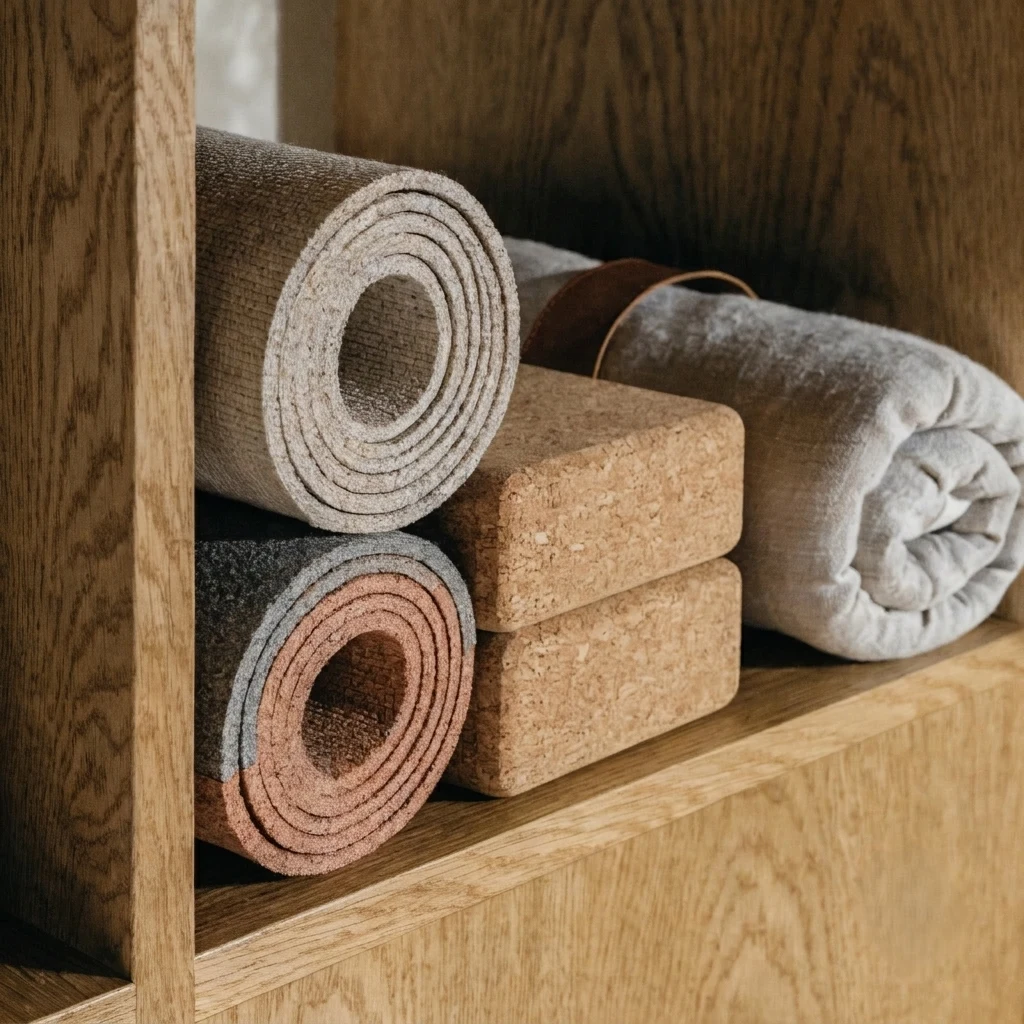
What separates a yoga room that gets booked from one that gets ignored? Rarely the hotel's category. Almost always the criteria it was designed with.
Véline Interiors · Wellness Design
Do you have a wellness space in your project?
If this approach fits your project, the conversation is open. Véline Interiors works with boutique hotels, high-end villas and developers who want to turn the same square footage into a genuine booking argument.
Submit your project →