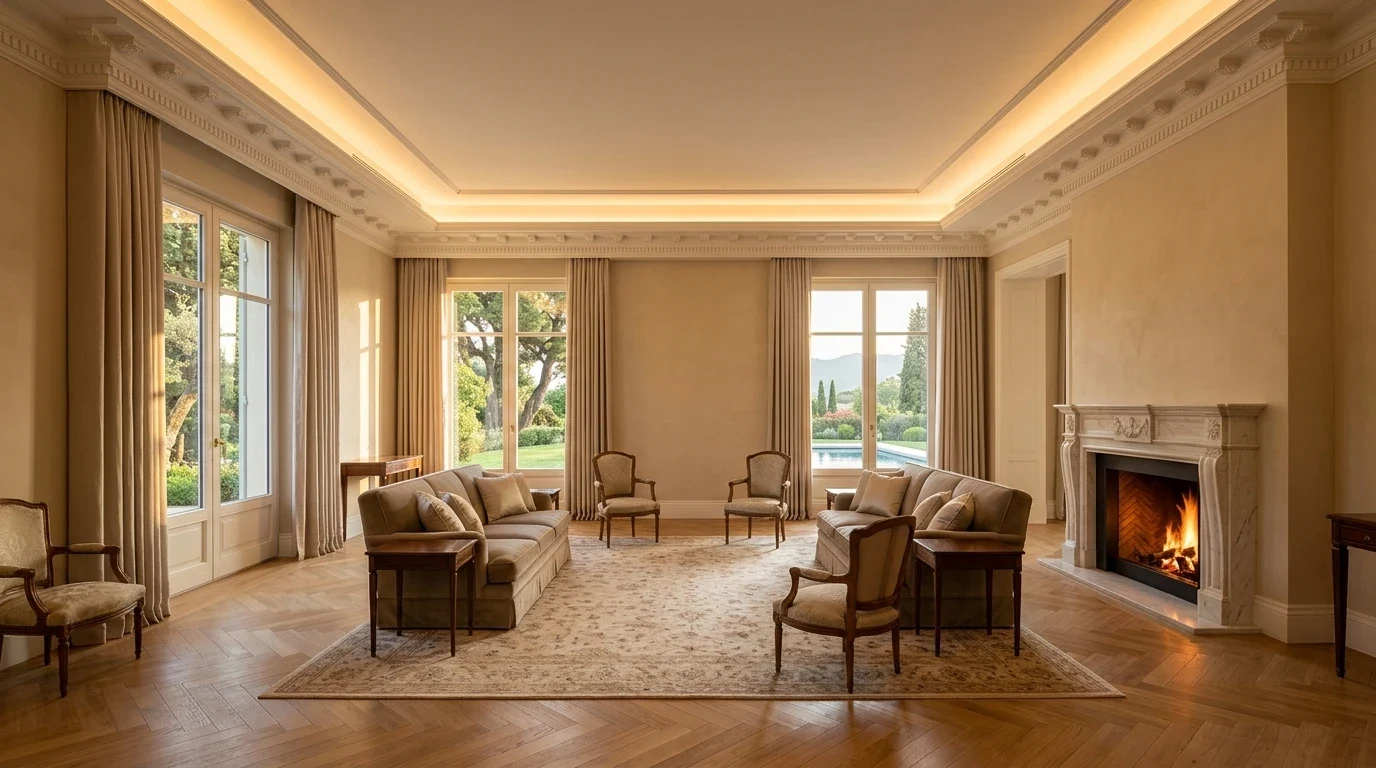
Invisible smart home — the kind that controls lighting, climate, blinds and audio without any technological element being visually recognisable as such — is one of the standards of luxury interiorism in boutique hotels and private villas in 2026. Not because the technology is more expensive: in many cases, well-integrated smart home systems have a similar total cost to conventional systems when compared over the project's life cycle. But because correct integration requires the smart home project and the interior design project to be developed simultaneously, and that does not happen when technology is added as a subsequent layer to an already completed design.
This article analyses the principles of smart home integration in luxury interior design projects, the systems with the best visual results and the most frequent mistakes.
The principle of invisible smart home: technology in service of the space
The governing principle is simple: technology must produce perceptible effects without being itself perceptible. The guest of a presidential suite who opens the door and sees lights coming on progressively at 2,700K, curtains opening at the rhythm of their entry and temperature exactly at their preferred point does not think "what good smart home." They think "it is so good here." That experience is the objective. The technological system that produces it is invisible.
For that to happen, smart home integration must begin before the interior design project is complete — ideally in the preliminary design phase. The decisions of where presence sensors go, where control switches are located, how motorised curtain rails are concealed and where recessed speakers are installed determine whether the final result is invisible or added smart home. None of those decisions can be made correctly after ceilings are closed, walls are finished and joinery is installed.
Lighting control: the most visible system and the most important
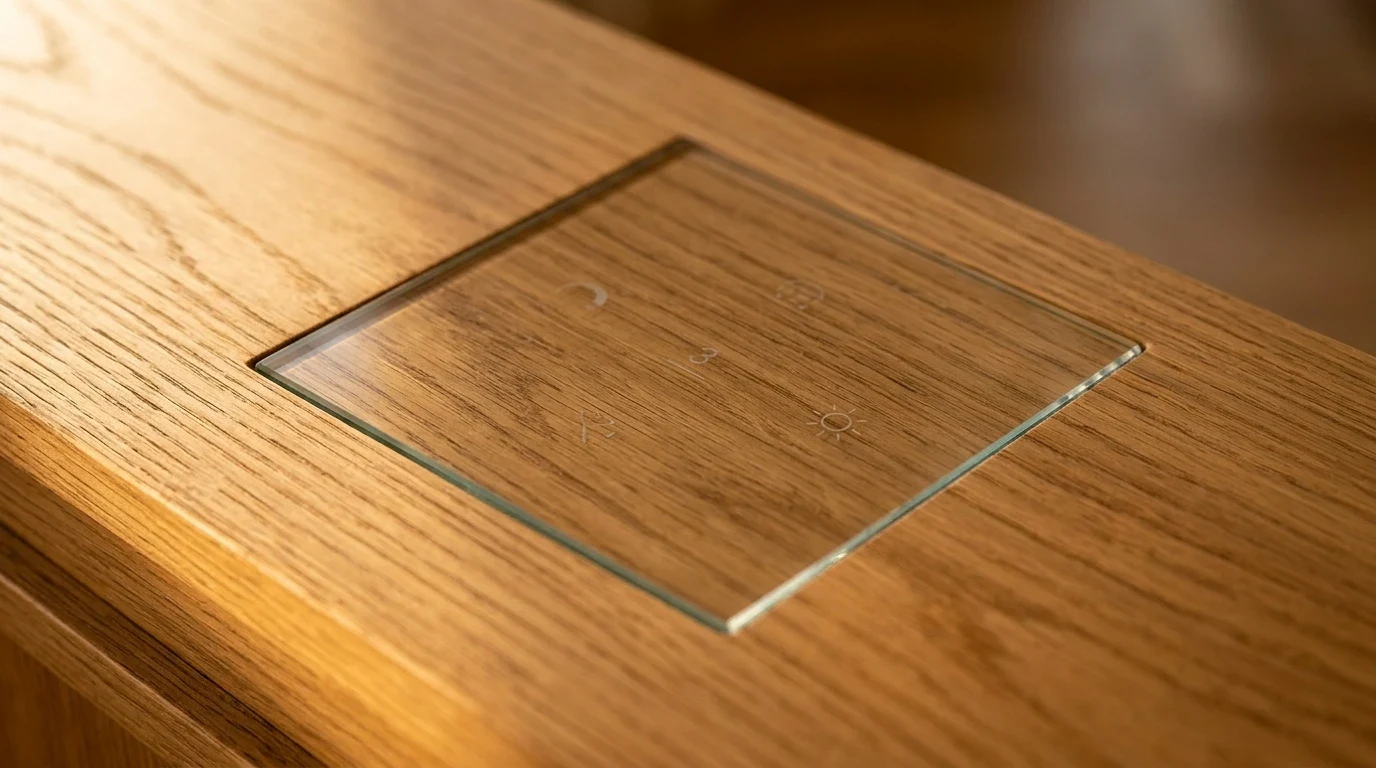
Lighting control is the smart home system with the greatest impact on the experience of the space and the one most frequently integrated visibly. The conventional switch — white, rectangular, with a standard plastic plate — is the element that most frequently breaks the design in luxury interiorism projects, because it is on every wall of every room and impossible to ignore.
The correct integration alternatives in luxury projects have three levels. Basic level: flush silk-screened glass or anodised aluminium switches with no protruding frame, in the same tone as the cladding. Systems such as Gira, Jung or Simon iO produce minimalist glass switches that integrate visually into plaster, timber or wallpaper walls without rupture. The incremental cost compared to a standard switch is between €80 and €200 per control point.
Intermediate level: switches integrated in bespoke joinery. In projects where walls have timber cladding or built-in joinery, the switch can be integrated into the timber itself with a flush glass or metal mechanism, with no visible plate. That integration requires coordination between the electrical project and the joinery project from the design phase.
Top level: app or voice control with no visible switches in the space. In presidential suites and top-tier rooms of boutique hotels, completely eliminating control switches and managing everything from the hotel app or an integrated voice assistant produces the greatest visual cleanliness. Its limitation: it requires the guest to download and use the app, which not all guests do with the same ease.
The lighting control protocols with the best technical result and the greatest ease of integration in luxury projects: KNX for large, permanent installations (hotels and villas over 500 m²), with a higher initial investment but greater durability and flexibility; Lutron Homeworks for mid-sized installations where dimming quality is the priority; and wireless RF systems such as Casambi for renovation projects where walls cannot be opened to run new cables.
Motorised curtains and blinds: the element most frequently visible when it should not be
Motorised curtains are one of the smart home elements with the greatest impact on the guest experience — waking up with light entering gradually as the curtains open at the programmed time is one of the most valued moments in luxury hotel satisfaction surveys — and one of the elements most frequently installed in a visually incorrect way.
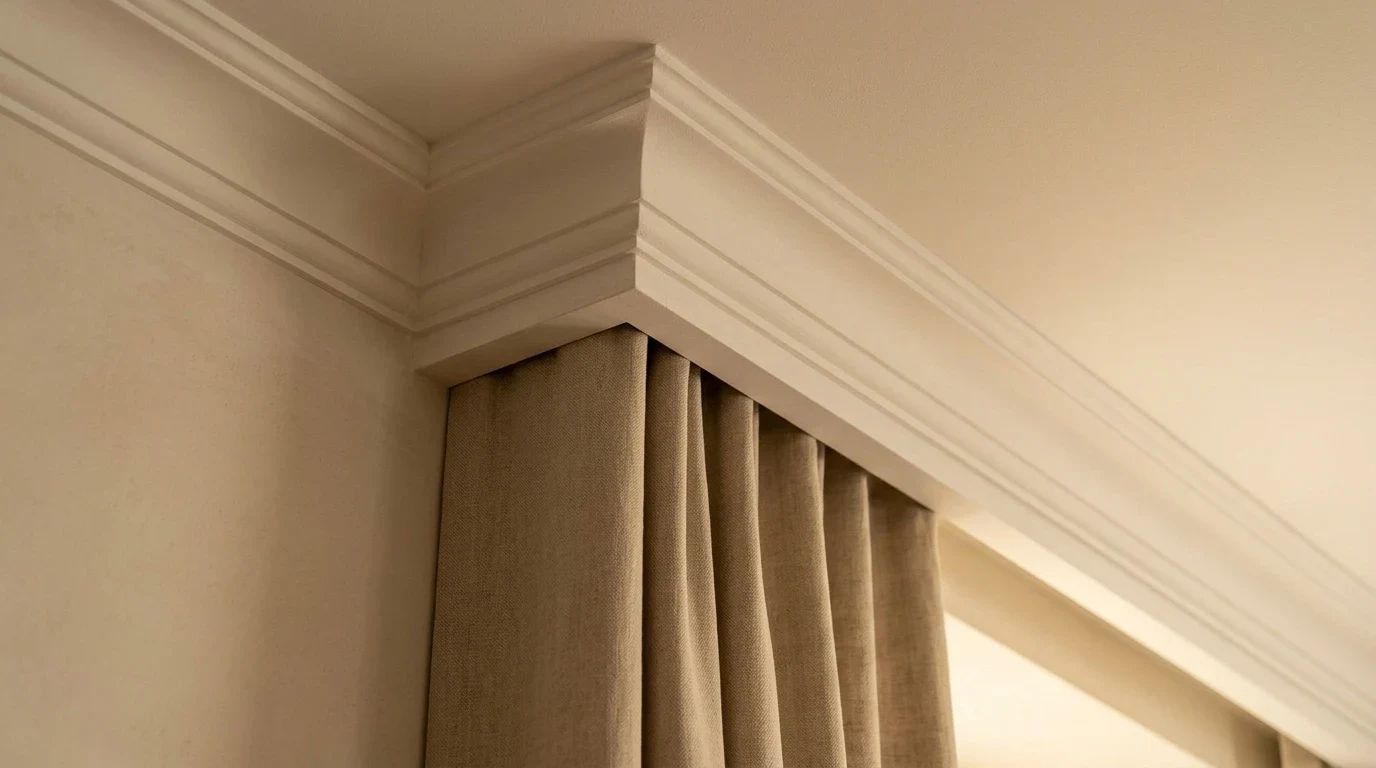
The motorised rail is the element that betrays the system. A silver aluminium rail protruding 8 cm from the ceiling with a plastic-bodied motor visible at one end destroys any luxury intention in the space, regardless of the fabric quality hanging from it. The correct solution: a registrable plaster or timber box that completely conceals the rail, motor and cables, leaving only the fabric drop visible from the ceiling. That box can integrate with the cornice moulding of the space — in neoclassical projects, the curtain box forms part of the cornice and is completely invisible — or can be an independent box painted in the same tone as the ceiling.
Best-integration motorisation systems for luxury projects: Somfy Glydea Ultra for light to heavy fabric curtains (silent motor integrated in the rail, no visible external motor), Nice Era MotionDC for roller blinds (tubular motor integrated in the roller tube, no exterior housing), and Lutron Sivoia QS for projects where synchronisation with the Lutron lighting system is the priority.
Audio and video: the systems most easily integrated and most easily ruined
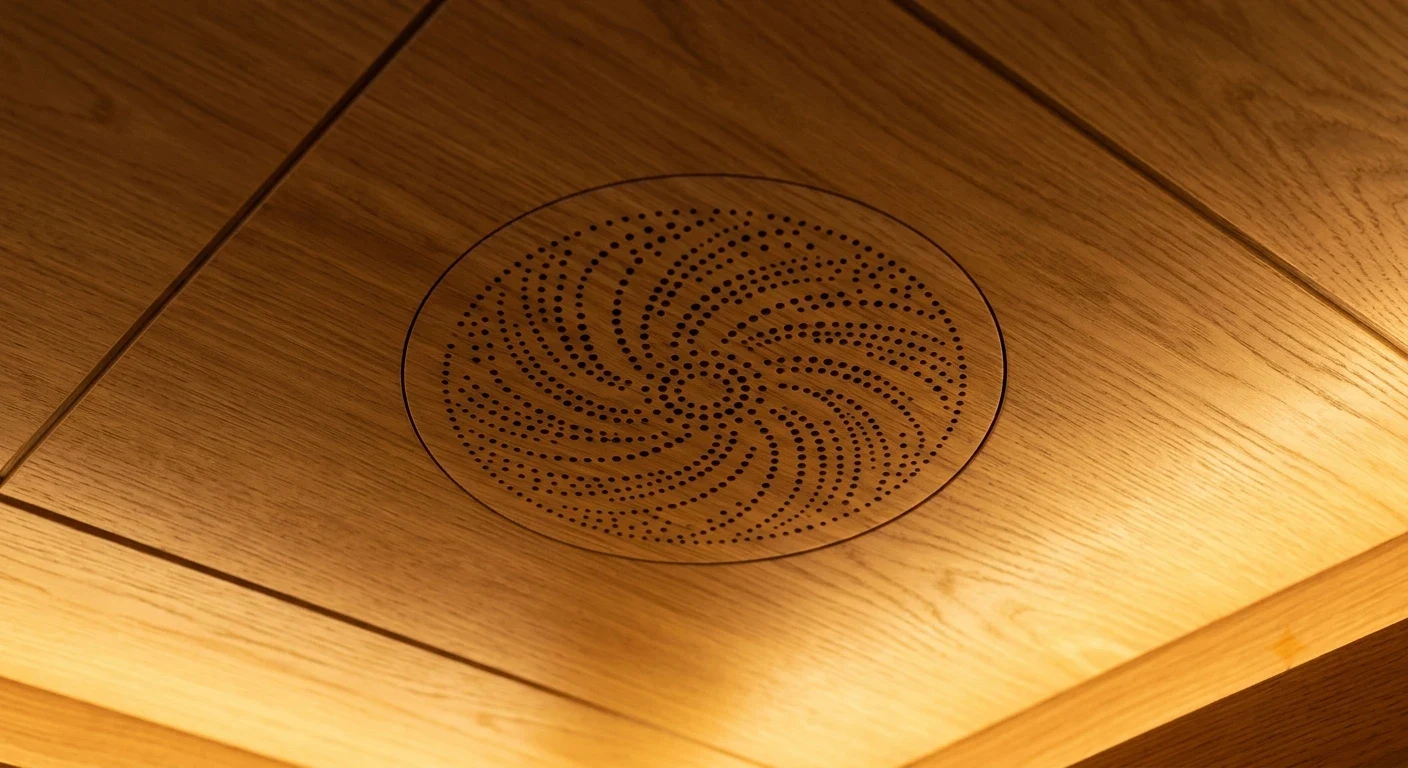
Ceiling-recessed audio is the smart home system with the best visual integration in luxury projects when correctly specified: the speaker installed in the ceiling with a grille painted in the same tone as the ceiling is virtually invisible and produces audio quality far superior to any portable speaker. Ceiling speakers from brands such as Sonance, Klipsch or KEF have aluminium grilles available in any RAL colour and can be covered with plaster or a tensioned fabric layer that makes them completely invisible without significantly affecting sound quality.
The most frequent audio mistake in luxury projects: installing a soundbar on the wall or under the television as an element added to the design. An 80 cm soundbar in timber or black aluminium on the television console is a piece of consumer technology that, in a luxury context, produces exactly the effect invisible smart home tries to avoid: signalling that the technology came after the design.
The television is the video element most difficult to integrate in luxury interior design projects. Best visual-result solutions: television integrated in bespoke joinery that conceals it when not in use (sliding timber panel, tilting mirror, plaster frame with acoustic fabric concealing the screen), or artistic frame television (Samsung Frame, LG Gallery) that displays an artwork when not switched on. The option of the television visible on the wall, even a high-end model, breaks the design in any luxury space that is not explicitly contemporary.
Circadian lighting: the most valued result of luxury smart home
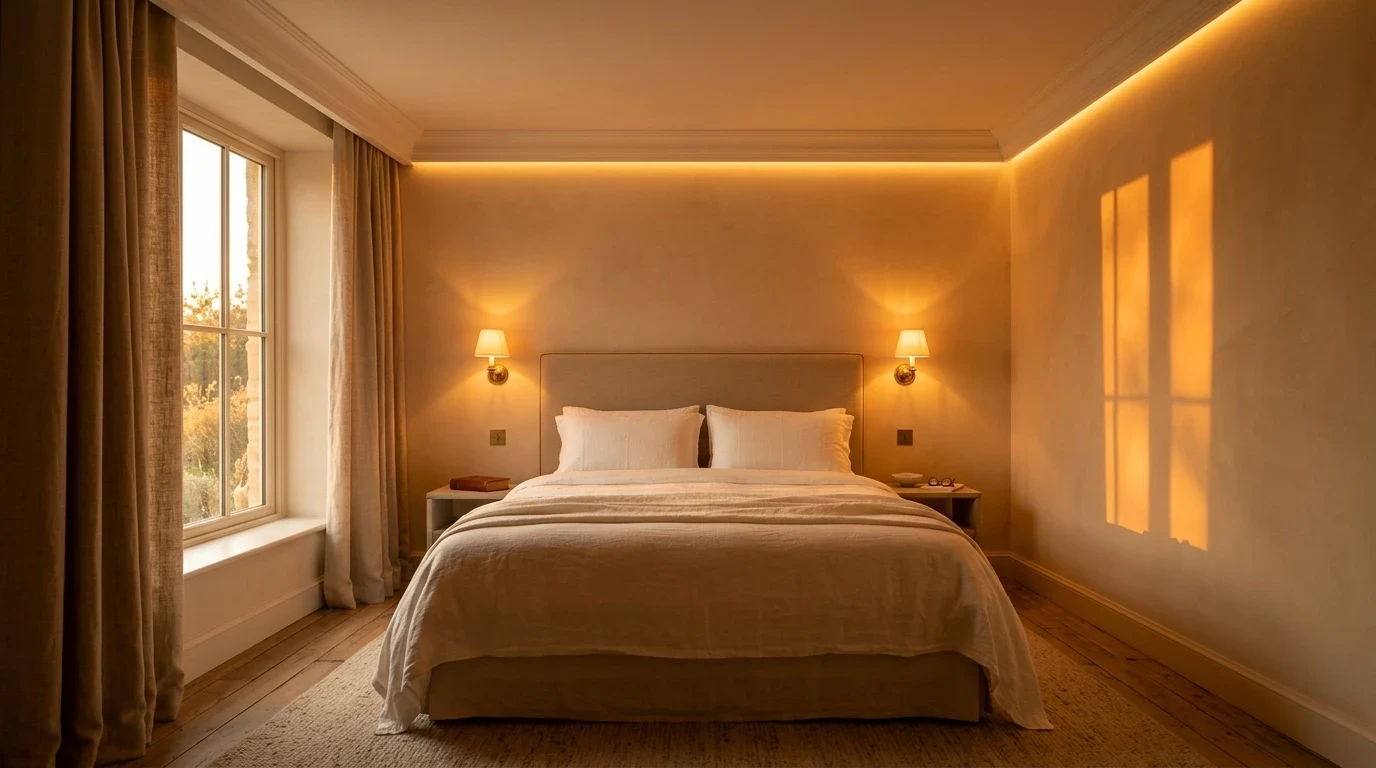
Circadian lighting — that which automatically adjusts the colour temperature and intensity of light throughout the day to support the occupant's biological rhythm — is the smart home application with the greatest impact on experience quality in luxury hotels and villas, and the one guests value most in satisfaction surveys when asked about it specifically.
The principle: light at 5,000–6,500K in morning hours activates cortisol and the alert state. The same light progressively falling to 3,000K at midday and 2,200–2,700K in the afternoon-evening hours produces the cortisol decline and melatonin increase that prepare the organism for rest. In a luxury hotel with this system, the guest who has not been able to sleep well on previous trips — because of jet lag, the room's lighting or the temperature — finds that at this hotel they sleep better, without knowing exactly why. What has happened is that the lighting has followed their biological rhythm instead of interrupting it.
The cost of implementing circadian lighting in a 20-room boutique hotel, over an already dimensioned dimmable lighting installation, is between €15,000 and €40,000 additional in equipment and programming. Its return is directly measurable in "sleep quality" ratings on platforms such as Booking or TripAdvisor, which in hotels with correctly implemented circadian lighting improve by between 0.3 and 0.7 points in the specific indicator.
The interior design for boutique hotels and villas we provide in Spain and Portugal includes the specification of integrated smart home systems as part of the project. If you have a project where technology must be invisible and the experience must be memorable, the conversation is open.
Véline Interiors · Hospitality Design
Do you have a project where technology must be invisible?
We specify integrated smart home systems that don't break the design: invisible lighting, climate, curtain and audio control.
Present your project →