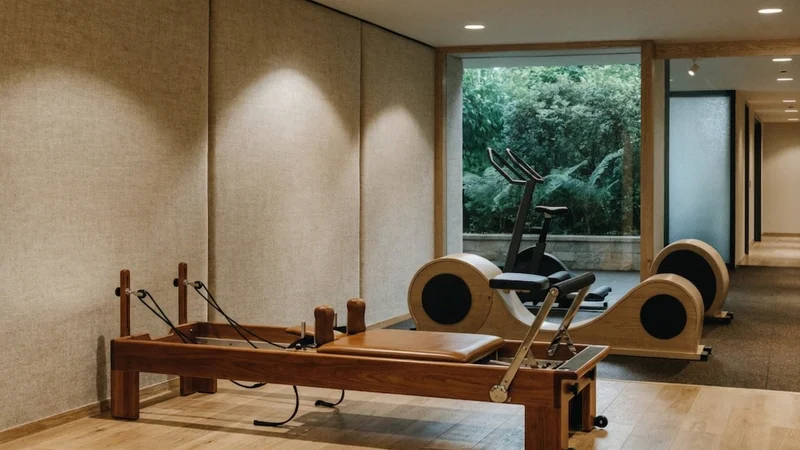
In the luxury hospitality segment, the gym has functioned for decades as an amenity list argument. It appears on the hotel profile, the booking platform, the travel guides. And in many cases, that is all: the space exists, the equipment is there, and the guests never arrive.
The reasons guests themselves cite — lack of time, travel fatigue, the temptation of the bar — are real. But they are symptoms, not the cause. The cause is that the conventional hotel gym is not designed to be used: it is designed to be listed.
The Gym as Residual Space
In the hierarchy of the hotel project, the gym typically occupies whatever is left over. The basement without natural light. The converted technical floor. The space no other programme wanted. This decision has a direct consequence: the guest arrives in a place that was not designed for them, but for the occupancy statistic.
Fluorescent lighting, industrial rubber flooring, commercial gym mirrors, equipment noise with no acoustic treatment: everything communicates the same message. This space is not for you. It is for those who already have the consolidated habit. And the guest who had planned to run twenty minutes before breakfast receives that message and turns back.
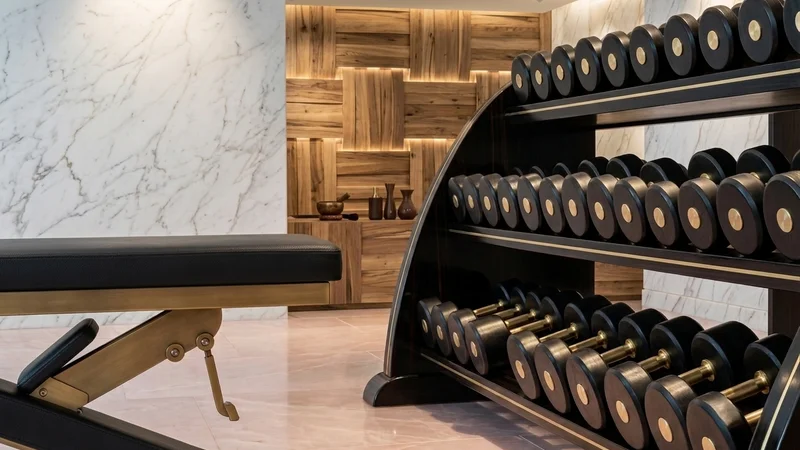
What Design Activates (and What It Inhibits)
Designing a luxury hotel gym is not fundamentally different from designing any other livable space. What activates use is not the number of machines or the brand of equipment: it is the sensory quality of the environment. The colour temperature of the light. The proportion between ceiling and floor. The view, if there is one, or the visual reference that substitutes it when there is not. The background silence or controlled sound.
The analysis of wellness spaces in hotels always begins with the same question: what does the guest perceive in the first five seconds? The answer determines whether they enter, whether they return, and whether they recommend. A space that communicates calm, proportion and intention in those five seconds — even if the equipment is identical to the hotel next door — generates a radically different usage rate.
The barrier is not one of willpower but of sensory threshold. A high threshold — cold lights, a squeaking floor, a mirror that confronts you before you are ready to be confronted — blocks the impulse. A low threshold — fluid access from the changing room, light that envelops rather than examines, materials that invite touch — converts intention into action.
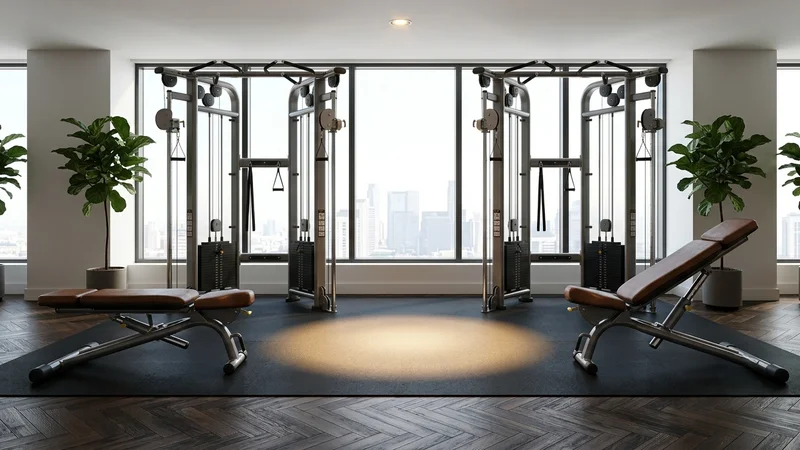
The Gym as Livable Space
The solution is not to spend more on equipment. It is to reverse the order of decisions: space first, programme second. A well-designed gym begins with light — natural when possible, warm and calibrated when not —, continues with materials (stone, wood, fabric in the adjacent calm zones), and builds the transition from the changing rooms to the movement area as if it were a cinematic sequence.
Véline Interiors' work in wellness spaces uses WELL Building standards as a design guide: colour temperature, acoustic quality, air circulation, visual connection to the exterior. Not as certification but as criterion. The result is a space the guest wants to use, uses, leaves feeling better from, and talks about. In the luxury hospitality segment, that circuit — space → experience → review → booking — has an impact on ADR that no marketing campaign can replicate.
78% don't use the gym because the gym doesn't invite them. Design is the invitation.
Véline Interiors · Wellness Design
Do you have a wellness space in your project?
If you are designing or renovating the wellness area of a hotel and want the design to generate real use — not just a presence on the amenities list — Véline Interiors is available for an initial conversation.
Present your project →