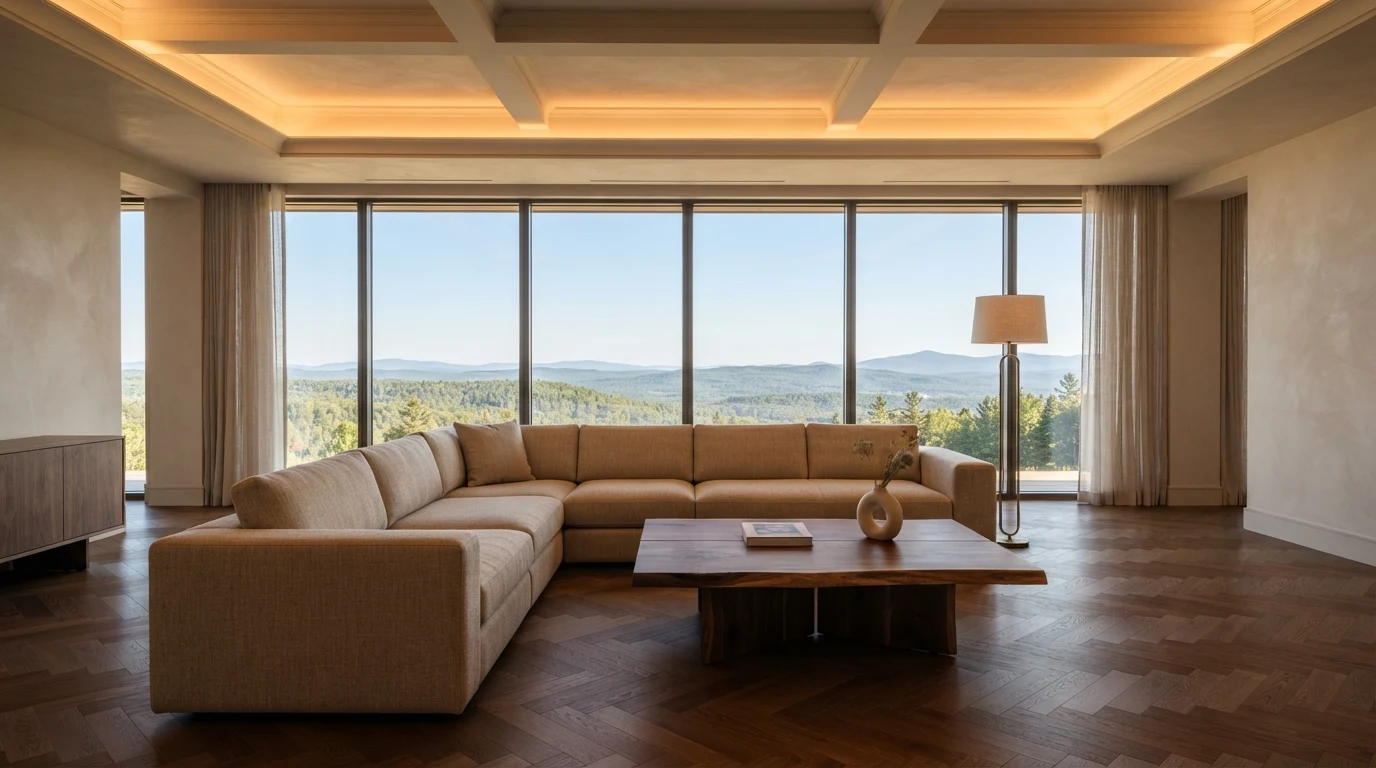
The guest who books the presidential suite of a luxury boutique hotel in Spain or Portugal is not buying square metres. They are buying the feeling that the hotel has a space designed specifically for them — not for the general market, but for someone who knows exactly what they want and is willing to pay for it. If the suite's design does not produce that sense of exceptionality from the first seconds in the space, the rate is not justified and the guest knows it even if they do not say so.
Scale: what the body perceives before the eye names
Scale is the first design variable that differentiates a presidential suite. The body perceives it before the conscious mind has catalogued any material or any piece of furniture. Entering a space with 3.5-metre ceilings, floor-to-ceiling windows and five metres between the door and the sofa produces a physiological response of expansion that no luxury finish can compensate for if the scale is not there.
The minimum surface area for a presidential suite to have real scale is 80–100 m² of useful area, with a layout that clearly separates bedroom from salon. An open-plan layout — bedroom and salon in a single volume divided by a decorative element — produces an apparently large surface but without the functional independence that defines a real presidential suite. The guest in bed must be able to inhabit the rest space without seeing the salon sofa and without the salon lighting affecting them. That independence cannot be produced without a layout with partitioning or a floor level change that marks the threshold between the two zones.
Ceiling height is as important as surface area. A 100 m² suite with 2.7-metre ceilings produces a sense of relative confinement that no furniture resolves. The same surface area with 3.2–3.5 metres of ceiling height produces the experience of a private palace. In renovated historic buildings — a Galician pazo, a Douro quinta, a Castilian manor — that height usually exists on the piano nobile and is one of the most powerful arguments for locating the presidential suite on that floor regardless of other considerations.
Materiality: what the guest touches before what they see
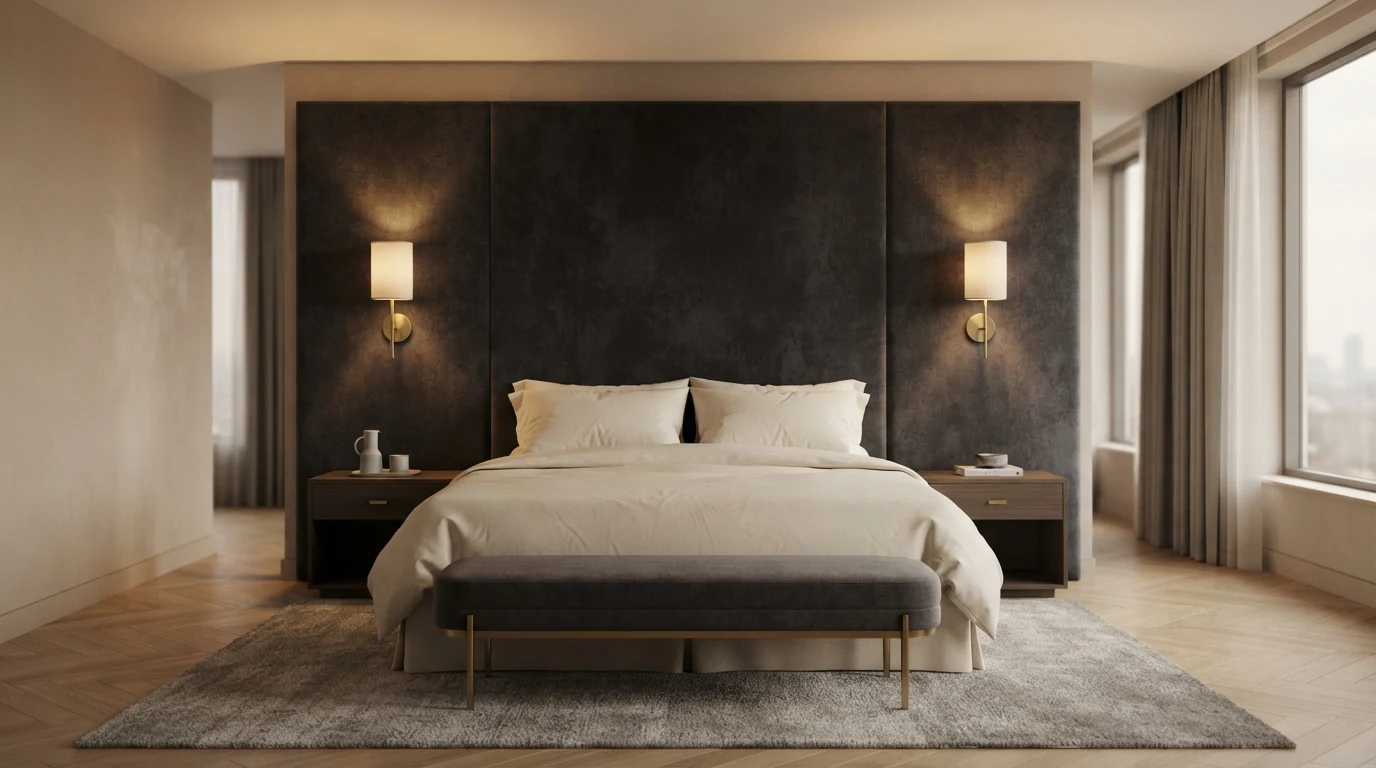
The materiality of a presidential suite is the second argument that justifies the rate, and the easiest to get wrong. The frequent error: accumulating costly materials without hierarchy. Calacatta marble floor with gold veining, blue velvet walls, gold mouldings and lacquered black furniture produces an expensive space without character. Correct materiality in a presidential suite has hierarchy: one primary material that defines the space, one or two secondary materials that give it depth, and metallic and textile details that complete it.
The primary floor material in a luxury hotel presidential suite in Spain or Portugal can be marble (in the bedroom, with an area rug), high-quality oak or walnut timber (in salon and bedroom), or large-format Portuguese limestone (in projects with more austere and territorial character). The floor material defines the register of everything else: an oil-finished oak floor calls for warm materials; a honed limestone floor calls for more mineral and fresh interiorism.
The headboard and upholstery fabric is the tactile element the guest experiences most directly. In a presidential suite, the headboard must go from floor to ceiling — minimum 2.8 metres — upholstered in an exceptional quality fabric: cut velvet, vegetable-tanned natural leather, high-density Belgian linen. The wall upholstery behind the headboard, which in five-star suites extends laterally to the beginning of the bedside tables, produces a sense of envelopment that the isolated headboard does not achieve. The bed must be of exceptional dimensions: the standard 180×200 cm is insufficient for a presidential suite; the minimum must be 200×200 cm.
The bathroom: the space that most contributes to the perception of luxury
Research on luxury hotel satisfaction consistently reaches a result that surprises those who have not seen it: the bathroom is the space with the greatest impact on the overall rating of a high-price hotel room. The presidential suite guest spends between 15% and 25% of their total suite time in the bathroom. And it is the space where the difference between good and exceptional is most easily perceptible to the non-expert.
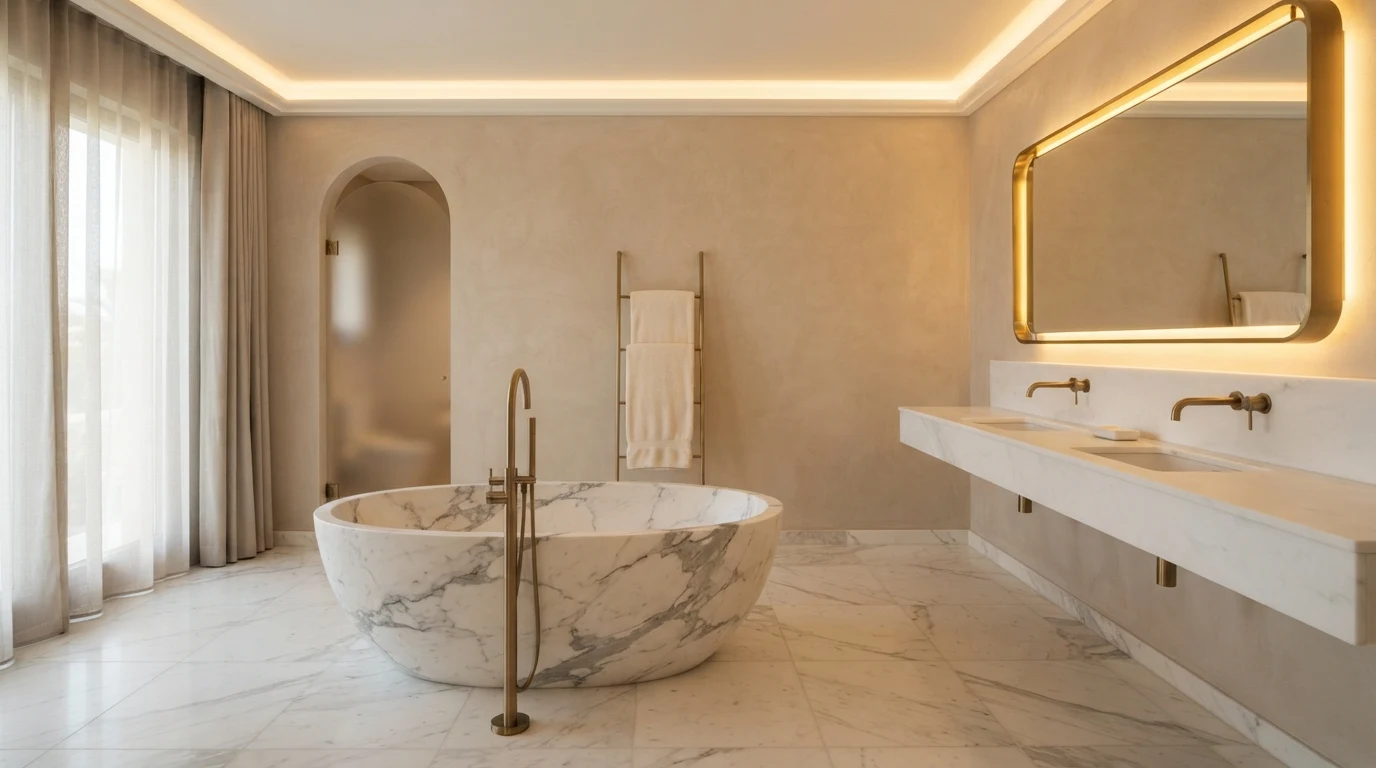
A presidential suite bathroom must have: minimum surface area of 15–20 m²; a freestanding — not recessed — bath with access on all four sides; a bespoke shower of generous dimensions (minimum 140×90 cm) with opening to two walls or floor-to-ceiling tempered glass screen; double basin with noble material countertop (marble, limestone, granite) of minimum 160 cm length; and mirror equal in length or longer than the countertop with perimeter lighting that eliminates shadows on the face.
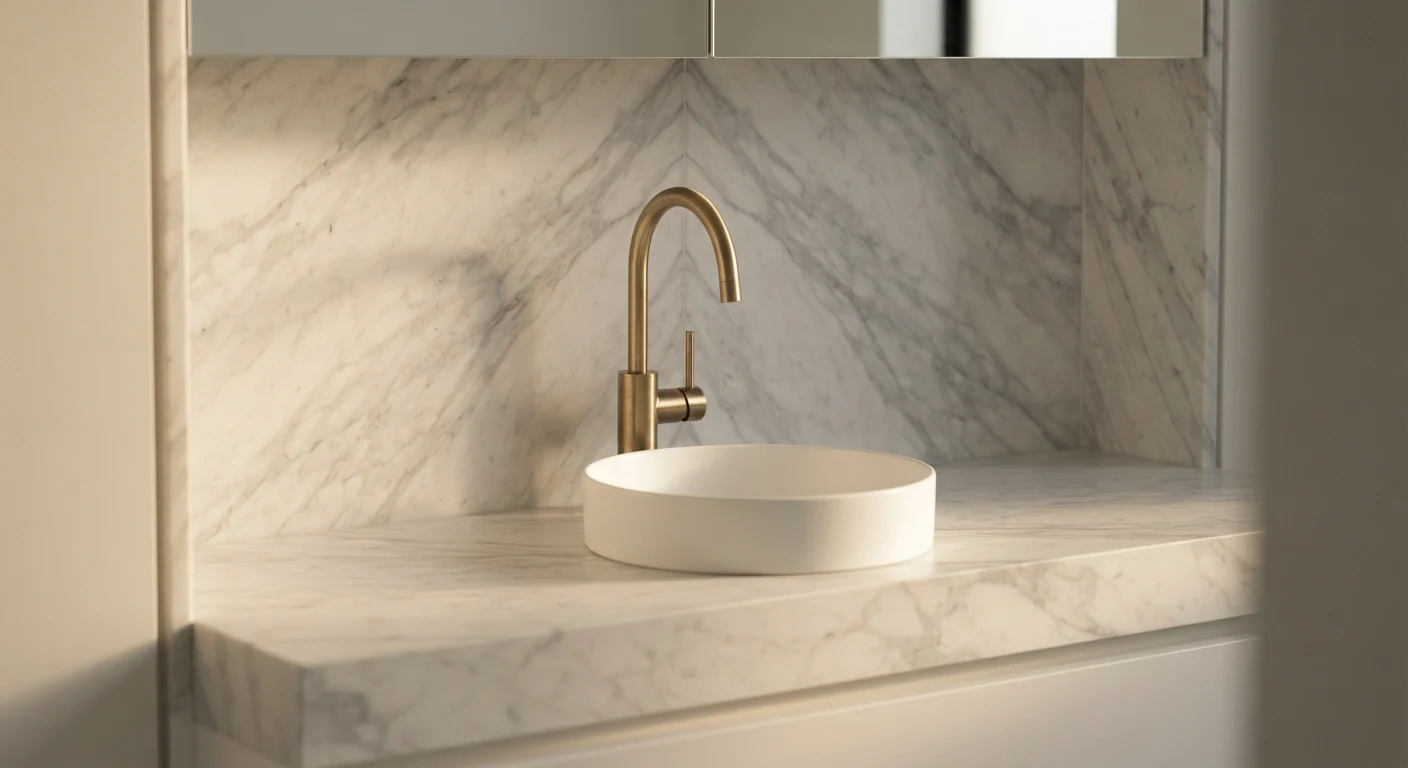
Tap fittings are the highest-visibility element per square metre in a luxury bathroom. In a presidential suite, brushed brass, matt nickel or matt black taps — never polished chrome, which is the cheapest and most generic finish in the market — produce an immediate register difference. The high-spout basin tap on a freestanding bath is the most photographed image from luxury suite bathrooms worldwide. It is also the element where cost is most frequently cut: replacing a solid brass tap at €800–1,200 with a zamak-plated one at €150 is visible to any guest with criterion.
The private terrace: the exterior that belongs only to the suite
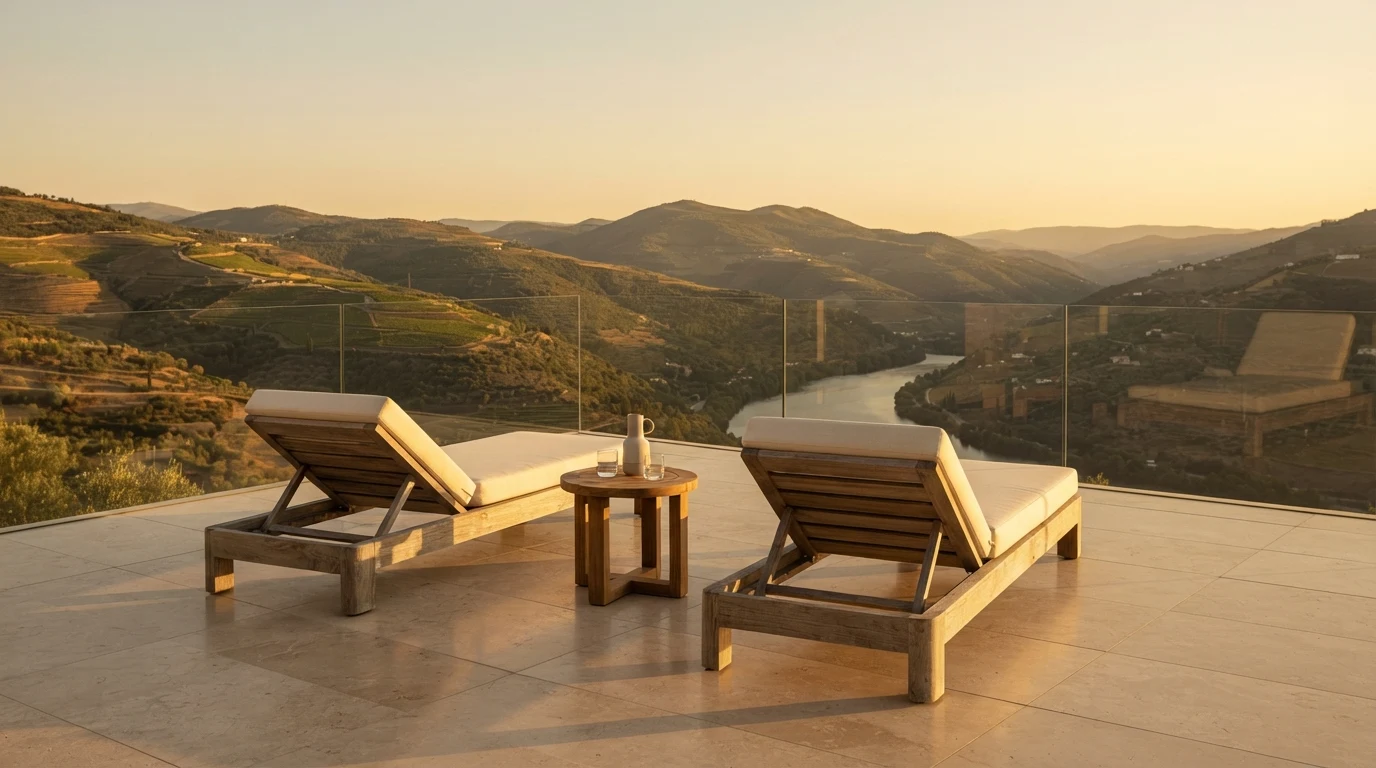
A private terrace — not shared with other rooms, with complete visual separation from any other hotel space — is the most powerful differentiating element of a presidential suite and the hardest to create retrospectively if the building does not allow it. In boutique hotels in historic buildings, the piano nobile usually has access to a roof terrace, a main balcony or an interior courtyard that with the correct intervention can become the suite's private terrace.
A presidential suite terrace must have three conditions to justify the rate. First, total privacy: it must not be visible from any common space or any other hotel room. Second, minimum scale: 25–40 m² to allow a rest zone (two loungers or two armchairs) and a dining zone (table for four people) without feeling narrow. Third, quality outdoor furniture: certified teak, high-density powder-coated aluminium or Corten steel, never plastic or low-quality resin.
In rural hotels and villas in Spain and Portugal with views of the landscape — river, vineyard, olive grove, mountains — a presidential suite terrace facing that view is frequently the property's most powerful marketing argument. A well-chosen armchair facing a Duero view at sunset produces an image that appears in thousands of guest posts and dozens of luxury curations. That image carries a visibility value that multiplies the suite rate in return-on-investment terms.
Service integration: what design must anticipate even when invisible
A luxury hotel presidential suite in Spain or Portugal has, in 2026, a layer of technological and hospitality services integrated into it that design must anticipate from the outset even when not visible in the final result. The most frequent error: treating technological integration as an added layer over a finished design, producing visible installations, improvised wiring and compromise solutions that devalue the experience.
Presidential suite home automation — centralised control of lighting, temperature, motorised curtains, audio and access — must be specified at the project stage and executed before wall and floor finishes. A well-integrated home automation system in a presidential suite is invisible: the guest sees no cable, no out-of-place screen controller, no generic remote on the bedside table. They see a touch panel or tablet integrated into the design, or manage everything from their phone through the hotel app.
Sound is the most underused technological service in boutique hotel presidential suites. A multi-channel audio system with ceiling-integrated speakers in the salon and bathroom, with independent zone control, adds a sensory experience layer that high-net-worth guests value disproportionately. Installation cost in new build or renovation with ceiling access is €3,000–8,000, depending on the number of zones and speaker quality. It is one of the elements with the highest return in terms of guest rating per euro invested.
Identity: what makes this suite belong to this hotel and nowhere else
The last variable — and the hardest to quantify — that differentiates an exceptional presidential suite from a merely expensive one is identity. Identity is what makes the suite recognisably of that hotel, that place and that moment, and not a combination of generic luxury materials that could be in Dubai, Singapore or any other destination in the world.
In the context of boutique hotels in Spain and Portugal, the identity of a presidential suite is built with three elements. First, the artwork: an original work — a sculpture, a handmade azulejo panel, a tapestry, an oil painting — by a local or regional artist that is genuinely exclusive to that space. Not a reproduction, not a high-quality print: a unique piece. The cost of a local artist's work of sufficient quality for a presidential suite ranges from €2,000 to €15,000. Its impact on the space's identity and on guest-generated content is disproportionate to that cost.
Second, the territorial material: a finishing element that can only come from that territory. Talavera azulejo in a suite in Castile. Moleanos limestone in a suite in the Alentejo. Chestnut timber from the Rías Baixas in a suite in Galicia. That territorial material produces an authenticity that internationally imported materials cannot reproduce, regardless of their quality.
Third, the artisan detail: a piece made by a local craftsperson with a traditional technique — marquetry, ironwork, embroidery, ceramics — that the guest can identify as production of that place. That artisan detail, presented with a card identifying the craftsperson and the technique, turns a decorative object into a story the guest takes with them.
Presidential suite and high-value room design in boutique hotels in Spain and Portugal is one of Véline Interiors' specialisms. If you have a project where design must justify your hotel's highest rate, the conversation is open.
Véline Interiors · Hospitality Design
Have a presidential suite in the works?
We design the suites that justify a hotel's highest rate.
Submit your project →