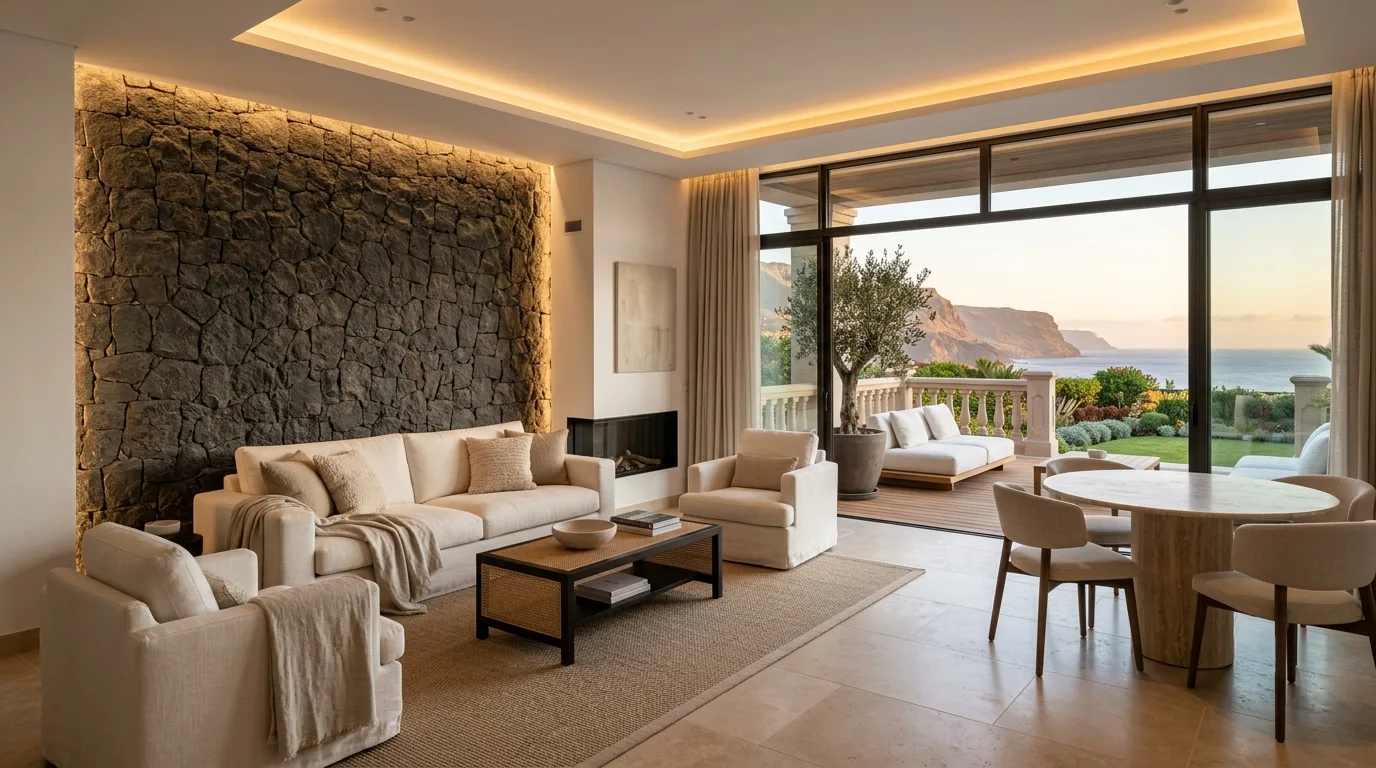
What Canarian volcanic stone actually is
"Volcanic stone" isn't one thing. Materials of volcanic origin coexist in the Canaries with very different behaviours. Basalt is a fine-grained, dark-coloured rock, dense yet porous on the surface, almost honeycomb-like up close. Volcanic tuff — known locally as "tosca" — has a medium consistency that made it historically ideal for stonework, to the point of building cave dwellings such as the Guayadeque settlement in Gran Canaria.
There are also named varieties with an established ornamental use: Arucas Stone, in Gran Canaria, and Arico ignimbrite, in Tenerife, both easy to carve and used decoratively for generations. They aren't interchangeable — each behaves differently depending on whether it's used on a façade, a floor, or a wet area.
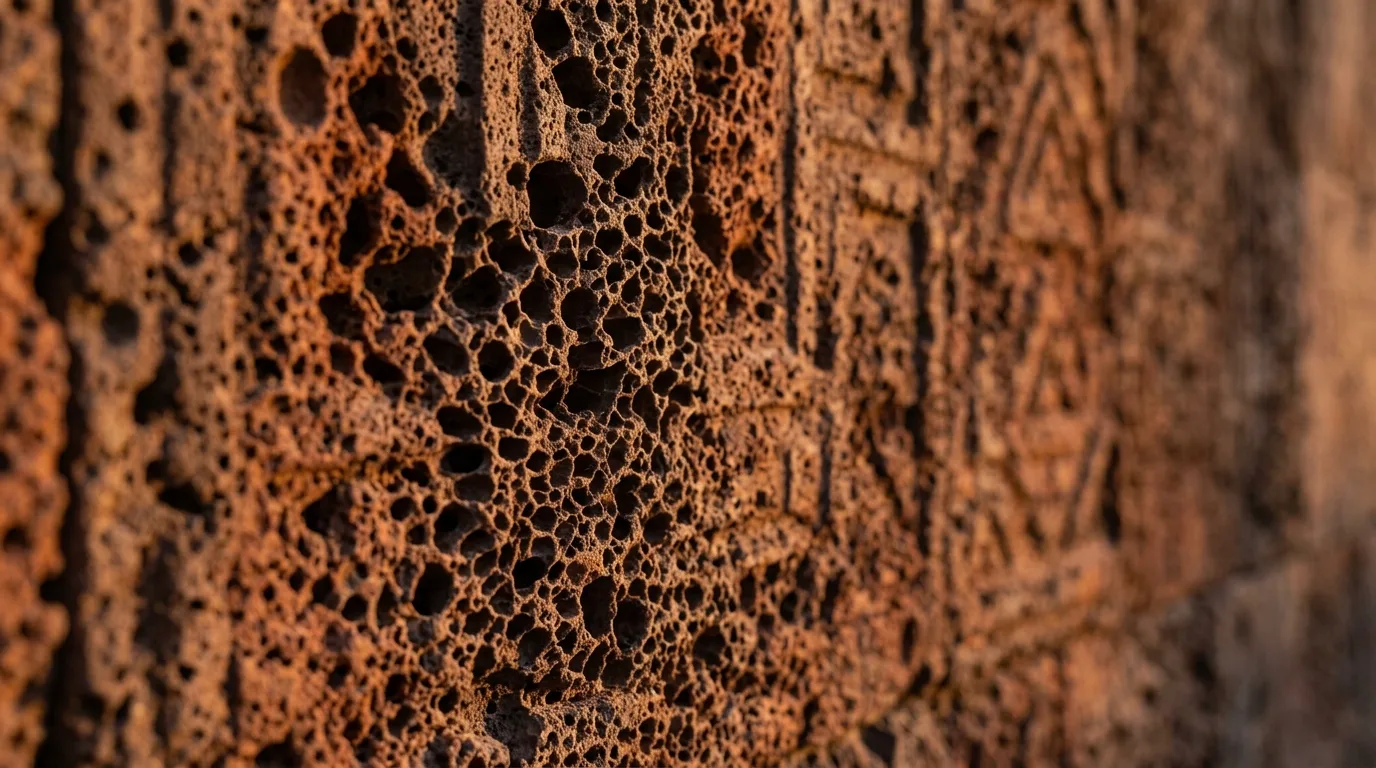
Thermal mass — why it buffers the island's day-night swing
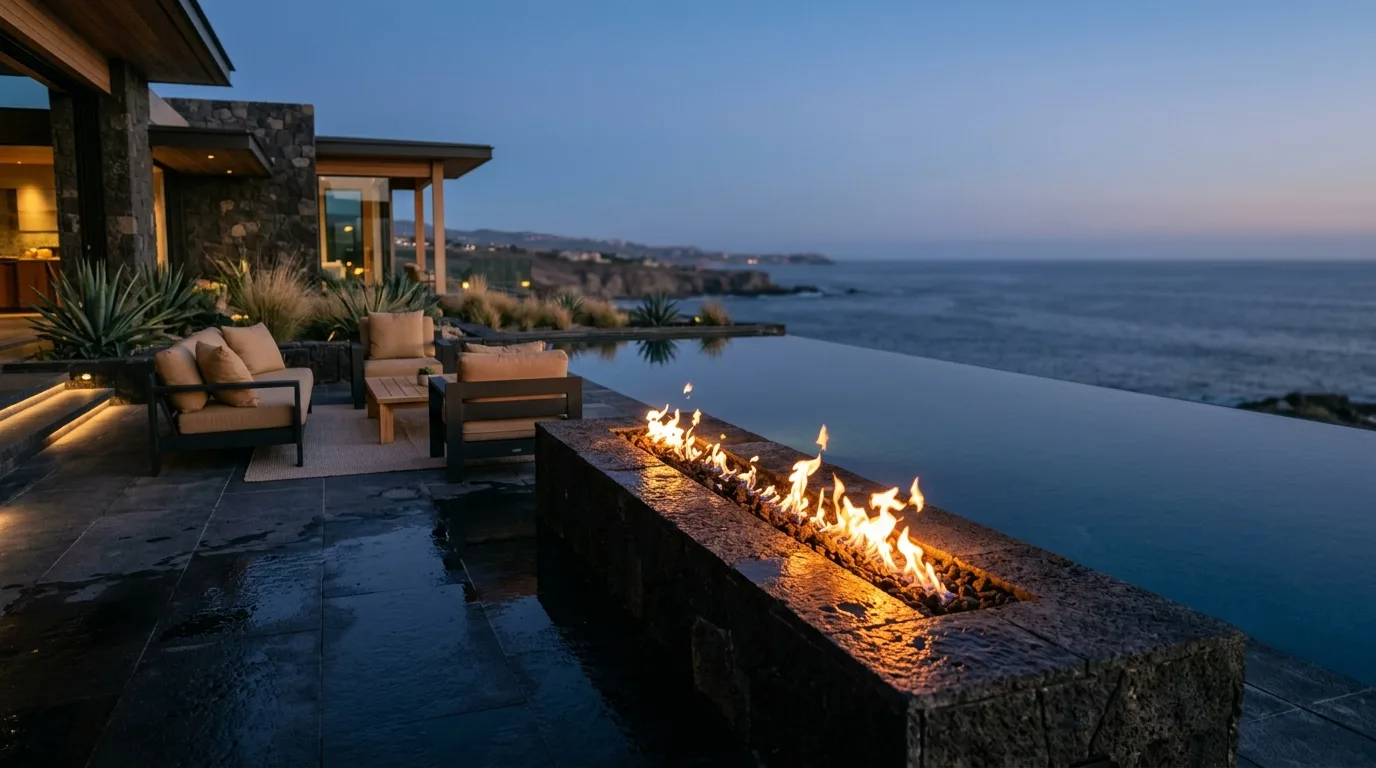
The temperature swing between day and night in the Canaries, especially in mid-altitude zones, is sharper than the annual average suggests. This is where basalt earns its place: its thermal capacity is used in radiant floors, fireplaces and exterior walls precisely because it keeps temperatures stable in extreme climates.
In a villa, this translates into volcanic stone walls or floors that absorb heat during the day and release it gradually at night, reducing reliance on active climate control — something a polished marble, with lower porosity and different conductivity, doesn't offer in the same way.
Porosity and maintenance versus mainland marble or granite
Basalt's porosity is both its greatest thermal advantage and its main maintenance requirement. Compared with a denser, less porous mainland marble or granite, volcanic stone needs correct sealing in wet or heavily used areas — not because it's a fragile material, but because its structure absorbs differently.
Properly treated, it's a low-maintenance stone, resistant to wear and extreme weather, with no noticeable deterioration from sun or water. Poorly sealed, that same porosity causes staining and moisture problems later blamed — wrongly — on the material, when the failure is in execution.
Is volcanic stone good for exteriors or wet areas?
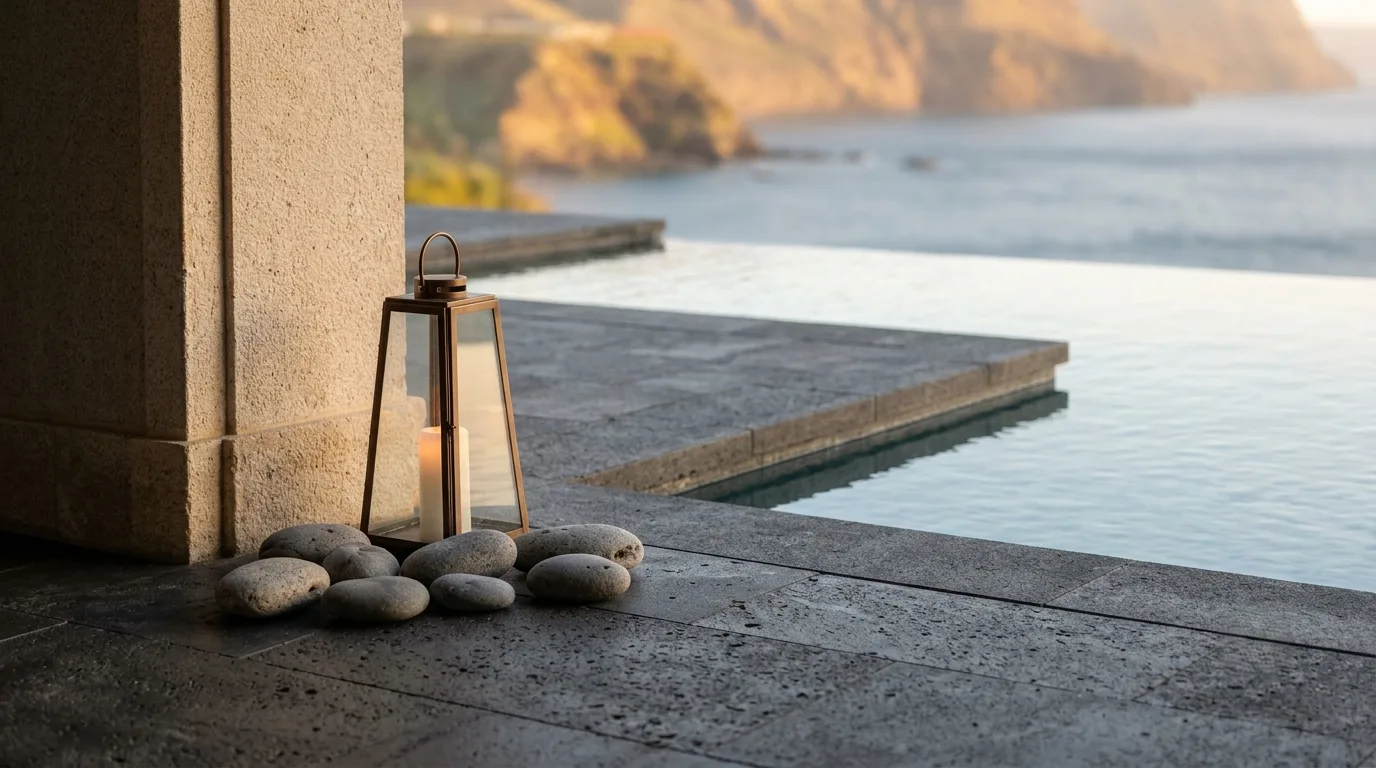
Yes, with conditions: its non-slip texture and resistance to extreme heat make it particularly suited to exterior flooring and pool surrounds, where it also requires little maintenance. The condition is correct sealing in the areas of greatest water exposure — without it, the same porosity that makes it thermally effective becomes a weak point.
Synthesis
Volcanic stone doesn't need to justify itself by being local — it justifies itself by what it does: it buffers heat, withstands the Canarian exterior, and ages with dignity when properly sealed. That doesn't mean it suits everything. A project that uses it on every surface because "it's from here" makes the same mistake as one that imports Carrara marble without asking whether the climate calls for it. The criterion isn't the material's origin — it's whether it solves the problem the island poses.
Véline Interiors · Quiet Luxury
If your Canary Islands villa hasn't yet decided what material it stands on, the conversation is open.
We specify volcanic stone and local materials for villas that respond to the island's real climate, not to the aesthetic assumed of it.
Present your project →