Porto's building stock — the starting point
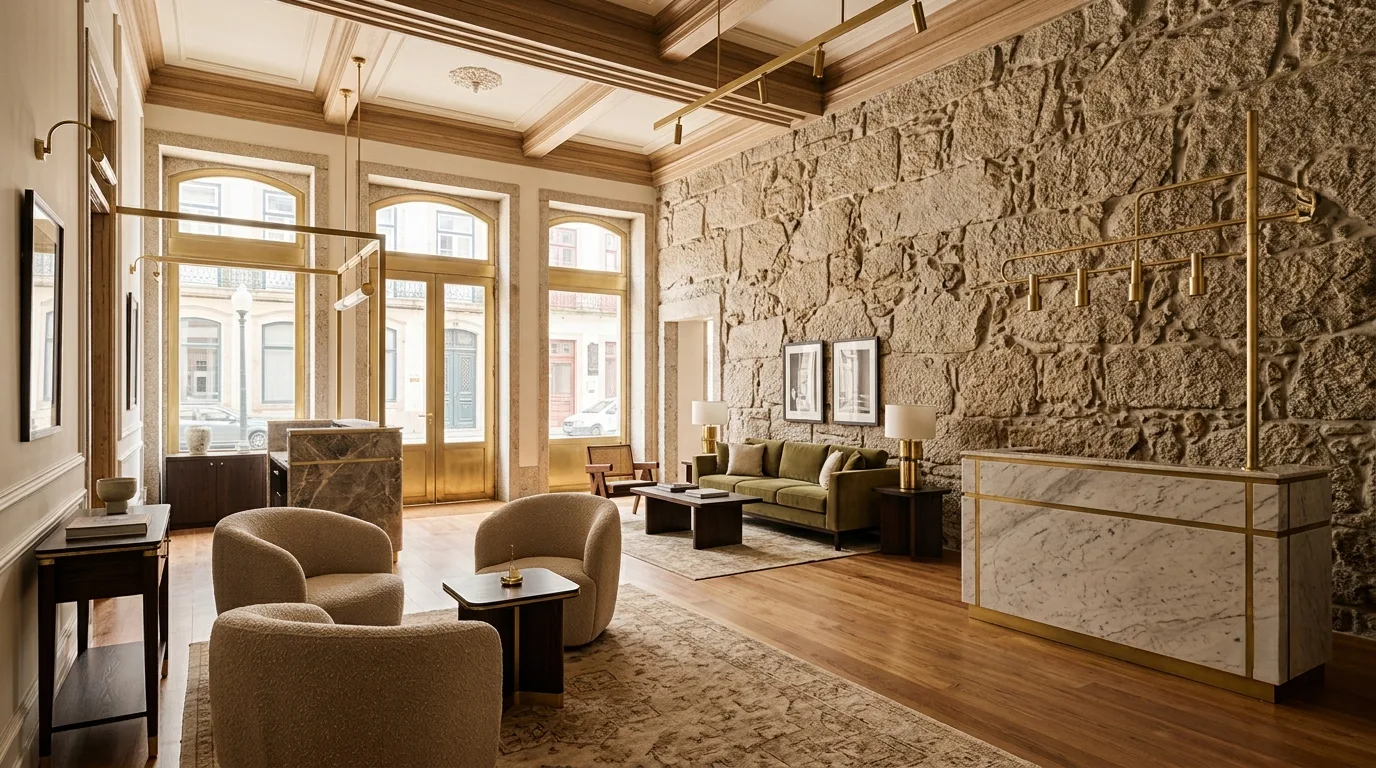
Porto is not a uniform historic centre. At least two building types coexist, with opposite implications for a hotel project: the nineteenth-century granite townhouse, with load-bearing walls, tall ceilings and pronounced domestic subdivision; and the industrial building — factory, warehouse, workshop — that dominates the Douro riverfront in Vila Nova de Gaia, with large-volume halls built for load, not habitation. Converting the latter requires a different intelligence: not the refinement of an existing domestic space, but the invention of a new spatial organisation within a structural system never designed for it.
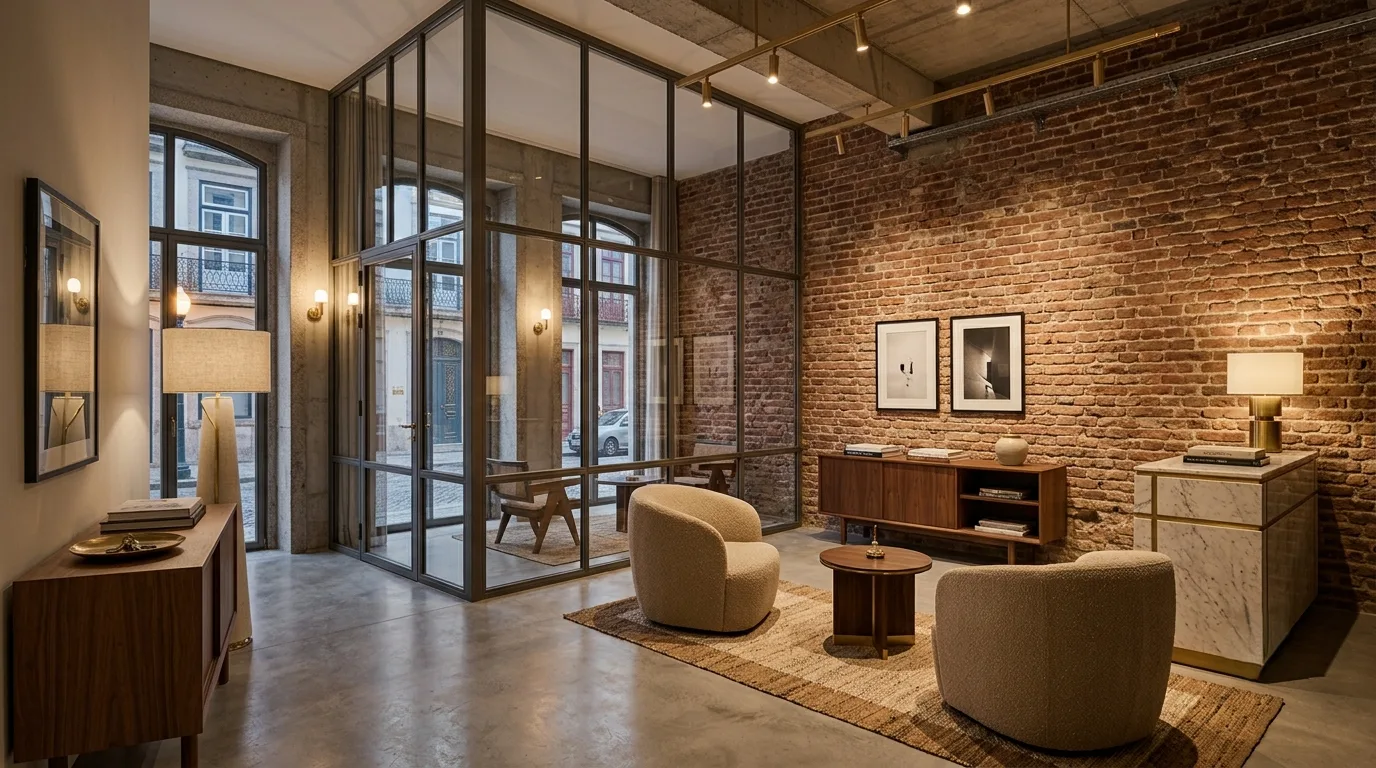
The most cited Porto case in this second category is The Rebello, in Vila Nova de Gaia: studio Metro Urbe converted a disused nineteenth-century kitchenware factory into four modernised buildings, two of them newly built to connect the original stone structures, with interiors by Quiet Studios. The interiors use steel-framed glass partitions, concrete floors and metal light fittings to preserve the building's industrial character. It's a coherent reading of the source building — and also the one repeated most often in Porto right now, to the point of becoming formula.
At the other end, projects such as Village by BOA start from a different nineteenth-century fabric: a late-nineteenth-century neighbourhood converted into 40 accommodation units across five restored buildings, with natural materials and a neutral palette, closer to the townhouse than the industrial hall. The first decision on any Porto project, before palette or furniture, is identifying which stock you're working with — and what it imposes on the guest.
The industrial temptation and its limit
Exposed concrete, steel, visible pipework: it's the grammar dominating Porto right now, and it works when the source building is genuinely industrial. There, it isn't a style — it's honesty toward the structure. The problem appears when that same grammar gets applied to a granite townhouse that never held machinery — it becomes costume, not criteria. The building stops speaking and starts quoting another building.
A neoclassical contemporary project starts from the opposite question: what the granite, the tall ceiling and the original proportion already offer, and how to sustain that logic with a serene palette and noble materials instead of forcing a borrowed aesthetic — with Estremoz marble as a material precedent for that same restraint. It isn't a default stylistic choice — it's a choice of coherence. It's the criterion applied in any initial assessment of a Porto building: before proposing a palette, identify what subdivision, what walls and what proportion belong to the building, and what a borrowed formula would impose instead. The right criterion isn't the one that photographs best — it's the one that betrays the building least.
Five structural decisions that define the project
Load-bearing walls. In the granite townhouse, most interior walls carry structural load. They determine which rooms can be enlarged before any interior design plan exists.
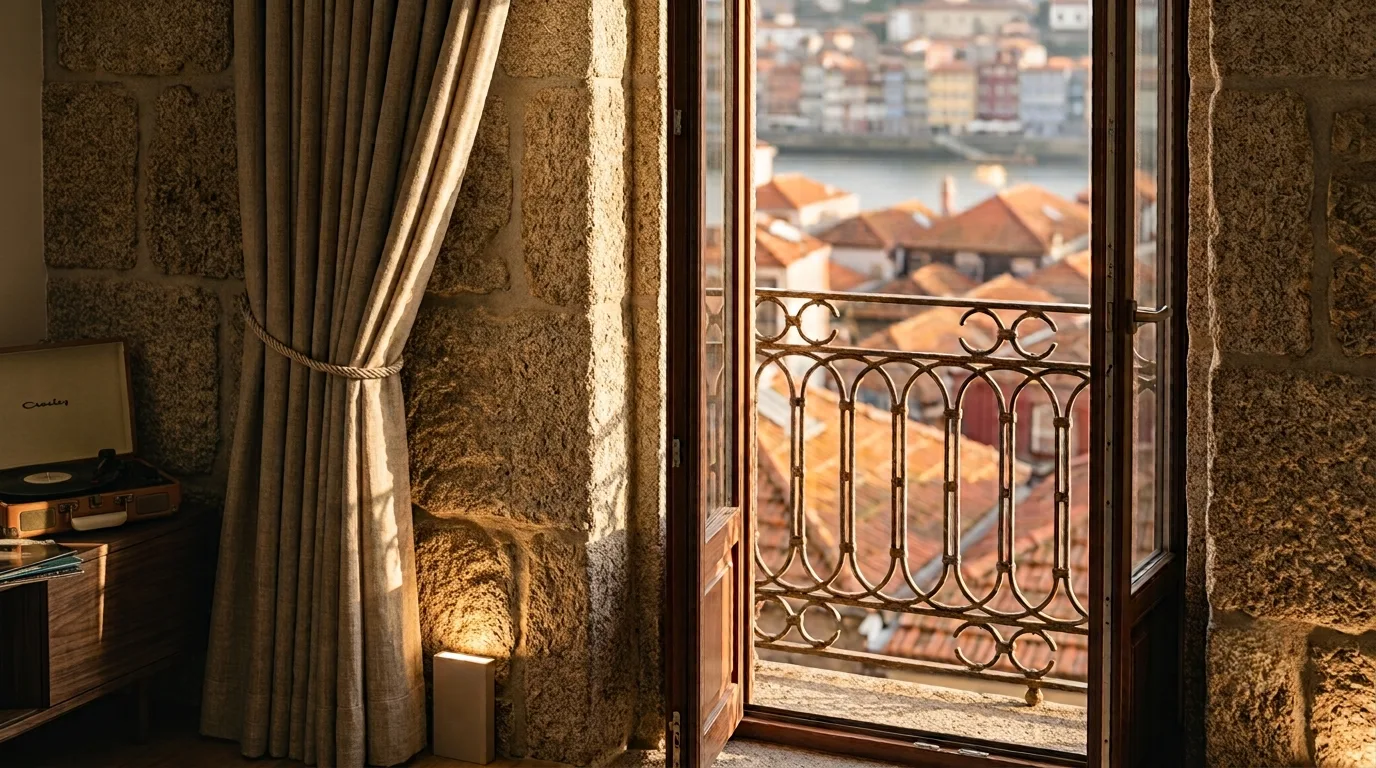
Granite's moisture and ventilation. Granite is a material that breathes. Sealing it with modern vapour barriers to gain insulation tends to trap moisture. The right intervention works with the wall's porosity, not against it.
Ceiling height. A 3.80m ceiling in a townhouse allows for mezzanines or indirect lighting that a converted industrial hall — with its own height, but a different volume logic — doesn't always permit in the same way.
Atlantic light. Porto receives a changeable, often low light, distinct from the Algarve or Lisbon. Room orientation and the window-to-wall ratio determine actual guest comfort, not just the façade.
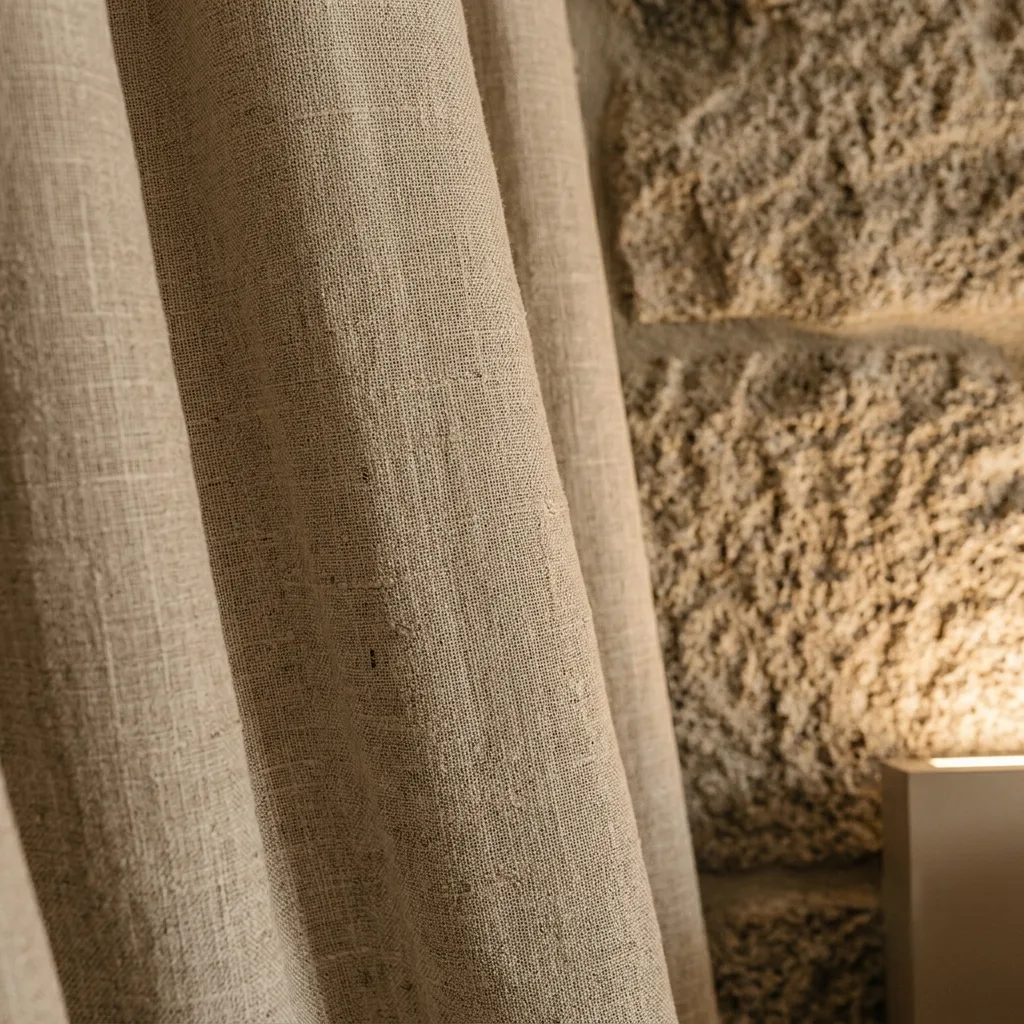
Acoustics. Industrial volumes reverberate. Without a deliberate textile strategy — heavy curtaining, rugs, upholstery — the same space that photographs spectacularly becomes uncomfortable to sleep in.
How much does it cost to convert a historic Porto building into a boutique hotel?
How much does it cost to convert a historic Porto building into a boutique hotel?
There's no single figure: cost depends above all on the condition of the original structure and the scope of reinforcement it requires, not on the final finish. A building with sound load-bearing walls and a roof in good condition allows budget to concentrate on interiors and systems; one with structural pathologies shifts most of the cost to phases never seen in the final photograph.
Synthesis
Porto will keep converting its building stock — there's a pipeline of openings and refurbishments for the years ahead, and the city hasn't run out of buildings to tell stories through. What sets one project apart from another isn't the chosen aesthetic, but whether that aesthetic responds to what the building actually is. The industrial formula has its place. So does the serene neoclassical route that respects granite and bourgeois proportion. Confusing the two isn't a nuance — it's the error that decides whether the project works.
Véline Interiors · Portugal Hospitality
Hasn't your Porto project decided which building it's starting from yet?
If your Porto project hasn't yet decided which building it's starting from, the conversation is open.
Present your project →