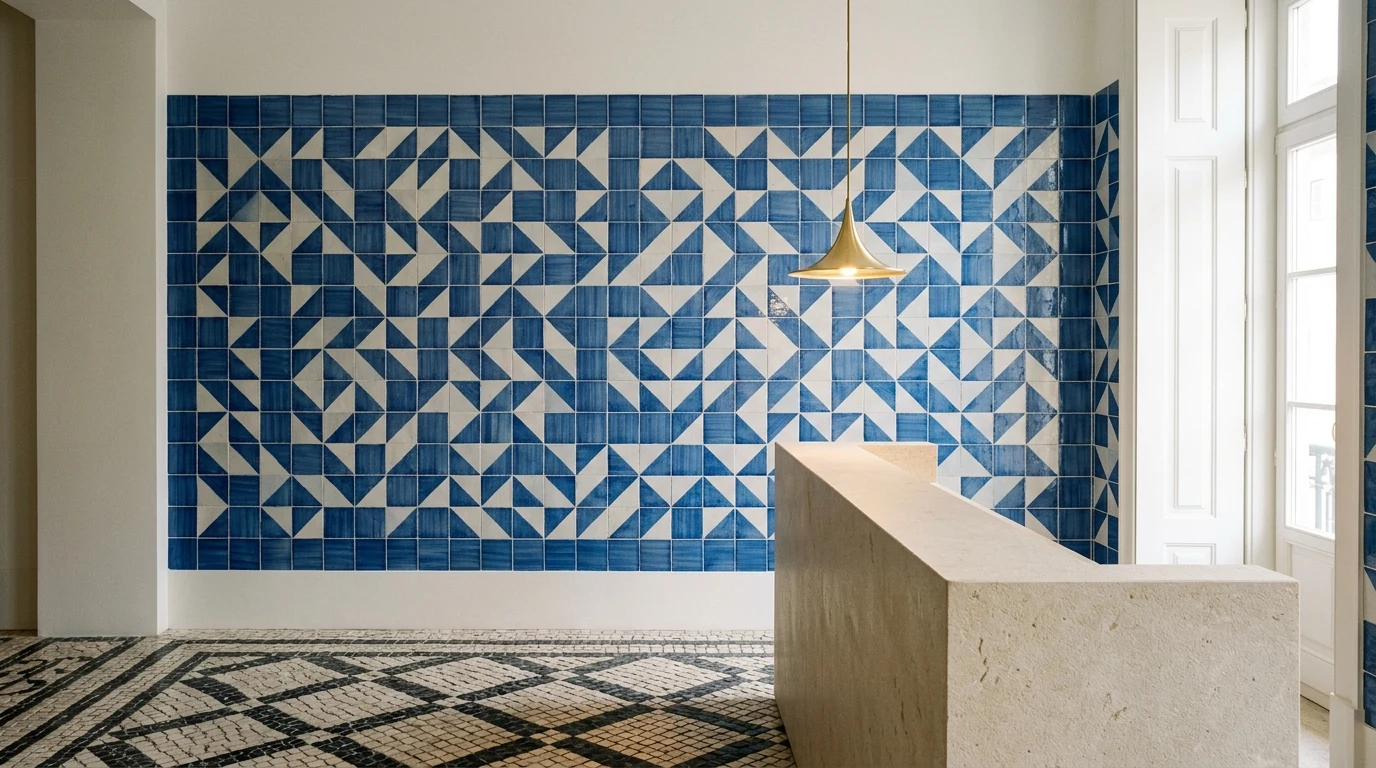
The successful Lisbon boutique hotel in 2026 is not the one with the best technical facilities — international chains have capex budgets above most independent operators. It is the one with the clearest identity, the most honest materials in relation to the place, and the most specific Lisbon experience: one the guest cannot have at a hotel of the same brand in Barcelona, Paris or Amsterdam.
This article examines the interior design trends that distinguish Lisbon's best boutique hotels in 2026, focusing on what is working, what is saturating and what remains underexplored.
What is working: place identity as competitive argument
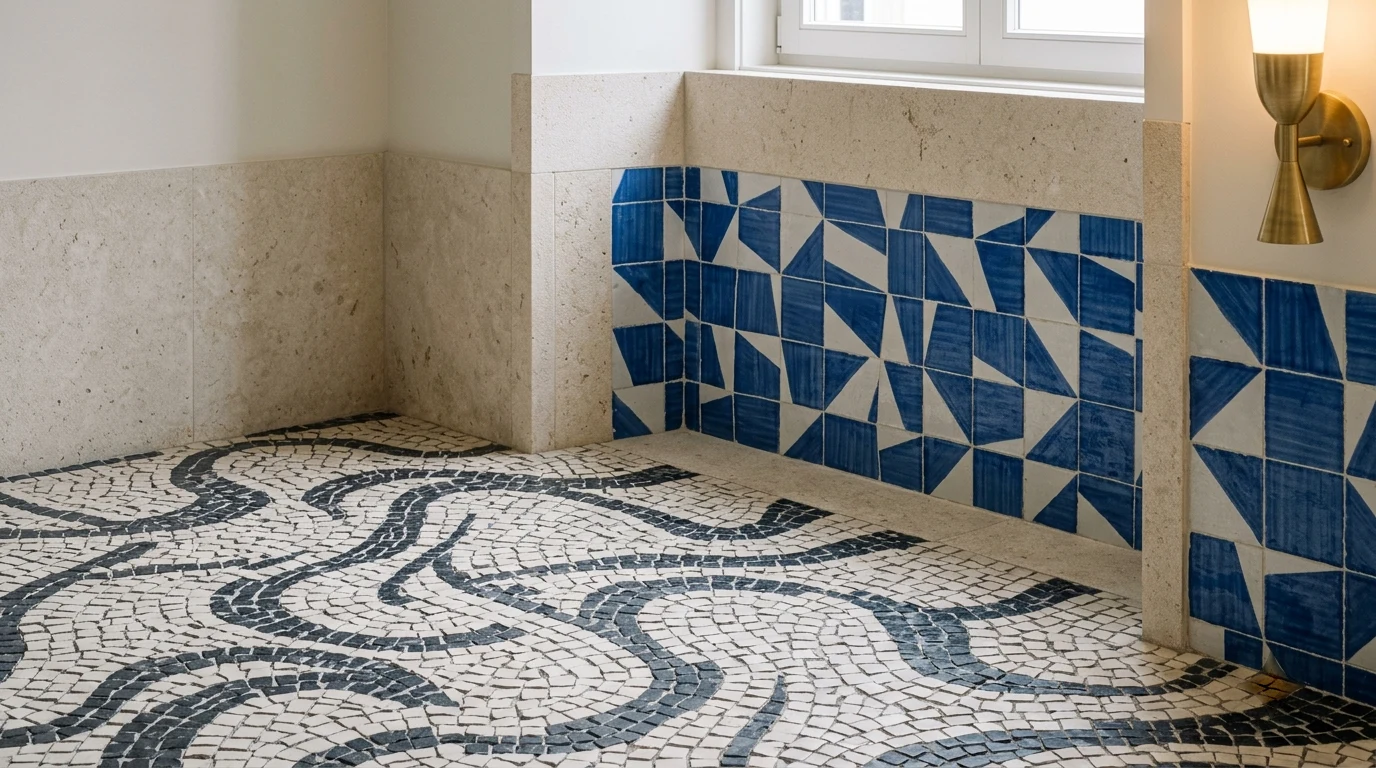
The clearest trend in the design of Lisbon's distinguishing boutique hotels in 2026 is the explicit and unashamed use of the city's materials and cultural references as foreground design elements — not as folkloric background decoration. Handmade Portuguese azulejo in a lobby wall panel not as nostalgic historical citation but as a contemporary artwork produced by current artists. Calçada portuguesa as a floor covering in common areas, not as an outdoor surface moved indoors but as a stone carpet designed with contemporary patterns. Wrought iron in stair railings and luminaires, as continuation of a craft tradition that in Lisbon has never ceased to have quality practitioners.
The Lisbon boutique hotels working this place identity most successfully in 2026 share one characteristic: the design was not imported from an international studio with a catalogue of generic luxury solutions, but developed with Portuguese craftspeople and manufacturers from the project phase onward. This has implications for the process — it is slower, more uncertain, requires more management — but produces a result the international guest recognises as authentic, because it is literally unreplicable outside Lisbon.
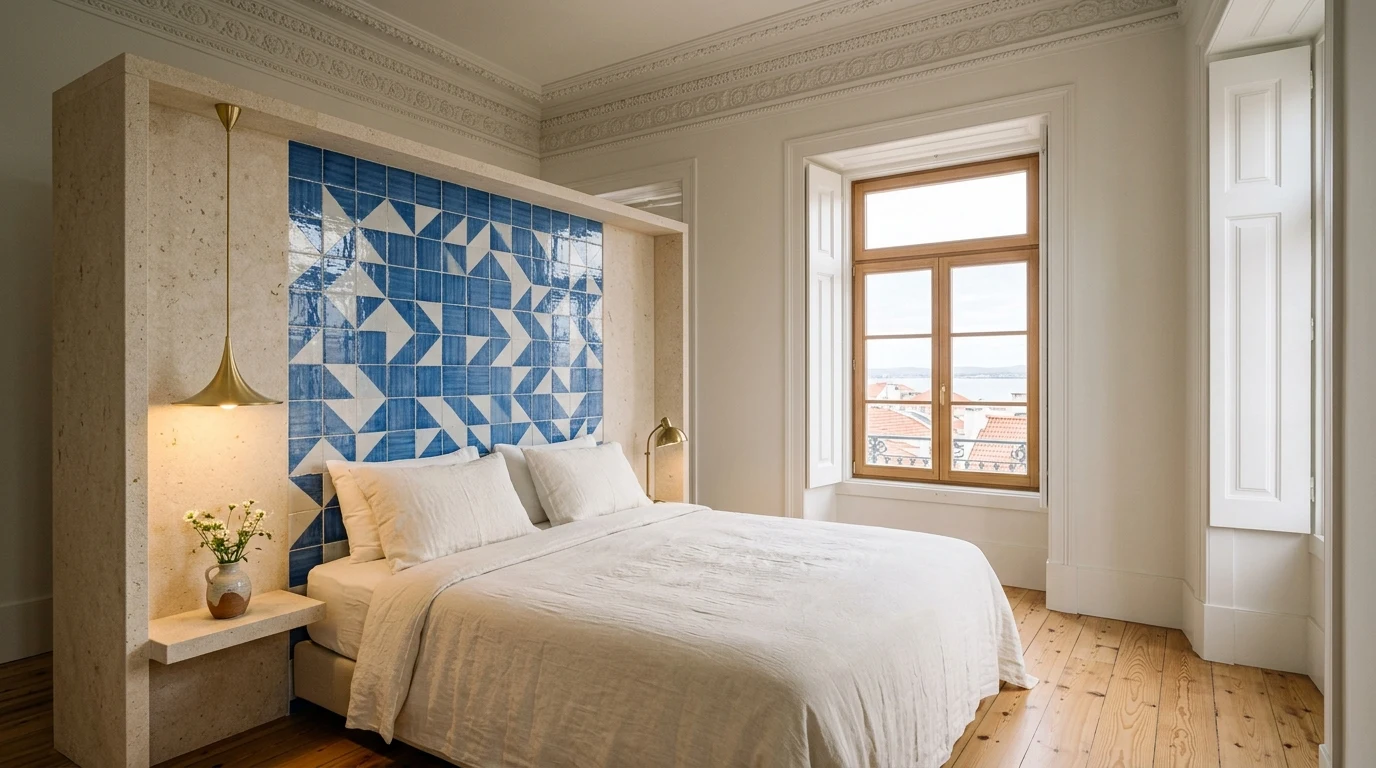
Ceiling height is the most powerful design resource that Lisbon's historic buildings offer and the most underused. Pombaline and 19th-century bourgeois buildings have ceiling heights between 3.5 and 4.5 metres on the piano nobile floors — a scale that new construction rarely achieves without very high structural cost. A hotel room with 3.8 metres of ceiling height, original recovered plaster cornices, Scots pine floor and sash windows with street views produces a Lisbon experience that no new construction can offer, regardless of construction budget.
What is saturating: industrial in Lisbon is what fast food is to gastronomy
The industrial aesthetic — exposed brick, raw concrete, visible piping, Edison lighting, iron and pallet wood furniture — dominated Lisbon boutique hotel design between 2016 and 2023 and is in 2026 at a point of evident saturation. The problem is not the aesthetic itself, which has real qualities when well executed: it is that in Lisbon most historic buildings where boutique hotels are installed are not industrial. They are Pombaline, bourgeois or Art Nouveau buildings with high ceilings, elaborate plasterwork and noble timber floors. Applying an industrial aesthetic over a 19th-century bourgeois building is an exercise in material dishonesty the experienced guest perceives — not consciously but through the sensation that something does not fit in the space.
Boutique hotels in Lisbon moving away from industrial in 2026 are working in a register some call "contemporary Lisbon": the rehabilitation of the building's original materials and finishes (plasterwork, pine flooring, local ironwork) combined with contemporary design furniture by Portuguese authors (Alma Design, Boca do Lobo, Vista Alegre porcelain, Arraiolos textiles), 2,700K lighting that values the ceiling height scale, and an art programme integrating current Portuguese artists. This register is at once more honest to the building, more specific to Lisbon, and harder to copy.
What is underexplored: the Lisbon that is not Chiado
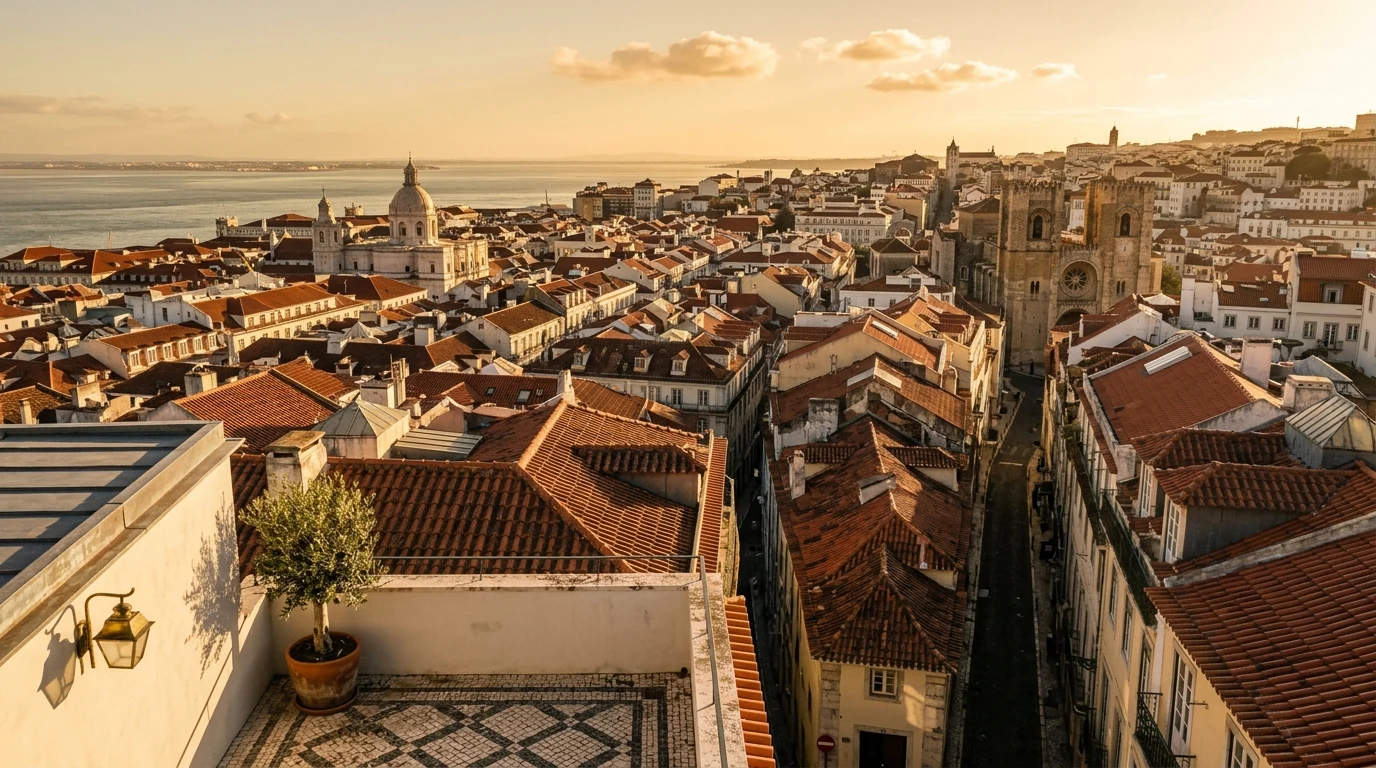
The concentration of quality boutique hotels in Lisbon in 2026 is still heavily centred in three zones: Chiado/Bairro Alto, Alfama/Mouraria and Santos/Príncipe Real. These three zones have the city's largest boutique hotel supply and the most direct competition. Zones with less quality supply and growing demand are Intendente (which has been in transformation since 2015 but still has very few quality accommodation options), Campo de Ourique (a residential neighbourhood with authentic local life and very little hotel infrastructure), and the riverside zone of Alcântara and Belém, with a historical and cultural density tourism has not yet explored to the same degree as the other zones.
The boutique hotel in Intendente or Campo de Ourique has an argument that no Chiado hotel can have: the Lisbon that is not touristy. The target market for that argument is the 35-55 year old European traveller who has already been to Chiado, already seen the Castle, and wants a Lisbon where the restaurants around the hotel are frequented mainly by Lisboetas. That market is real and growing, and the hotel supply serving it is still very scarce.
The rooftop as design asset: the view as product
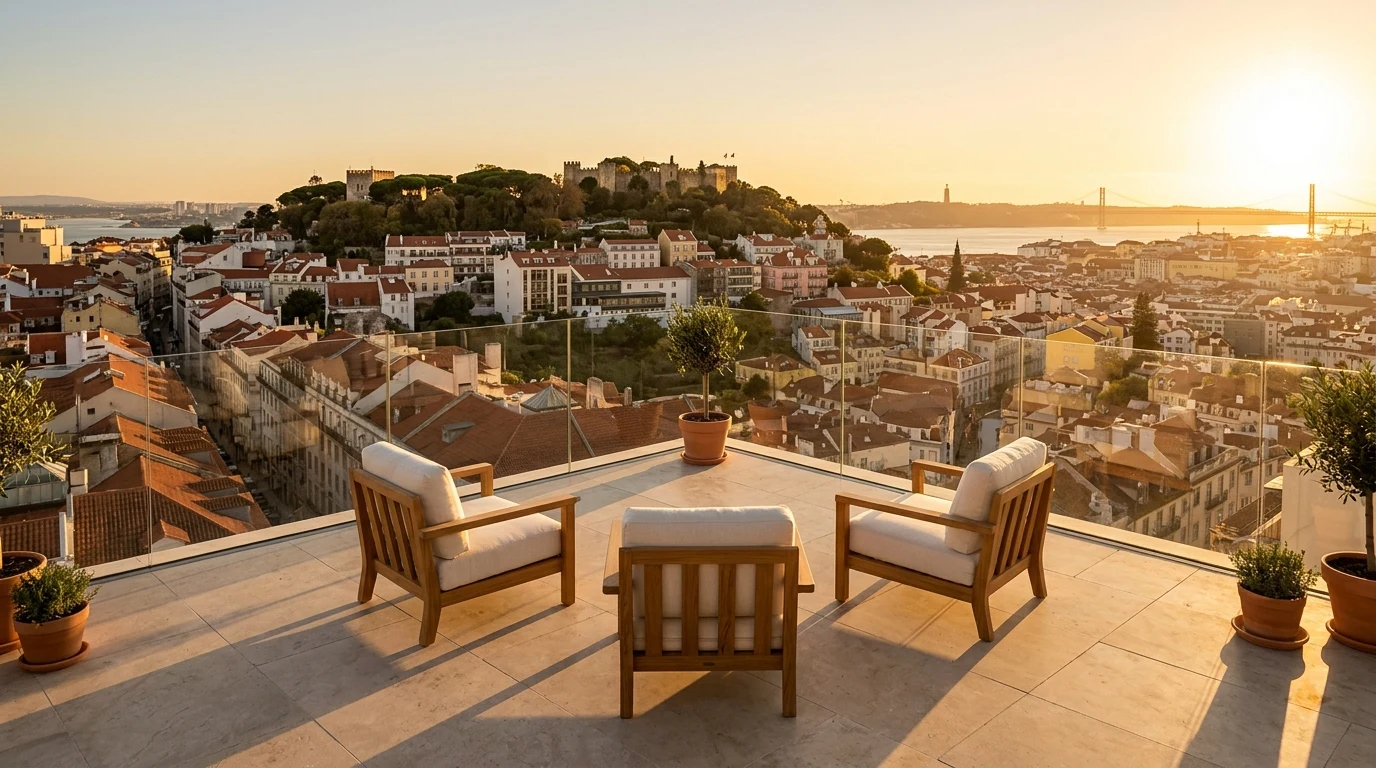
The rooftop is the design asset with the greatest return potential in Lisbon boutique hotels, and the most frequently underused. Lisbon is a city of viewpoints — the miradouros are an urban typology with centuries of history in the city — and a quality view over the historic city, the Tagus or the castle has an emotional and commercial value no other hotel element can match.
A well-designed rooftop in a Lisbon boutique hotel — with natural stone paving, quality outdoor furniture, 2,200K lighting that does not compete with the city's night view, and technology completely integrated and invisible — produces a space the guest photographs, shares and remembers as the most memorable moment of the stay. The organic visibility generated by that shared content is the highest-return marketing argument per euro invested a Lisbon hotel can have.
The most frequent error in the design of Lisbon boutique hotel rooftops: the overloading of furniture and decorative elements that visually competes with the view. A rooftop with the view of São Jorge Castle at sunset needs no other visual argument. The correct design is the one that places the minimum of elements between the guest and the view, and lets the city be the protagonist.
Interior design for boutique hotels in Lisbon and Portugal is one of Véline Interiors' specialisms. If you have a project in Lisbon where design must produce place identity and commercial return, the conversation is open.
Véline Interiors · Hospitality Design
Do you have a project in Lisbon?
We design boutique hotels in Lisbon where place identity produces commercial return.
Start your project →