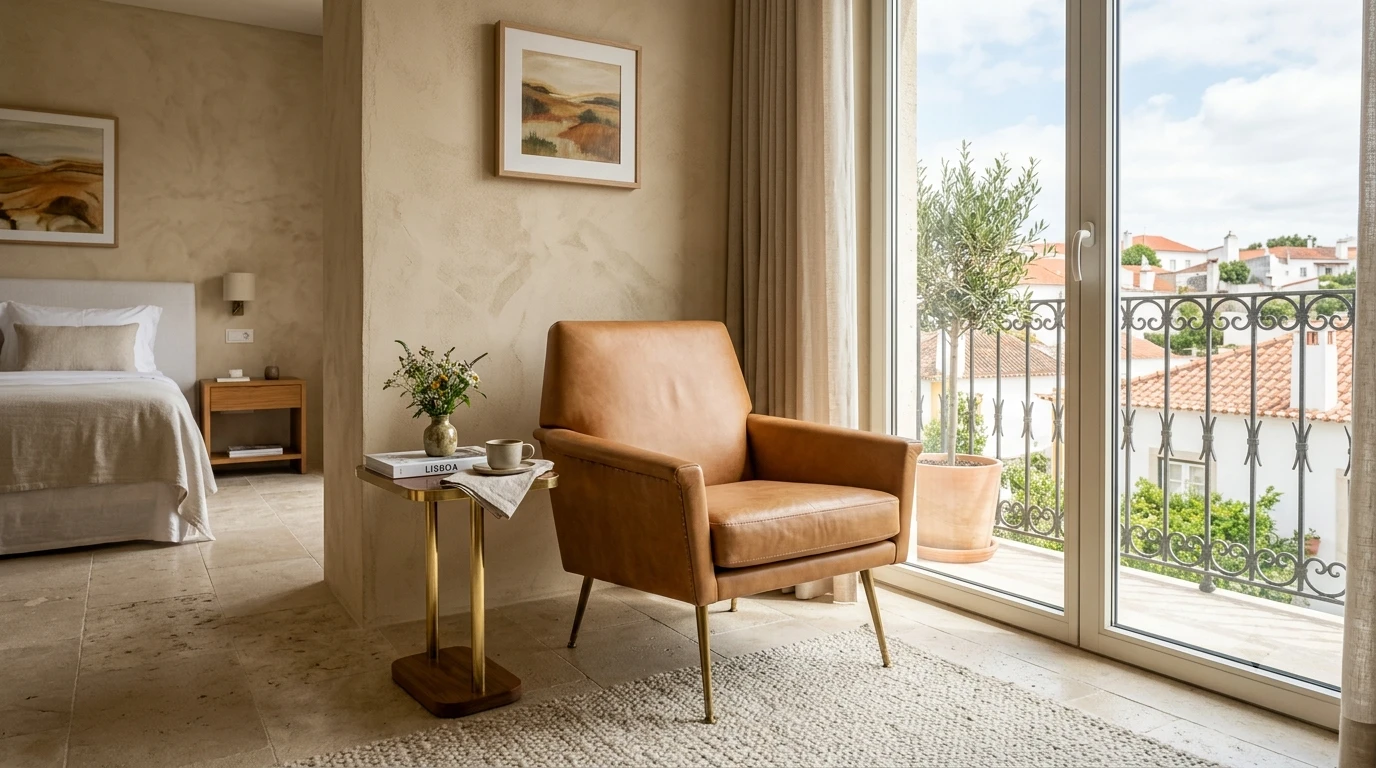
Designer furniture in hospitality is not an aesthetic indulgence: it is a strategic positioning decision. A signed piece — a LUXXU luminaire, a Domkapa armchair, a dining table developed specifically for the project by a Portuguese designer — tells the guest where they are. And the guest who feels they are somewhere unique is the one who returns and recommends.
Portugal's furniture production ecosystem
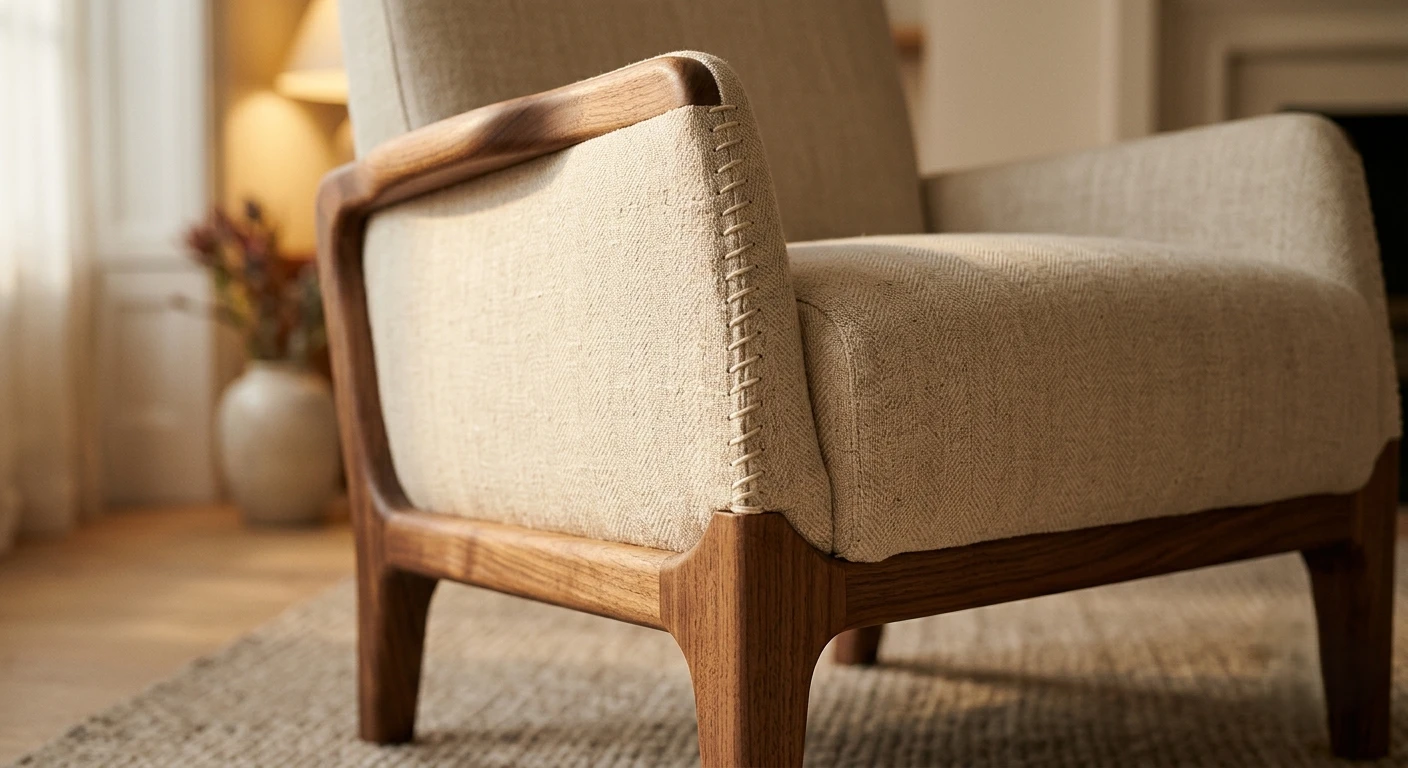
Portugal exports furniture to over 130 countries and is Europe's tenth-largest producer. What distinguishes Portuguese production from Italian, Scandinavian or German is not scale — it is the combination of artisan capacity, customisation flexibility and competitive pricing for the designer segment. A design studio ordering a limited-production designer piece in Italy pays 30–50% more than the equivalent piece produced in northern Portugal with comparable quality.
Reference Portuguese brands for luxury hospitality in 2026 cover a wide spectrum. LUXXU produces luxury contemporary furniture and lighting with sculptural pieces in noble metals — brass, bronze, stainless steel — with hand-applied finishes; their luminaires appear in reference hotels in Lisbon, Dubai and New York. Domkapa specialises in luxury upholstery with couture finishes: armchairs, sofas and beds with upholstery in natural leather, velvet and high-density technical fabrics. Laskasas combines mid-century aesthetics with contract customisation, with strong presence in boutique hotels in the Algarve and Alentejo. Premium Hotel Interiors, headquartered in Paços de Ferreira, produces complete FF&E for five-star hotel projects — including the recent renovation of Emirates' First and Business Class lounges, a five-million-euro contract.
Beyond established brands, Portugal has a generation of independent designers — many trained in Porto and Lisbon with international trajectories — producing limited or bespoke pieces for specific hotel projects. That artisan niche production is where the most differentiated projects find pieces no catalogue has. The Rebello in Vila Nova de Gaia drew on artists, craftspeople and Portuguese designers to compose a narrative of materials and ideas built around four elements: water, wine, timber and industry. Vermelho in Melides, Christian Louboutin's initiative, incorporated unique pieces and craftsmanship that make each room an unrepeatable space.
Designer vs contract furniture: where to use each
The most common confusion in boutique hotel projects: treating all furniture with the same criterion. Designer and contract furniture have different functions and are not interchangeable.
Contract furniture is produced for intensive hotel use: martindale above 100,000 in upholstery, fire resistance to EN 1021-1 and EN 1021-2, ergonomic dimensions for diverse users, ease of maintenance and repair. Its design is functional but generic — it serves the purpose but tells no story. It is the correct furniture for beds (the base and mattress sustain years of use but have minimal visibility once made), work desks, wardrobes and TV units.
Designer furniture is correct for the highest-visibility and lowest-use-intensity pieces: the reading armchair by the window, the lobby luminaire the guest photographs on arrival, the dining table of the presidential suite, the entrance chest that is the first piece the guest sees when opening the room door. Those pieces do not have to withstand 200 nights of bed use per year — they have to withstand the guest's gaze and attention.
The most cost-effective FF&E strategy in terms of cost-to-impact ratio: designer furniture in three to five focal pieces per space, quality contract in the rest. That combination produces a perception of exclusivity significantly above the all-catalogue-contract project, at an incremental cost that rarely exceeds 15–20% of the total FF&E budget.
How to integrate designer furniture without incoherence
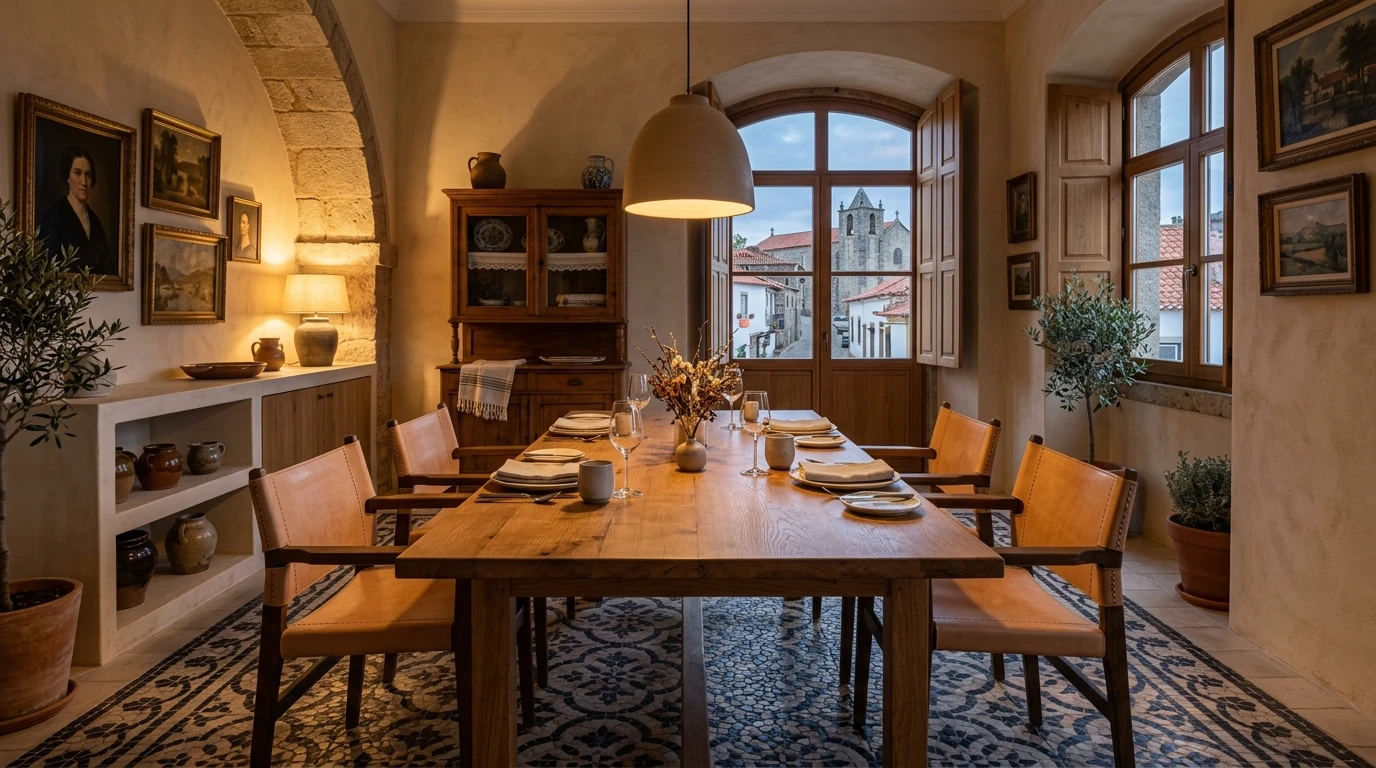
The risk of designer furniture in hospitality is incoherence: a strong design piece in a context that cannot sustain it. A sculptural LUXXU armchair in a room with catalogue wallpaper and generic downlight lighting produces dissonance, not sophistication. The designer piece needs a context of commensurate quality.
Three principles for integrating designer furniture coherently in a Portuguese boutique hotel. First, the designer piece is the argument, the space is the background: wall cladding, flooring and lighting must be sufficiently neutral for the piece to stand out without competition. A natural leather armchair in tobacco tone in a space with lime plaster wall and local limestone flooring produces coherence. The same armchair in a space with floral wallpaper and high-gloss laminate flooring does not.
Second, the piece's identity must relate to the territory. A boutique hotel in the Douro with designer furniture in oak and linen produced in Paços de Ferreira tells a coherent story. The same hotel with designer furniture imported from Milan tells a different story — not necessarily worse, but less rooted. The international guest who chooses the Douro is partly choosing Portugal: furniture that reflects that territory amplifies the hotel's argument.
Third, the designer furniture's durability must be verified before purchase. A design piece that deteriorates in two years of intensive hotel use is an operational and aesthetic problem. Designer upholstery in delicate fabrics — silk, cut velvet — is unsuitable for hotel use without martindale specifications above 30,000. The beauty of the piece and the durability of the fabric are simultaneous requirements, not alternatives.
Designer luminaire: the highest-impact focal piece per euro invested
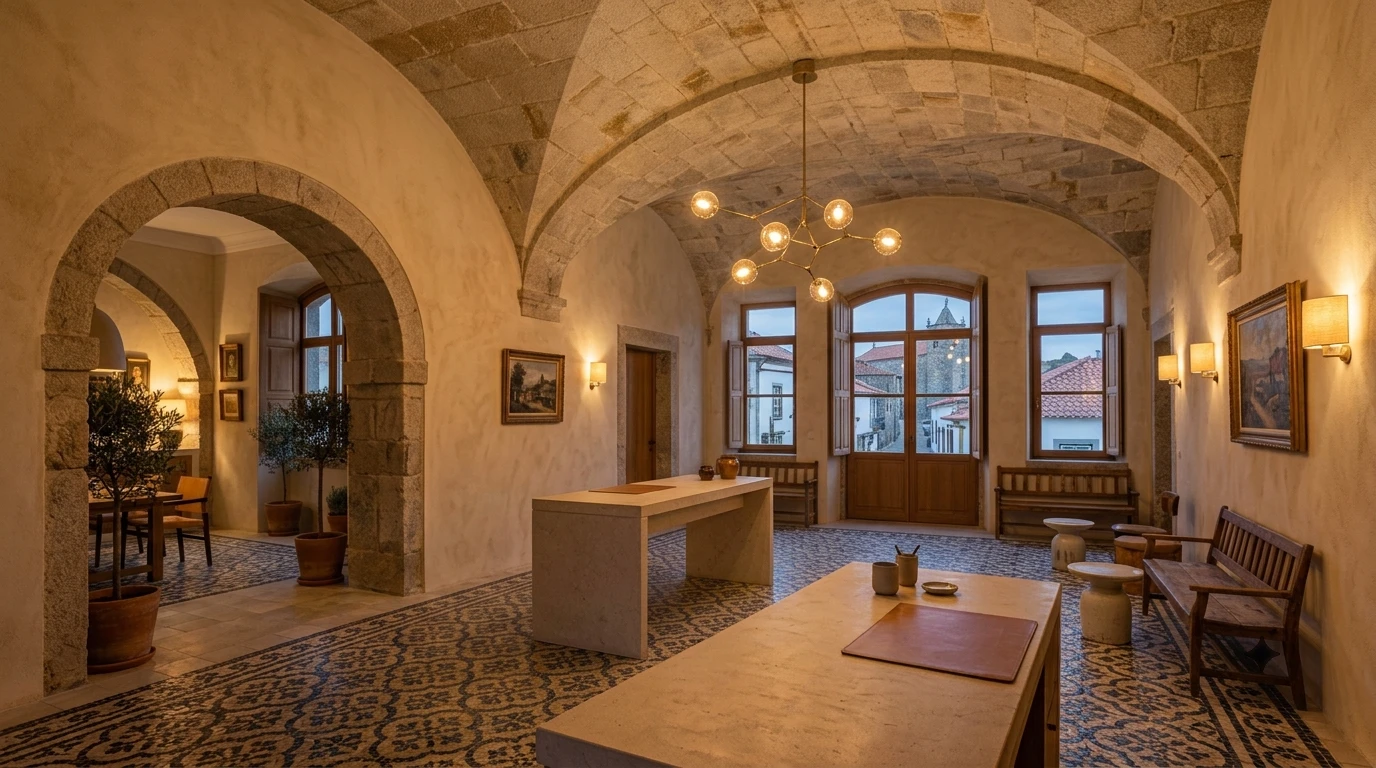
The designer luminaire is the piece with the greatest impact per square metre and per euro invested in a hotel space. A sculptural LUXXU chandelier at the lobby centre is photographed by virtually every guest and appears in dozens of social media posts per week. It is advertising with a shelf life of years, not weeks.
Portuguese designer luminaires have a characteristic that Italian or Nordic production pieces frequently lack: they are customisable in dimension, finish and geometry for each project. A chandelier developed specifically for the ceiling height and palette of a given lobby achieves an impact that even a high-end catalogue piece does not. That level of customisation is accessible in Portugal with lead times and costs that in Italy or France would represent double the investment.
Investment for a sculptural designer luminaire for a boutique hotel lobby typically falls between €8,000 and €35,000 depending on complexity and manufacturer. The return in visibility — shared photographs, mentions in international curations, positioning on booking platforms — amortises that investment in the first operating year in hotels with good occupancy and socially active guests. It is one of the few FF&E elements where return on investment is directly measurable through the volume of generated content.
The ordering process: lead times and expectation management
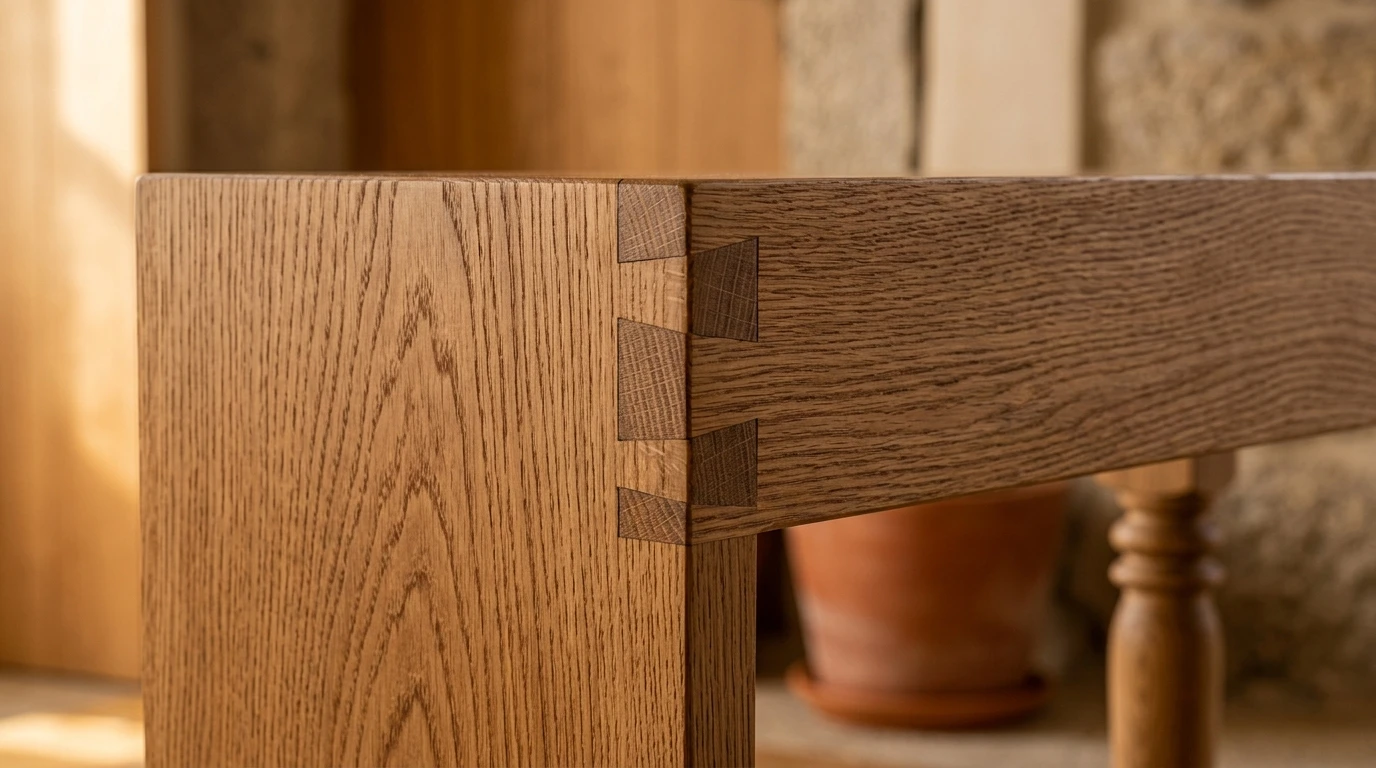
The main operational risk of designer furniture in hotel projects is lead time. A contract catalogue manufacturer delivers in 6–12 weeks. A designer furniture maker with production in Paços de Ferreira delivers in 16–28 weeks depending on complexity and the atelier's workload. An independent designer with artisan production can reach 36–52 weeks.
Those lead times have direct consequences on the opening calendar of a hotel in renovation. The decision to integrate designer furniture must be made at the start of the design process — ideally before the interior design project is complete — and not in the final phases when delivery timelines become critical. The most frequent error: deciding to include a designer piece after the FF&E specification is closed, with an opening timeline that does not accommodate artisan production lead times.
Expectation management with the hotel client must be explicit: designer furniture means long lead times, high customisation and no available stock. The alternative for tight calendars — acquiring catalogue pieces from designer brands that carry stock — exists and is valid. LUXXU, Domkapa and Laskasas have catalogue pieces available in 4–8 weeks that combine designer signature with operational availability. For projects opening in under four months, that is frequently the correct option.
The cost of designer furniture in a hotel context varies widely. A Domkapa armchair with natural leather upholstery falls between €2,800 and €5,500 per unit. A bespoke solid oak dining table, between €4,000 and €9,000. A LUXXU sculptural lobby luminaire, between €8,000 and €35,000. Those values are above contract catalogue furniture but below equivalent Italian brands, positioning Portuguese designer furniture in a genuine value zone — the best quality-to-price ratio in its segment.
The boutique hotels and resorts in Portugal that best integrate designer furniture are those that treated that decision as a strategic component of the design project, not as a last-minute addition. Véline Interiors develops FF&E specification — including Portuguese designer furniture — as an integral part of the interior design project. If you have a project in Portugal and want to evaluate how designer furniture can differentiate it, the conversation is open.
Véline Interiors · Hospitality Design
Have a project in Portugal?
We specify the designer furniture that differentiates your boutique hotel.
Present your project →