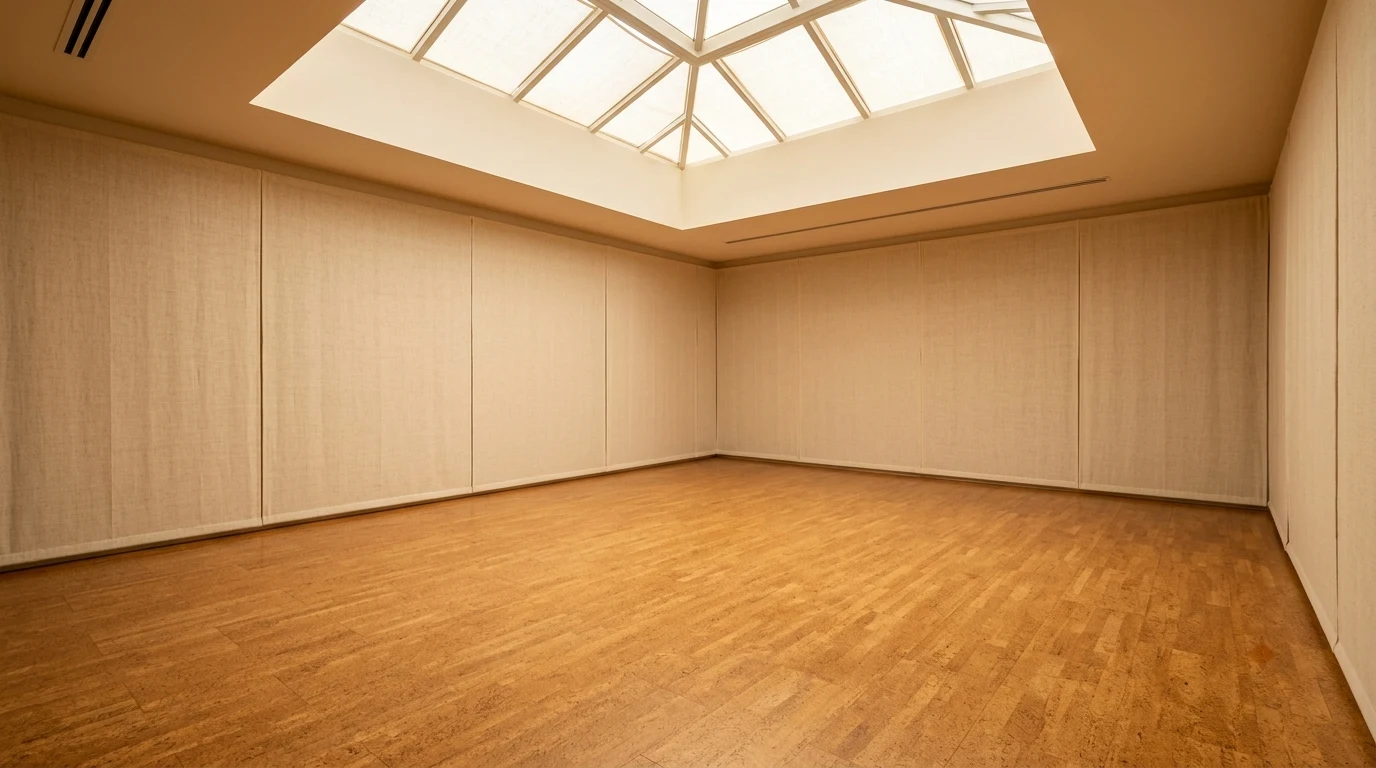
The materials of a luxury boutique hotel or private villa yoga and meditation room must simultaneously meet three conditions: produce a positive sensory response to touch and temperature (tactile warmth, cushioning, organic texture), contribute to the correct acoustic environment for practice (sound absorption, elimination of echo), and maintain their visual and tactile integrity with use and cleaning. The materials that meet all three conditions in the context of a luxury wellness space belong primarily to the natural world: cork, untreated timber, clay earth, linen, jute, limestone, bamboo.
This article analyses the sensory materials most relevant to yoga and meditation rooms in luxury boutique hotels and private villas, their technical behaviour and their impact on the practitioner's experience.
Cork: the floor material with the greatest sensory profile for yoga
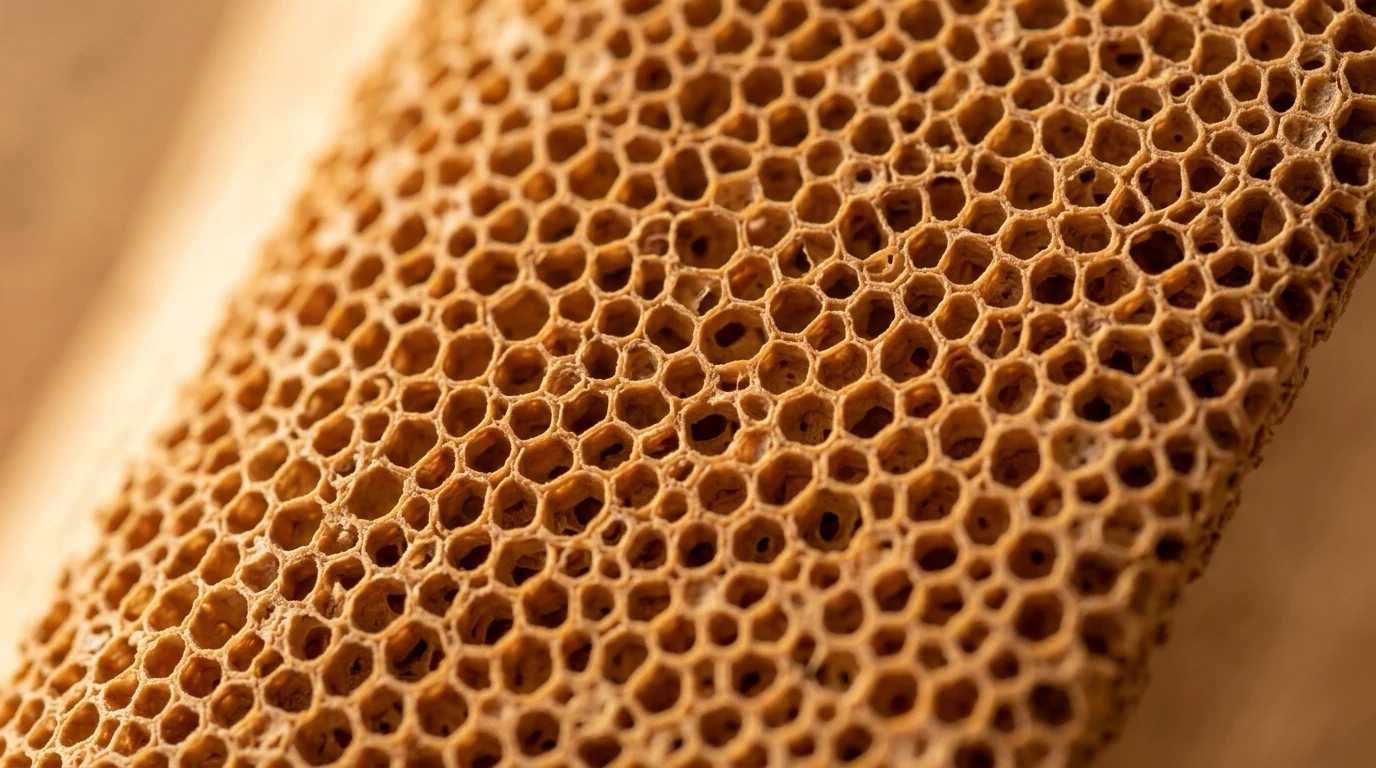
Natural cork is the floor material with the most complete sensory profile for a yoga room. Its cellular structure — millions of closed air cells in a suberin matrix — simultaneously produces the four qualities that the bare foot values most in a practice floor: light cushioning (pressure on the joints is lower than on a hard floor), tactile warmth (cork's low thermal conductivity makes the foot perceive the surface as warm even in winter), natural grip without uncomfortable adhesion, and absolute silence (cork absorbs the sound of the step and eliminates impact on the floor).
For intensive-use yoga rooms, cork is specified in natural cork planks of 10-15 mm thickness, treated with linseed oil or natural wax — never synthetic varnish, which closes the pore and eliminates the material's technical and olfactory properties — installed over a levelling layer with solvent-free calcium silicate adhesive. The characteristic cork smell — soft, vegetal, slightly spiced — is part of the space's sensory profile: the same smell as wine bottle corks, but in a soft and persistent version, acting as a low-intensity olfactory stimulus that contributes to the sensation of nature and calm.
Portugal is the world's largest cork producer — more than 50% of global production — and Portuguese cork specified directly from national production has superior quality and density to generic distribution products. In villa and hotel projects in Portugal, specifying nationally produced cork is also a territorial identity argument that reinforces the project's coherence.
Untreated timber: the organic material the foot recognises
Pine, fir or cedar timber without varnish — treated with tung oil, linseed oil or beeswax — is the yoga room floor material with the greatest charge of sensory memory. The bare foot on untreated timber perceives the texture of the grain, the temperature difference between harder and softer growth rings, and the smell of wood that synthetic varnish eliminates completely. That tactile and olfactory experience produces in the practitioner a response of recognition that synthetic materials — vinyl, rubber, resin — cannot replicate.
The technical limitation of untreated timber in an intensive-use yoga room: it is more sensitive to humidity than cork and requires annual re-lubrication maintenance with natural oil. In yoga rooms where Bikram or hot yoga is practised (ambient temperature above 30°C with high humidity), untreated timber expands and contracts in a way that can produce creaking and gaps between boards. In those conditions, cork or igusa tatami are more suitable options.
Clay earth and mineral plaster: the walls that breathe
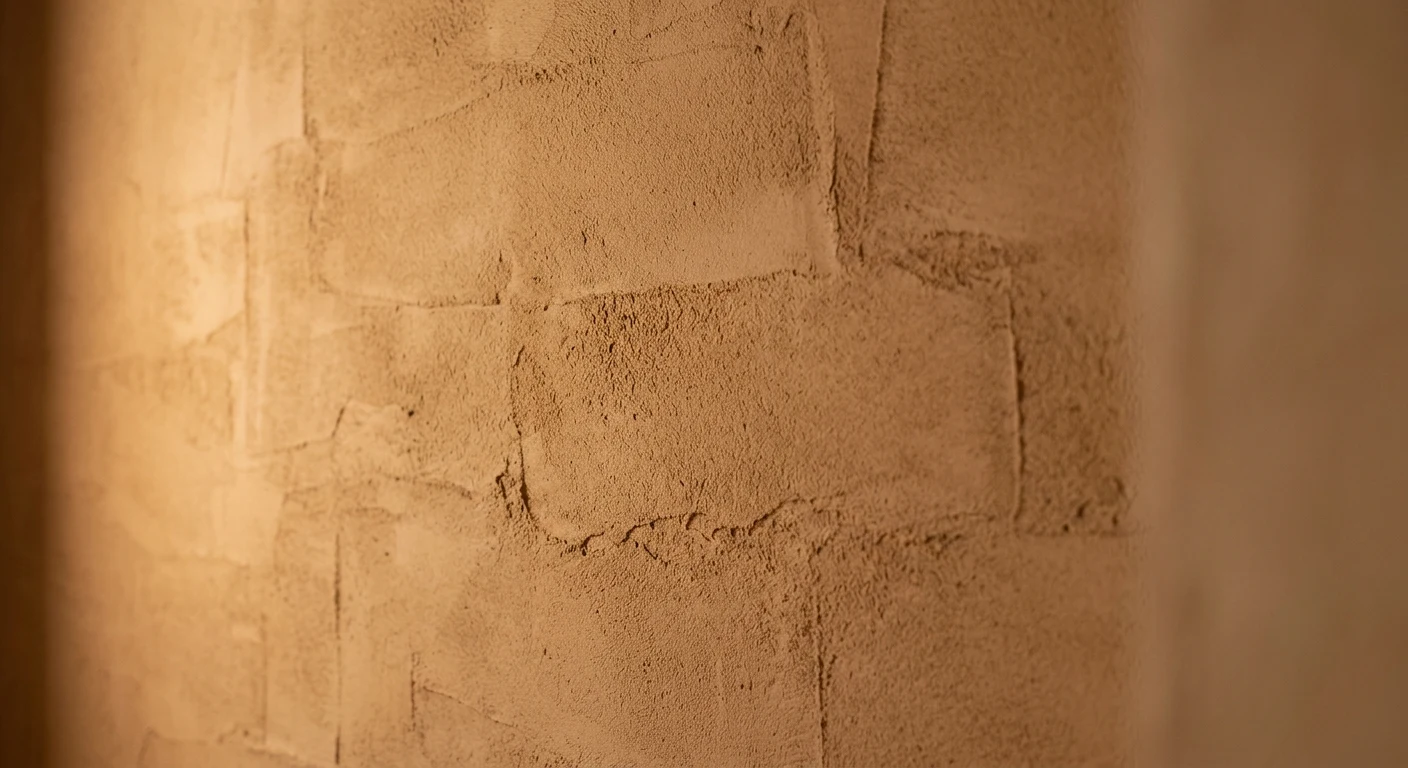
The walls of a yoga or meditation room have a less immediate sensory role than the floor but one equally relevant to the quality of the space. Natural clay earth walls — clay render applied by hand in two or three layers over the substrate — produce a living, irregular and warm texture that no industrial finish can replicate. Its most relevant technical quality for a wellness space: clay earth naturally regulates ambient humidity, absorbing excess water vapour when the space is occupied and releasing it when empty. In a yoga room with ten people practising for 60 minutes, that natural humidity regulation produces a more stable and comfortable microclimate than any conventional climate control system.
Mineral plaster — Venetian plaster, lime plaster, Moroccan tadelakt — is the alternative to clay earth when greater humidity resistance is required (in rooms adjacent to a spa or pool) or greater visual uniformity. Tadelakt, applied with river stone and treated with black soap, produces a waterproof mineral surface, slightly lustrous and with a movement texture that absorbs light differently to any other finish. Its use on the walls of a meditation room in a luxury villa in Morocco, Portugal or southern Spain produces an effect of cultural and material continuity that the international guest identifies as authenticity, even if they cannot name it exactly.
Linen and jute: the textiles that absorb sound and the eye
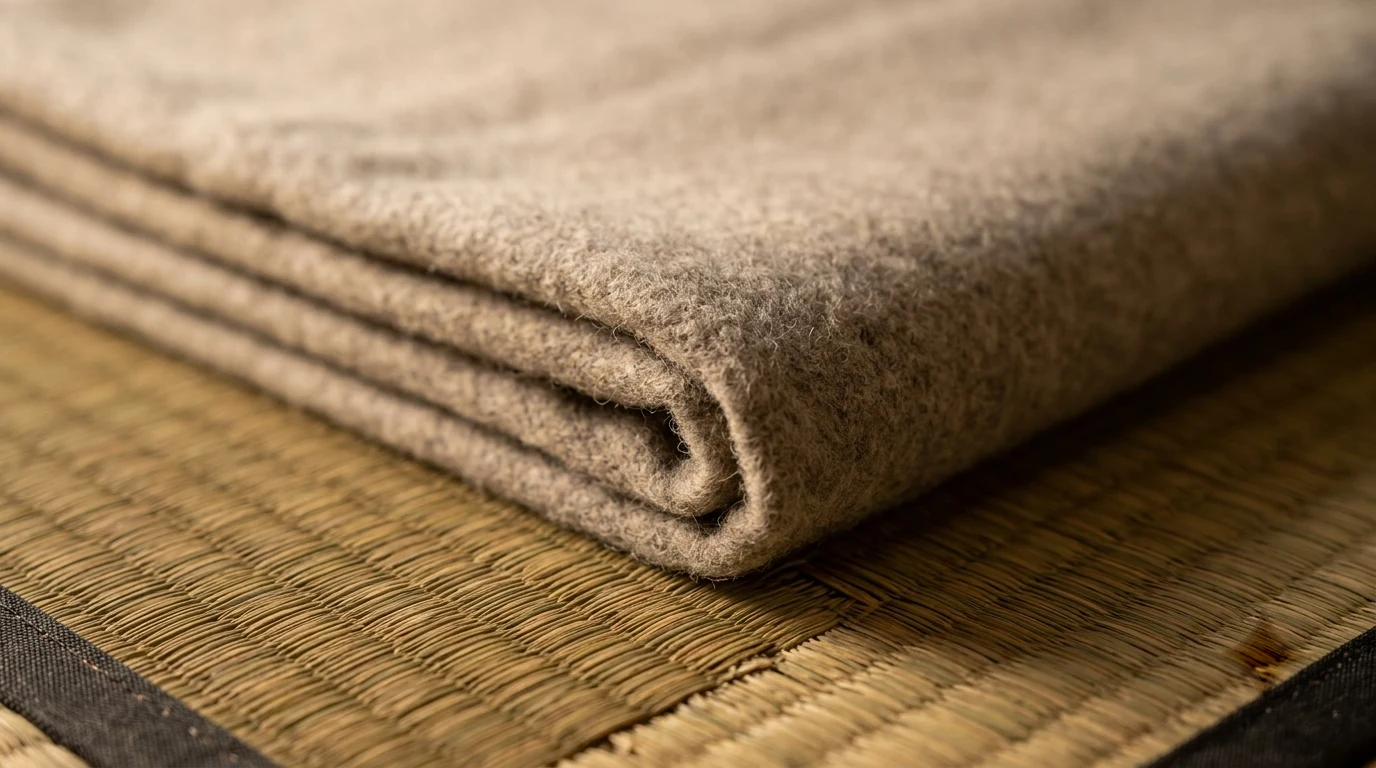
Wall textiles in a yoga or meditation room serve a primary technical function: acoustic absorption. A yoga room without wall textiles — only plaster, stone or timber walls — has a reverberation time (RT60) that can exceed 0.8-1.2 seconds, producing a perceptible echo that interferes with meditation music, with the instructor's cues and with the sense of silence that practice requires. The acoustic target for a yoga or meditation room is an RT60 of between 0.4 and 0.6 seconds.
Tensioned linen on a panel frame — raw or natural-toned linen, undyed — is the wall finish with the greatest simultaneous profile of acoustic absorption and visual quality for a luxury wellness space. A 120×240 cm linen panel over a frame with mineral wool behind produces acoustic absorption of between 0.5 and 0.7 NRC (noise reduction coefficient) depending on thickness and density, with a visual appearance of natural fabric that reinforces the space's sensory language. The cost of fabrication and installation of linen panels in a 50 m² yoga room ranges between €3,000 and €7,000, depending on linen quality and tensioning system.
Limestone and bamboo: the detail materials that complete the space
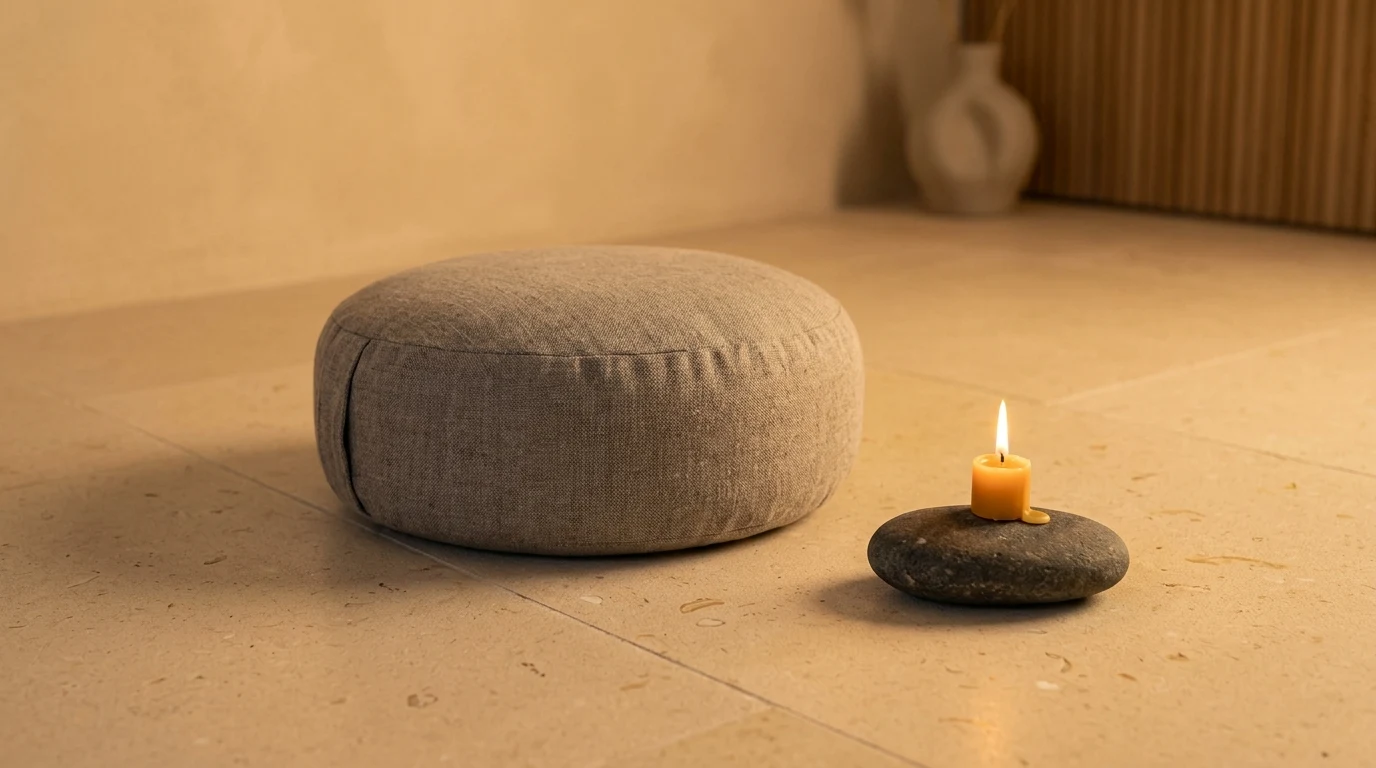
Honed limestone — Moleanos limestone, Bourgogne limestone or local equivalent — in the entrance and transition zone of a yoga or meditation room produces the sensory contrast that separates the practice space from the rest of the building. The step from standard ceramic corridor floor to honed limestone, and from limestone to the cork or tatami of the practice zone, is a sensory transition ritual that the practitioner covers with bare feet and that signals the state change that practice requires. That threshold ritual — well designed, with clearly defined material and tactile temperature differences — is one of the highest-impact design elements in the quality of the yoga and meditation experience.
Bamboo — as floor boards, wall panels or furniture elements — is the material with the greatest symbolic charge in yoga and meditation spaces with Asian influence. Its mechanical resistance (superior to many hardwoods), its growth speed (renewable in 3-5 years versus 30-80 for tree timber), and its visual texture of regular knot and warm honey colour make it a material with a sustainability and aesthetic profile that the 2026 luxury wellness hotel guest values increasingly. Its limitation in Spain and Portugal: it is not a local material, which in projects with territorial identity emphasis can be a counterargument.
The design of yoga and meditation spaces in luxury boutique hotels and private villas is one of Véline Interiors' specialisms. If you have a wellness space project where materials must produce sensory experience, the conversation is open.
Véline Interiors · Wellness Design
Do you have a wellness space project?
We design yoga and meditation rooms where materials produce sensory experience.
Present your project →