
And it is also the item most frequently managed without the rigour it deserves. Errors in the FF&E supply chain are the primary cause of hotel opening delays, immediate renovation costs for defective pieces, and discrepancies between the designed project and the inaugurated hotel. In Portugal's luxury hotel market, where international demand requires growing quality standards, those errors carry a reputational cost that frequently exceeds the direct financial cost.
This article analyses how the FF&E supply chain works in luxury hotel projects in Portugal, which phases are critical, which errors are most frequent and how to avoid them.
The phases of the FF&E process and their real lead times

The FF&E process in a hotel project has six phases with interdependent lead times. Compressing any of them impacts all subsequent phases in a multiplying effect.
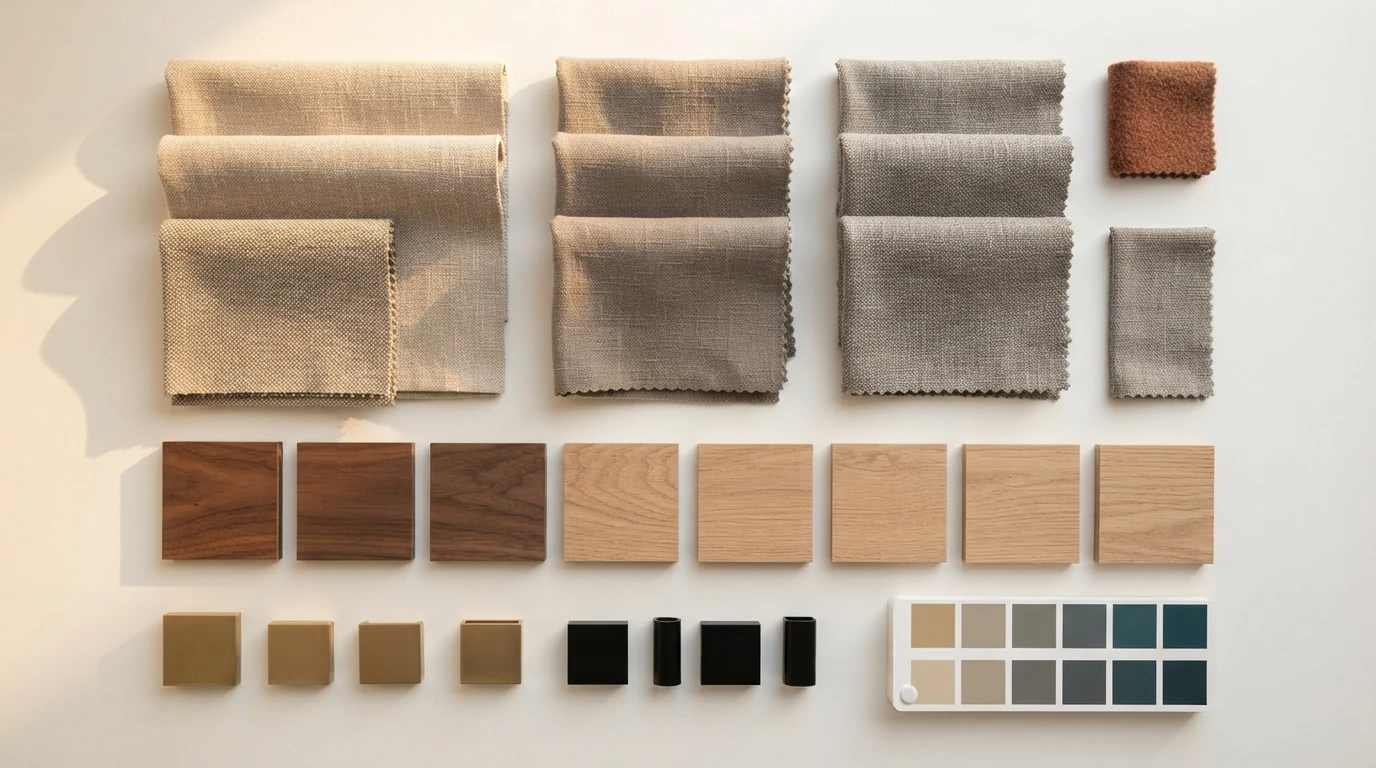
Phase 1: Specification. The interior design studio defines each piece with precision: model, dimensions, material, finish, fabric reference with martindale and fire resistance classification, colour reference with RAL or Pantone coordinates, and required certifications documentation (BIFMA, GREENGUARD, M1 fire classification or European equivalent). This phase takes 6–10 weeks for a 20–30 room boutique hotel project. Skipping or shortening it produces incorrect orders and factory rejections.
Phase 2: Request for quotation and supplier selection. The specification is sent to three or four qualified manufacturers for comparable quotations. Comparing quotations must be done against the same specification — not on price per piece without considering material or finish differences. This phase takes 3–5 weeks. Pressure to close quickly frequently leads to comparing quotations against different specifications, producing a seemingly economical selection that results in a lower quality product than expected.
Phase 3: Sample approval. The selected manufacturer produces one or two pilot pieces for approval by the interior design studio and the client. This phase is non-negotiable in luxury projects and takes 4–8 weeks. Projects that omit sample approval to gain time discover quality discrepancies when the entire production has been delivered — forcing complex negotiations with the supplier or acceptance of a result below specification.
Phase 4: Production. Once samples are approved, the manufacturer initiates full order production. For quality contract furniture in Portugal, typical lead times are: upholstered armchairs and sofas, 8–12 weeks; beds and headboards, 10–16 weeks; solid timber tables and sideboards, 12–20 weeks; bespoke luminaires, 14–24 weeks. These are standard production lead times without expediting. Expediting — accelerated production at additional cost — reduces lead times by 20–30%, never more.
Phase 5: Factory inspection and quality control. Before shipment, the interior design studio or an independent inspector verifies each piece against the approved specification: dimensions, finish, seams, mechanism function, material correspondence. This phase takes 3–7 days depending on order volume. Omitting it is the most frequent error and produces the most costly problems: detecting a quality discrepancy after installation costs 5–10 times more than detecting it in the factory.
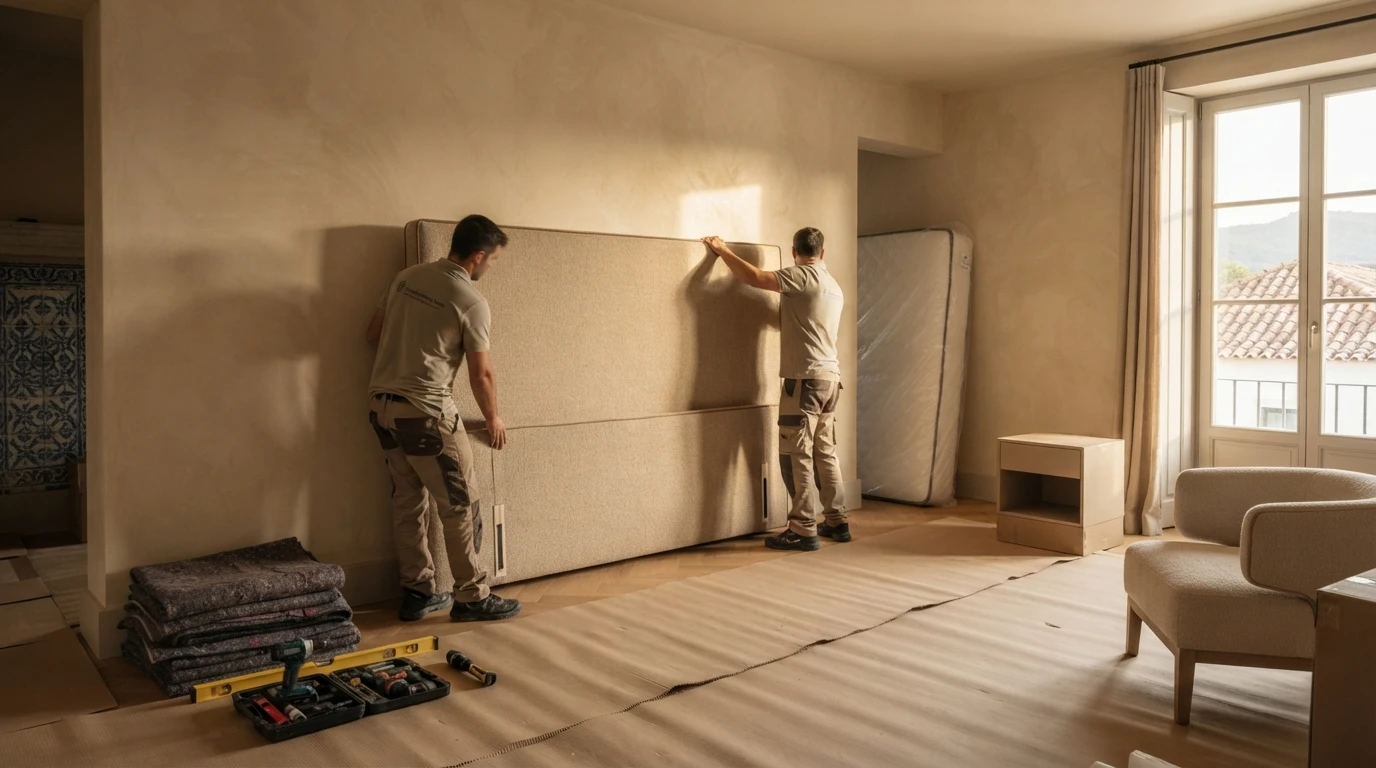
Phase 6: Transport, receipt and installation. Transport from northern Portugal to any domestic destination takes 1–3 days. Receipt and installation in a 30-room hotel takes 2–4 weeks with a 4–6 person installation team. Transport damage is the second-largest operational problem in hotel FF&E: packaging must be specified with the order, not after.
Portugal's FF&E supplier ecosystem

Portugal has a furniture and FF&E manufacturing cluster concentrated primarily in the north of the country — Paços de Ferreira, Paredes, Braga, Guimarães — that is the third largest in Europe by export volume. That cluster has capacity to produce virtually any hotel furniture piece to luxury quality with competitive lead times relative to Italy or Germany.
The market structure has three relevant levels for luxury hotel projects. Integrated manufacturers — such as Premium Hotel Interiors, Mobilinox or Frama — produce complete FF&E for hotel projects: from design to installation, with logistics management capacity included. They are the most efficient option for projects of more than 50 rooms where coordination between product categories is critical. Design brands with contract production capacity — LUXXU, Domkapa, Laskasas, TGV Interiores — combine design identity with series production capacity for the hospitality industry. They are the option for projects where the hotel's brand positioning includes recognisable names in the FF&E. Category-specialist manufacturers — upholstery, timber, metal, lighting — produce with greater depth in their specific category but require coordination between multiple suppliers, which increases management complexity.
Portugal's comparative advantage over Asia or Eastern Europe is not only cost — which is competitive but not the lowest in the market — but the capacity for customisation in medium volumes (between 20 and 200 units), the geographic proximity that facilitates control visits, and European fire resistance compliance at no additional cost.
The most frequent errors and how to avoid them
1. Incomplete specification. Requesting quotation with generic descriptions — "upholstered armchair in grey fabric" — without fabric reference, martindale, exact dimensions or fire classification. The supplier quotes what they interpret, not what the project needs. Solution: complete technical specification with product sheets per piece before requesting quotation.
2. Selection by price without quality control. Choosing the cheapest supplier without verifying their production capacity for the required standard. A supplier that has not previously worked with five-star hotels lacks the necessary quality control processes. Solution: require references from five-star hotel projects and conduct a factory visit before awarding the contract.
3. Omission of the pilot sample. Accepting the supplier's quotation and moving directly to production to save time. Colour, texture and finish discrepancies between specification and production are common even with quality suppliers. Solution: mandatory pilot sample, signed by the client, before authorising production.
4. Destination inspection instead of factory inspection. Accepting material on receipt at the hotel without prior verification before shipment. When defects are detected on site, the margin for manoeuvre is minimal: the supplier argues transport damage, replacement requires weeks and the opening calendar does not wait. Solution: mandatory factory inspection before shipment, with a signed report from inspector and supplier.
5. Uncoordinated management between supplier categories. Buying beds from one supplier, headboards from another, upholstery from a third and luminaires from a fourth, without a project coordinator managing lead times in an integrated way. Delays in one category affect the installation of all others. Solution: designate an FF&E project manager — internal or external to the interior design studio — with authority to coordinate all suppliers and resolve incidents.
The FF&E budget: how to structure it without surprises
The FF&E budget in a luxury hotel in Portugal has a standard structure the market has consolidated over recent years. Category ranges for a four- or five-star boutique hotel in Portugal with an FF&E budget between €400,000 and €800,000: bedroom furniture (beds, headboards, bedside tables, desks, chairs, wardrobes), 35–45% of total FF&E budget; lighting (wall lights, floor lamps, ceiling fixtures per room), 8–12%; textiles (bed linen, curtains, upholstery, carpets), 12–18%; bathroom (accessories, mirrors, complements), 6–10%; common areas (lobby, restaurant, spa, corridors), 15–25%; contingency: minimum 10%.
The 10% contingency is the element most frequently eliminated in budget negotiation and the most necessary in practice. Projects without FF&E contingency that encounter a production defect in 5% of pieces — which is statistically normal — are forced to make cuts in other items or open the hotel with deficiencies.
The FF&E cost per room in a four-star hotel in Portugal ranges from €15,000 to €30,000. In a five-star boutique hotel, from €30,000 to €70,000. In a hotel with Michelin Key or Relais & Châteaux ambitions, it can exceed €90,000 per room when designer pieces, noble materials throughout and high-standard common areas are included.
Interior design and FF&E management for hotels in Spain and Portugal is one of Véline Interiors' specialisms. If you have a project in development and want to evaluate the supply chain with criterion, the conversation is open.
Véline Interiors · Hospitality Design
Have a hotel project in Portugal?
We manage the FF&E supply chain with technical and design criterion, without losing quality or timeline.
Submit your project →